


Electronic Components for Prototype Circuit Board: A Comprehensive Guide for Engineers and Hobbyists
Introduction
Building a prototype circuit board is one of the most critical steps in electronics development. Whether you are a seasoned engineer testing a new design or a hobbyist bringing your first project to life, the choice of electronic components for prototype circuit board directly impacts the performance, reliability, and cost of your prototype. Unlike mass production, where components are selected for volume and cost efficiency, prototyping demands flexibility, availability, and ease of manual assembly. This article explores the essential components, selection criteria, and best practices for sourcing and using electronic components in prototype circuit boards. For those seeking reliable sourcing, ICGOODFIND offers a curated marketplace for both common and hard-to-find components, ensuring your prototype journey starts with quality parts.
Part 1: Core Passive Components for Prototype Circuit Boards
Resistors: The Foundation of Every Circuit
Resistors are the most fundamental electronic components for prototype circuit board designs. For prototyping, through-hole resistors (e.g., 1/4W carbon film) remain popular because they are easy to insert, solder, and replace. However, surface-mount resistors (SMD, 0603 or 0805 packages) are increasingly common for compact designs. Key considerations include:
- Tolerance: For most prototypes, ±5% tolerance is sufficient, but precision circuits (e.g., voltage dividers) may require ±1%.
- Power rating: Standard 1/4W resistors work for low-power circuits; higher current paths need 1/2W or 1W.
- Temperature coefficient: For stable performance, choose ±100 ppm/°C or better.
Pro tip: Keep a resistor kit with common values (e.g., 10Ω, 100Ω, 1kΩ, 10kΩ, 100kΩ) to speed up prototyping. ICGOODFIND offers pre-sorted resistor kits that save time and reduce waste.
Capacitors: Decoupling, Filtering, and Timing

Capacitors are indispensable for power supply decoupling, signal filtering, and timing circuits. For prototype boards, the most common types are:
- Ceramic capacitors (MLCC): Ideal for decoupling (0.1µF to 10µF) due to low ESR and high frequency response. Use X7R or C0G dielectrics for stability.
- Electrolytic capacitors: For bulk storage (10µF to 1000µF) in power supply rails. Aluminum electrolytics are cost-effective, but tantalum capacitors offer better stability in compact sizes.
- Film capacitors: For precision timing or audio circuits, where low leakage and low distortion are required.
Critical rule: Always place a 0.1µF ceramic capacitor as close as possible to each IC’s power pin to suppress high-frequency noise. For prototype boards, through-hole ceramic capacitors are easier to handle, but SMD versions (1206 or 0805) are recommended for modern designs.
Inductors and Transformers
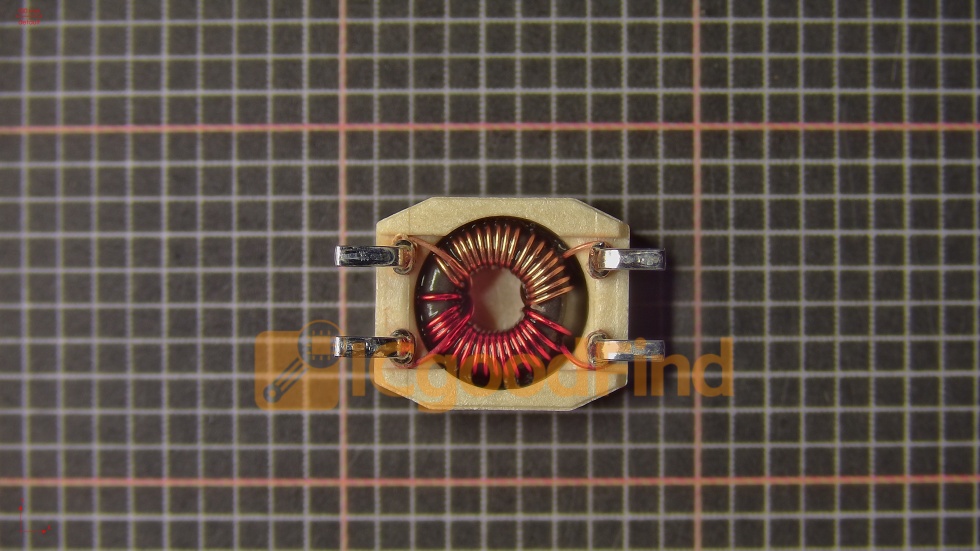
Inductors are essential for switching power supplies, RF circuits, and filtering. For prototypes, through-hole inductors with ferrite cores are common, but SMD power inductors (e.g., 10µH to 100µH) are preferred for compact designs. When selecting inductors, consider:
- Current rating: Ensure the inductor can handle the peak current without saturation.
- DC resistance (DCR): Lower DCR reduces power loss and heat.
- Self-resonant frequency (SRF): For RF circuits, choose inductors with SRF well above your operating frequency.
ICGOODFIND provides detailed datasheets and cross-references for inductors, helping you match the right part to your prototype requirements.
Part 2: Active Components and Semiconductors
Integrated Circuits (ICs): The Brains of Your Prototype
ICs are the heart of most modern prototype circuit boards. For prototyping, DIP (Dual In-line Package) ICs are still widely used because they fit into breadboards and solderable prototyping boards. However, SOIC, TSSOP, and QFP packages are common for surface-mount designs. Key considerations:
- Power supply voltage: Ensure the IC operates within your prototype’s voltage range (e.g., 3.3V, 5V, or 12V).
- Operating temperature: Commercial-grade ICs (0°C to 70°C) are fine for most prototypes; industrial-grade (-40°C to 85°C) is needed for harsh environments.
- Availability: Popular ICs like LM358 (op-amp), NE555 (timer), ATmega328P (microcontroller), and LM7805 (voltage regulator) are readily available from ICGOODFIND and other distributors.
Prototyping tip: Use breakout boards for complex ICs (e.g., microcontrollers, sensors) to simplify wiring and debugging. Many suppliers, including ICGOODFIND, offer pre-assembled breakout boards for common ICs.
Transistors and Diodes
Transistors (BJT, MOSFET) and diodes are essential for switching, amplification, and rectification. For prototypes:
- BJT transistors (e.g., 2N2222, BC547) are easy to use for low-power switching and amplification.
- MOSFETs (e.g., IRF520, IRLZ44N) are preferred for high-current switching due to low Rds(on).
- Diodes: 1N4148 for general-purpose switching, 1N4007 for rectification, and Schottky diodes (e.g., 1N5819) for low forward voltage drop.
Important: Always include flyback diodes across inductive loads (relays, motors) to protect your prototype from voltage spikes.
Sensors and Modules
Prototype circuit boards often integrate sensors for temperature, humidity, motion, light, or distance. Popular choices include:
- DHT11/DHT22 for temperature and humidity.
- HC-SR04 for ultrasonic distance measurement.
- BMP180/BMP280 for barometric pressure.
- MPU6050 for accelerometer and gyroscope.
These modules typically come on breakout boards with pin headers, making them easy to connect to your prototype board. ICGOODFIND stocks a wide range of sensor modules with verified compatibility.
Part 3: Connectors, Wiring, and Prototyping Tools
Connectors and Headers
Reliable connections are critical for prototype circuit boards. Common connectors include:
- Pin headers (male and female): For modular connections between boards or to sensors.
- Screw terminals: For power input or high-current connections.
- USB connectors: For data and power (e.g., micro-USB, USB-C).
- JST connectors: For battery connections or compact wiring.
Best practice: Use color-coded wires (red for VCC, black for GND) to simplify debugging. For breadboard prototyping, pre-cut jumper wires save time.
Prototyping Boards and Tools
The choice of prototyping board depends on your circuit complexity:
- Breadboards: Ideal for initial testing and quick changes. Use full-size breadboards for large circuits.
- Perfboards (stripboard): For semi-permanent prototypes. Solder components and use wire wrap or solder bridges for connections.
- Custom PCBs: For final prototypes, order 2-layer or 4-layer PCBs from manufacturers. ICGOODFIND offers PCB assembly services for small batches.
Essential tools: A soldering iron (temperature-controlled), multimeter, oscilloscope (for debugging), and wire strippers are must-haves for any prototype work.
Power Management Components
Stable power is the backbone of any prototype. Key components include:
- Voltage regulators: LM7805 (5V), AMS1117-3.3 (3.3V), or buck converters (e.g., LM2596) for efficient step-down.
- Battery management: TP4056 for Li-ion charging, 18650 battery holders, and power switches.
- Fuses and protection: Resettable fuses (PTC) and TVS diodes to protect against overcurrent and voltage spikes.
Critical advice: Always decouple power supply rails with capacitors (10µF electrolytic + 0.1µF ceramic) at the point of load. ICGOODFIND provides power management modules that include all necessary components for quick integration.
Conclusion
Selecting the right electronic components for prototype circuit board is a balancing act between functionality, availability, and ease of assembly. From passive components like resistors and capacitors to active ICs and sensors, each part plays a vital role in bringing your design to life. By prioritizing through-hole components for ease of prototyping, using breakout boards for complex ICs, and ensuring proper decoupling and power management, you can avoid common pitfalls and accelerate your development cycle.
For sourcing reliable components, ICGOODFIND stands out as a trusted platform that connects engineers and hobbyists with quality parts, detailed specifications, and fast shipping. Whether you need a single resistor or a full BOM for a complex prototype, ICGOODFIND simplifies the sourcing process so you can focus on innovation.
Remember: A successful prototype is not just about the circuit design—it’s about the quality of the components and the efficiency of your workflow. Start with the right parts, test thoroughly, and iterate quickly. Happy prototyping!