


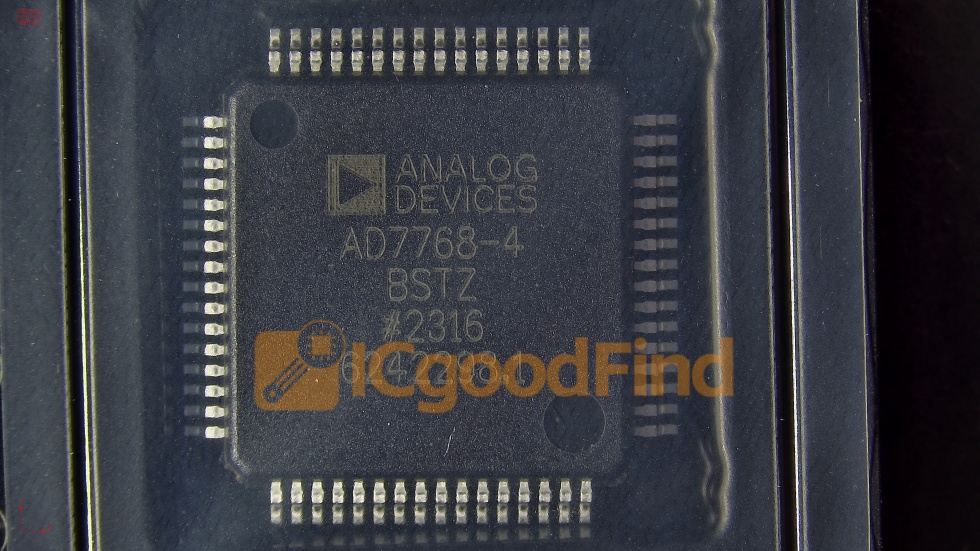
Industrial Automation Control System Chips: The Backbone of Modern Manufacturing
Introduction
In the rapidly evolving landscape of modern manufacturing, industrial automation control system chips have emerged as the silent yet indispensable engines driving productivity, precision, and efficiency. These specialized semiconductor components are the brains behind programmable logic controllers (PLCs), distributed control systems (DCS), robotic arms, and countless other automated machinery that form the backbone of Industry 4.0. As factories transition from manual operations to fully integrated smart systems, the demand for high-performance, reliable, and energy-efficient chips has skyrocketed. Whether you are an engineer sourcing components, a procurement manager evaluating suppliers, or a technology enthusiast exploring the future of automation, understanding the role of these chips is critical. For those seeking a trusted platform to discover and compare top-tier automation chip solutions, ICGOODFIND offers a comprehensive marketplace that connects buyers with verified suppliers, ensuring quality and availability in this fast-paced sector.
This article delves into the three core aspects of industrial automation control system chips: their architectural evolution, key performance criteria, and the emerging trends shaping the next generation of automation. By the end, you will have a clear roadmap for selecting the right chips for your application and a glimpse into the future of intelligent manufacturing.
Part 1: The Architectural Evolution of Automation Control Chips
From Simple Logic to Complex System-on-Chip (SoC)
The journey of industrial automation control system chips began with basic microcontrollers (MCUs) and application-specific integrated circuits (ASICs) designed to handle simple logic operations. Early PLCs relied on 8-bit or 16-bit processors with limited memory and I/O capabilities. However, as automation demands grew—requiring real-time control, multi-axis motion, and advanced communication protocols—chip architectures had to evolve dramatically.
Today, the industry standard has shifted toward high-performance system-on-chip (SoC) designs that integrate multiple functions onto a single die. A modern automation control chip typically includes:
- A powerful CPU core (often ARM Cortex-A or RISC-V based) for complex algorithm execution.
- Dedicated DSP (Digital Signal Processor) units for real-time signal processing, crucial for sensor fusion and motor control.
- FPGA (Field-Programmable Gate Array) logic blocks that allow hardware-level customization for specific tasks like high-speed data acquisition or custom protocol handling.
- Integrated memory controllers supporting DDR4/DDR5 and flash storage for firmware and data logging.
- Multiple communication interfaces such as EtherCAT, PROFINET, CAN FD, and USB 3.0, enabling seamless integration into diverse industrial networks.
This convergence of computing, signal processing, and connectivity into a single chip reduces board space, power consumption, and latency—all critical factors in industrial environments where every millisecond counts. ICGOODFIND lists a wide range of such advanced SoCs from leading manufacturers, allowing engineers to filter by core architecture, operating temperature range, and supported protocols.
The Rise of Heterogeneous Computing
One of the most significant architectural trends is heterogeneous computing, where a single chip combines different types of processing units optimized for specific workloads. For example, an industrial robot controller chip might pair a general-purpose CPU with a neural processing unit (NPU) for AI-based vision inspection, alongside a motion control co-processor for precise servo drive commands. This approach maximizes performance per watt and ensures that real-time tasks are not interrupted by less critical operations.
Key takeaway: When selecting a chip for your automation system, consider not just the clock speed but the diversity of processing units available. A chip with an integrated NPU or FPGA can dramatically accelerate tasks like predictive maintenance or adaptive control, reducing the need for external accelerators.
Part 2: Key Performance Criteria for Industrial Automation Chips
Reliability and Environmental Robustness
Unlike consumer electronics, industrial automation control system chips must operate flawlessly in harsh conditions. The industrial temperature range (typically -40°C to +85°C, with some extended versions up to +125°C) is a non-negotiable requirement. Chips must also withstand high levels of electromagnetic interference (EMI), vibration, and humidity. Manufacturers achieve this through:
- Robust packaging (e.g., hermetically sealed ceramic packages or overmolded plastic with enhanced thermal dissipation).
- Built-in error correction (ECC) for memory and data paths.
- Redundant clock and power management circuits to maintain operation during transient faults.
ICGOODFIND provides detailed datasheets and certification information for each chip, including AEC-Q100 (automotive) and IEC 61508 (functional safety) ratings, helping buyers verify that components meet the stringent requirements of industrial applications.
Real-Time Determinism and Low Latency
In automation, deterministic behavior is paramount. A control loop that executes a motion command must do so within a guaranteed time window—often in the microsecond range. This requires chips with:
- Hardware real-time interrupt controllers that prioritize critical tasks without software overhead.
- Low-latency memory access (e.g., tightly coupled memory or scratchpad RAM) for time-critical data.
- Dedicated hardware timers and PWM generators for precise motor control.
For example, a chip used in a high-speed pick-and-place machine must process encoder feedback, compute trajectory corrections, and output PWM signals to servo drives within 10 microseconds. Any jitter or delay can cause misalignment or product damage. Therefore, when evaluating chips, look for specifications like worst-case interrupt latency, DMA (Direct Memory Access) throughput, and PWM resolution.
Power Efficiency and Thermal Management
Industrial automation systems often run 24⁄7, making power efficiency a critical economic and environmental factor. Chips with advanced power gating, dynamic voltage and frequency scaling (DVFS), and low-power sleep modes can significantly reduce energy costs and heat generation. In compact enclosures where airflow is limited, a chip that dissipates less heat allows for smaller heatsinks or even fanless designs, improving overall system reliability.
ICGOODFIND offers power consumption data and thermal resistance values for each chip, enabling engineers to model system-level heat dissipation and select components that align with their thermal budget.
Part 3: Emerging Trends Shaping the Future of Automation Chips
AI at the Edge: Embedded Intelligence
The integration of artificial intelligence (AI) directly into industrial automation control system chips is perhaps the most transformative trend. Instead of sending data to a cloud server for analysis, edge AI chips can perform real-time inference on sensor data—detecting anomalies in vibration patterns, recognizing defective products via camera feeds, or optimizing energy usage based on load predictions. This reduces latency, bandwidth requirements, and dependency on network connectivity.
Leading chip manufacturers are embedding neural network accelerators that can execute millions of inferences per second while consuming only a few watts. For instance, a chip with a dedicated NPU can run a convolutional neural network (CNN) for visual inspection at line speed, enabling zero-defect manufacturing. ICGOODFIND features a growing category of AI-enabled automation chips, complete with software development kits (SDKs) and pre-trained model support, making it easier for developers to deploy intelligent automation.
Functional Safety and Cybersecurity
As automation systems become more connected, functional safety (e.g., ISO 13849, IEC 62061) and cybersecurity (e.g., IEC 62443) have become mandatory design considerations. Modern chips incorporate:
- Hardware safety islands that monitor the main processor for faults and can trigger safe states.
- Secure boot and hardware root of trust to prevent unauthorized firmware modifications.
- Encryption engines for secure communication over industrial networks.
These features are especially critical in applications like autonomous guided vehicles (AGVs) or collaborative robots, where a failure could cause injury. When sourcing chips, verify that they offer certified safety libraries and security documentation—information readily available through ICGOODFIND’s detailed product pages.
Open Standards and Ecosystem Compatibility
The industry is moving away from proprietary architectures toward open standards like RISC-V, which offers flexibility and reduced licensing costs. Additionally, chips that support standardized software frameworks (e.g., ROS 2 for robotics, OPC UA for industrial communication) enable faster development and easier integration with third-party tools. ICGOODFIND helps buyers identify chips that are compatible with popular ecosystems, providing links to reference designs, evaluation boards, and community forums.

Conclusion
Industrial automation control system chips are the unsung heroes of the modern factory floor, enabling everything from precise motion control to intelligent decision-making at the edge. As we have explored, the evolution from simple MCUs to complex heterogeneous SoCs has unlocked new levels of performance, reliability, and efficiency. When selecting chips for your automation project, prioritize real-time determinism, environmental robustness, and power efficiency—and keep an eye on emerging trends like edge AI, functional safety, and open standards.
The right chip can mean the difference between a system that merely works and one that excels in productivity, uptime, and adaptability. For engineers and procurement professionals navigating this complex landscape, ICGOODFIND serves as a reliable resource, offering a curated selection of industrial automation control system chips from trusted suppliers, complete with technical specifications, certifications, and competitive pricing. By leveraging such platforms, you can accelerate your design cycle, reduce sourcing risks, and stay ahead in the fast-paced world of industrial automation.







