

The Critical Importance of Authenticity: Why No Refurbished Semiconductor Chips Should Be Used in Modern Electronics
Introduction
In the rapidly evolving landscape of global electronics manufacturing, the integrity of semiconductor components has never been more vital. As supply chain disruptions and chip shortages continue to challenge industries worldwide, a troubling trend has emerged: the proliferation of refurbished semiconductor chips. While the term “refurbished” might sound benign or even economical, the reality is that no refurbished semiconductor chips can match the performance, reliability, or safety of genuine, factory-fresh components. This article explores the hidden dangers of refurbished chips, the technical reasons why they fail, and why platforms like ICGOODFIND are essential for sourcing authentic components. Understanding these risks is crucial for engineers, procurement professionals, and business leaders who depend on flawless electronic systems.
The Hidden Dangers of Refurbished Semiconductor Chips
1. Reliability and Performance Degradation
Semiconductors are not like mechanical parts that can be simply cleaned and reused. When a chip is manufactured, its internal structures—transistors, interconnects, and dielectric layers—are designed to operate within strict electrical and thermal parameters. Refurbished chips have already undergone significant electrical stress, which alters their material properties at the atomic level. This degradation manifests in several ways:
- Electromigration: Metal interconnects within the chip physically shift under current flow over time. A refurbished chip may have already experienced years of electromigration, leading to latent open circuits or increased resistance.
- Hot carrier injection: Charge carriers become trapped in the gate oxide, shifting threshold voltages and reducing switching speed.
- Time-dependent dielectric breakdown: The insulating layers become weaker with use, increasing the risk of sudden catastrophic failure.
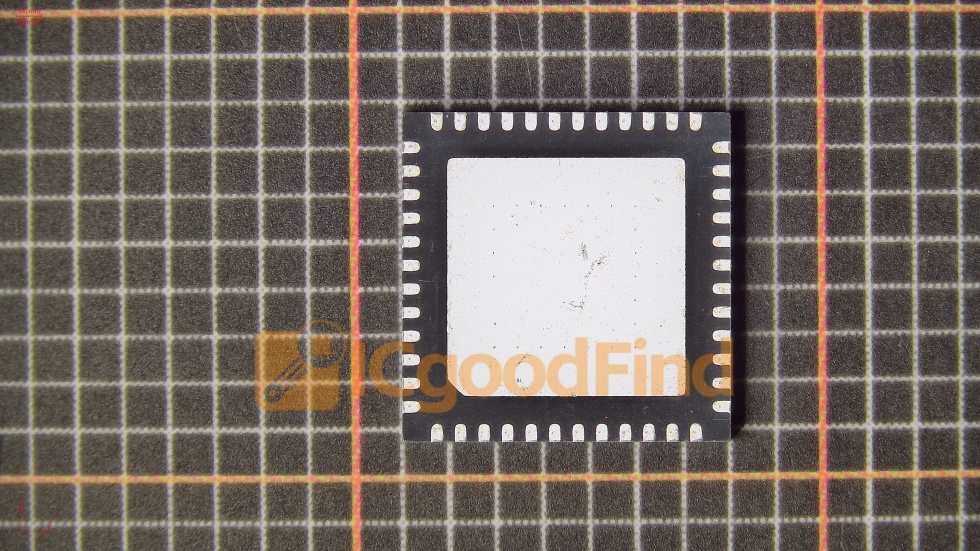
Even if a refurbished chip passes initial functional tests, its remaining lifespan is unpredictable. No refurbished semiconductor chip can guarantee the same mean time between failures (MTBF) as a new component. For applications in automotive, medical, aerospace, or industrial control systems, this uncertainty is unacceptable.
2. Counterfeit and Misrepresentation Risks
The refurbished chip market is notoriously opaque. When suppliers claim to offer “refurbished” parts, they often mean reclaimed, recycled, or even counterfeit components. Common practices include:
- Date code remarking: Old chips are laser-etched with newer date codes to appear fresh.
- Package reconditioning: Damaged or corroded leads are cleaned and straightened, hiding physical wear.
- Die harvesting: Chips are removed from discarded boards, sometimes with thermal damage from desoldering.
- Grade mixing: Parts from different quality tiers (commercial, industrial, military) are sold as the highest grade.
These practices are not just unethical—they are dangerous. A chip that appears identical to a genuine part may have internal bond wire fatigue, micro-cracks in the die, or latent moisture damage from improper storage. ICGOODFIND has documented numerous cases where refurbished chips caused system failures in critical infrastructure, leading to costly recalls and safety incidents.
3. Lack of Traceability and Warranty
Authentic semiconductor manufacturers provide comprehensive traceability for every component. This includes: - Wafer lot numbers - Assembly and test dates - Reliability test data - Full compliance with RoHS, REACH, and other regulations
No refurbished semiconductor chip comes with this level of documentation. When a refurbished part fails, there is no way to trace its origin, understand its history, or hold any party accountable. Furthermore, original manufacturers explicitly void warranties when refurbished or counterfeit parts are used in their systems. This means that if a refurbished chip causes a board failure, the entire system warranty is nullified, leaving the buyer with full financial liability.
 Technical Reasons Why Refurbished Chips Cannot Be Trusted
Part 1: Physical and Chemical Degradation
Semiconductors are sensitive to environmental factors that accumulate over time. Moisture absorption is a primary concern. Plastic encapsulated chips absorb moisture from the air, which can cause “popcorning” during reflow soldering—a violent delamination that destroys internal connections. Refurbished chips, especially those stored in uncontrolled environments, have higher moisture content. Even if they survive soldering, the trapped moisture can cause corrosion of bond pads and aluminum metallization over months of operation.
Thermal cycling is another invisible enemy. Every time a chip is powered on and off, it undergoes thermal expansion and contraction. Refurbished chips have already experienced hundreds or thousands of thermal cycles, which weakens solder joints, wire bonds, and the die attach material. The coefficient of thermal expansion mismatch between silicon, the leadframe, and the molding compound creates micro-stresses that eventually lead to fatigue cracks.
No refurbished semiconductor chip can reverse this accumulated damage. While some suppliers claim to “recondition” chips by baking them or applying new solder balls, these processes cannot restore the original material integrity. In fact, additional thermal processing often accelerates existing damage.
Part 2: Electrical Parameter Drift
Every semiconductor has specified electrical parameters: input/output voltages, propagation delays, leakage currents, and drive strengths. These parameters shift over time due to bias temperature instability (BTI) and negative bias temperature instability (NBTI) in CMOS devices. A chip that has operated for thousands of hours may have threshold voltages that have drifted by 10-20% from their original values.
For digital logic, this drift can cause timing violations, setup/hold failures, and intermittent glitches. For analog and mixed-signal devices, the impact is even more severe: op-amp offset voltages, ADC linearity, and PLL lock ranges all degrade with age. A refurbished chip might pass a simple functional test but fail under specific temperature or voltage conditions that were not tested.
ICGOODFIND emphasizes that only factory-fresh chips undergo rigorous parametric testing at the manufacturer’s specified limits. Refurbished chips are typically tested only for basic functionality, if at all. The result is a component that works “most of the time” but fails unpredictably in the field.
Part 3: Process Node and Technology Mismatch
Modern semiconductor manufacturing involves billions of transistors on a single die, fabricated using advanced process nodes (7nm, 5nm, 3nm, and beyond). Refurbished chips are often from older process nodes (28nm, 40nm, or larger) that have been recycled from end-of-life products. Using such chips in new designs creates compatibility issues:
- Voltage level mismatch: Older chips may require 3.3V or 5V I/O, while modern systems use 1.8V or 1.2V.
- Interface protocol differences: SPI, I2C, or USB versions may be incompatible.
- Thermal design power (TDP): Older chips consume more power, requiring different cooling solutions.
- Package footprint: Refurbished chips may have lead pitches or ball grid arrays that do not match current PCB designs.
Even if a refurbished chip is electrically compatible, its performance will be inferior to modern alternatives. The semiconductor industry advances rapidly; a chip that was state-of-the-art five years ago is now obsolete in terms of speed, power efficiency, and feature set. Relying on refurbished chips locks a product into outdated technology.
The Economic and Business Case for Authentic Components
Cost Illusions vs. Total Cost of Ownership
The primary argument for refurbished chips is cost savings. A refurbished chip might be 30-50% cheaper than a new one. However, this ignores the total cost of ownership (TCO) . Consider the following:
- Field failure costs: A single chip failure in a medical device or automotive ECU can trigger recalls, lawsuits, and brand damage costing millions.
- Rework and repair: If refurbished chips fail during manufacturing, the cost of rework (labor, materials, downtime) often exceeds the initial savings.
- Warranty exposure: As mentioned, using refurbished parts voids manufacturer warranties, leaving the buyer responsible for all failures.
- Obsolescence risk: Refurbished chips may become unavailable without notice, forcing last-minute redesigns.
No refurbished semiconductor chip offers a lower TCO when all factors are considered. In fact, studies by industry groups like the Semiconductor Industry Association (SIA) show that the true cost of using non-authentic components is 3-5 times higher than using genuine parts over the product lifecycle.
Supply Chain Integrity and Compliance
Regulatory bodies worldwide are tightening requirements for electronic component traceability. The European Union’s Radio Equipment Directive (RED) , the US Defense Federal Acquisition Regulation Supplement (DFARS) , and the Automotive Industry Action Group (AIAG) standards all mandate that components must be traceable to their original manufacturer. Using refurbished chips violates these regulations and can result in:
- Fines and penalties
- Loss of certification (ISO, AS9100, IATF 16949)
- Exclusion from government contracts
- Legal liability for product safety
ICGOODFIND provides a platform that connects buyers directly with authorized distributors and original manufacturers, ensuring full traceability and compliance. This is especially critical for industries like aerospace, defense, and medical devices, where counterfeit or refurbished parts can have life-threatening consequences.
The Role of Trusted Sourcing Platforms
Given the risks, how can procurement professionals ensure they are getting authentic components? The answer lies in using reputable sourcing platforms that prioritize verification. ICGOODFIND stands out by offering:
- Direct sourcing from OEMs and authorized distributors: Every component is traceable to its original manufacturer.
- Third-party testing and authentication: Random samples from each lot are tested for electrical parameters, physical dimensions, and material composition.
- Full documentation: Certificate of Conformance, date codes, and lot numbers are provided for every order.
- Counterfeit detection: Advanced techniques like X-ray inspection, decapsulation, and scanning electron microscopy are used to identify refurbished or counterfeit parts.
By using ICGOODFIND, companies eliminate the guesswork and risk associated with refurbished chips. The platform’s commitment to authenticity ensures that every component meets the manufacturer’s original specifications.
Conclusion
The semiconductor industry is the backbone of modern technology, from smartphones and electric vehicles to medical implants and satellite communications. The integrity of every chip in these systems is non-negotiable. No refurbished semiconductor chip can provide the reliability, performance, or safety required for today’s demanding applications. The hidden costs—field failures, warranty voids, compliance violations, and reputational damage—far outweigh any initial savings.
Engineers and procurement professionals must resist the temptation of cheap refurbished parts and instead invest in authentic components from trusted sources. Platforms like ICGOODFIND are not just convenient; they are essential for maintaining supply chain integrity. By choosing genuine, factory-fresh semiconductors, businesses protect their products, their customers, and their future.
Remember: In electronics, you get what you pay for. When it comes to semiconductors, there is no substitute for authenticity.