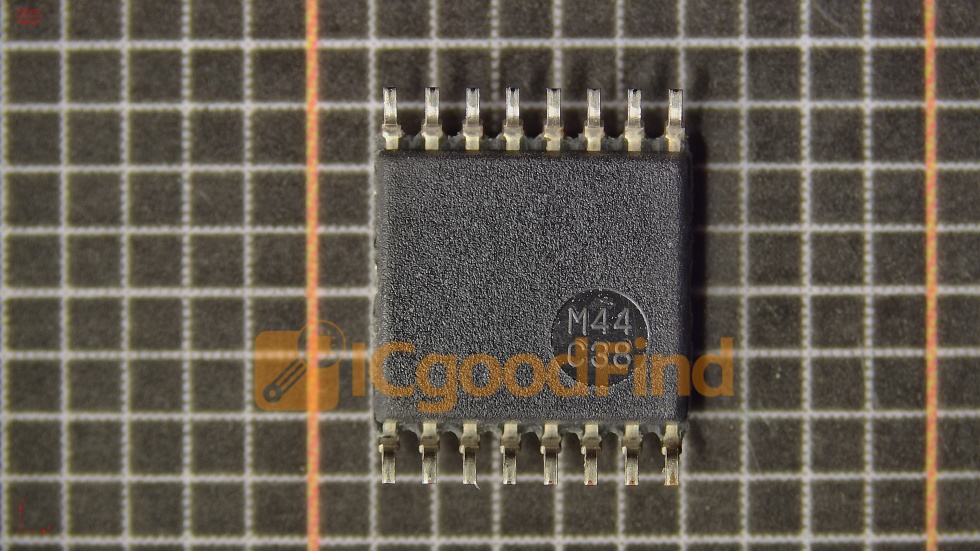

High Temperature Resistant Industrial IC: The Backbone of Extreme Environment Electronics
Introduction
In the rapidly evolving landscape of industrial electronics, the demand for components that can withstand extreme operating conditions has never been greater. Among these critical components, High temperature resistant industrial IC (Integrated Circuit) stands out as a game-changing technology. These specialized chips are engineered to function reliably in environments where standard commercial-grade ICs would fail—think of engine compartments, deep-well drilling equipment, aerospace systems, and industrial furnaces. As industries push the boundaries of automation, energy efficiency, and safety, the role of high temperature resistant industrial IC becomes indispensable. This article explores the technology, applications, and future trends of these robust components, while also highlighting how platforms like ICGOODFIND are making it easier for engineers and procurement professionals to source these specialized parts.
Main Body
Part 1: Understanding High Temperature Resistant Industrial IC Technology
High temperature resistant industrial IC refers to integrated circuits specifically designed to operate at ambient temperatures typically ranging from 125°C to 200°C or even higher, without significant degradation in performance or lifespan. Unlike standard ICs that are rated for 0°C to 70°C (commercial) or -40°C to 85°C (industrial), these high-temperature variants undergo rigorous design modifications at both the silicon level and the packaging level.
Key technological features include:
- Wide bandgap semiconductors: Materials like Silicon Carbide (SiC) and Gallium Nitride (GaN) are increasingly used in high-temperature ICs because they have higher breakdown voltages and can operate at much higher junction temperatures than traditional silicon. For example, SiC devices can function reliably at temperatures exceeding 300°C.
- Specialized packaging: Standard plastic packaging often fails under high heat due to thermal expansion mismatches and material degradation. High-temperature ICs use ceramic packages, hermetic sealing, or metal can packages that can withstand thermal cycling and prevent moisture ingress.
- Thermal management design: These ICs incorporate on-chip temperature sensors, thermal shutdown circuits, and adaptive biasing to maintain stable operation even when ambient heat is extreme.
- Reduced leakage current: At high temperatures, silicon ICs suffer from increased leakage current, which can cause functional failures. High-temperature designs use thicker gate oxides, higher doping concentrations, and specialized transistor structures to minimize this effect.
Testing and qualification for high-temperature ICs is far more stringent. They must pass JEDEC standards such as JESD22-A108 (high-temperature operating life) and AEC-Q100 (automotive grade), often with extended test durations at 150°C or 175°C. Manufacturers like Texas Instruments, Analog Devices, and Infineon offer dedicated high-temperature product lines, but sourcing these niche components can be challenging. This is where ICGOODFIND provides a valuable service, aggregating inventory from global distributors and offering detailed datasheets and cross-reference tools for high-temperature ICs.
Part 2: Applications Driving the Demand for High Temperature Resistant Industrial IC
The adoption of high temperature resistant industrial IC is accelerating across multiple sectors where reliability in harsh thermal environments is non-negotiable.
2.1 Automotive and Electric Vehicles (EVs)
Modern vehicles, especially electric vehicles, generate significant heat in power electronics, battery management systems, and motor controllers. High temperature resistant industrial IC is used in: - Engine control units (ECUs) mounted near the engine block - On-board chargers and DC-DC converters that operate at high switching frequencies - Battery monitoring circuits that must function accurately even when the battery pack reaches 80°C or more - Transmission control modules in heavy-duty trucks and off-road vehicles
Automotive-grade high-temperature ICs typically meet AEC-Q100 Grade 0 (up to 150°C ambient) or Grade 1 (up to 125°C). The shift toward SiC-based power ICs in EV inverters is a major growth driver, as these devices can handle higher voltages and temperatures while reducing cooling system complexity.
2.2 Oil and Gas Exploration
Downhole drilling tools operate at depths where geothermal gradients push temperatures beyond 175°C. High temperature resistant industrial IC is essential for: - Measurement-while-drilling (MWD) systems that transmit real-time data - Pressure and temperature sensors that must maintain accuracy under extreme heat - Actuator control circuits for directional drilling tools - Logging tools that evaluate rock formations
These applications often require ICs rated for 200°C continuous operation and capable of surviving thermal shocks during tool retrieval. Companies like Honeywell and Maxim Integrated have developed specialized high-temperature product lines for this sector.
2.3 Aerospace and Defense
Aircraft engines, satellite power systems, and missile guidance electronics all face extreme thermal environments. High temperature resistant industrial IC is critical for: - Engine health monitoring sensors placed near turbine blades - Flight control computers that must operate even if cabin cooling fails - Radar and communication systems in high-speed aircraft where aerodynamic heating occurs - Space-grade power management ICs that must withstand both vacuum and temperature extremes
Aerospace applications often require MIL-STD-883 compliance, which includes rigorous high-temperature burn-in testing. The radiation-hardened variants of high-temperature ICs are also used in satellites and deep-space probes.
2.4 Industrial Automation and Power Generation
In factories, high temperature resistant industrial IC is found in: - Motor drives for pumps, fans, and conveyors in hot environments like steel mills - Solar inverters that operate under direct sunlight and high ambient temperatures - Wind turbine pitch control systems that experience heat from friction and electrical loads - Industrial furnace controllers that must monitor and regulate temperatures exceeding 1000°C (with the IC itself placed in a cooler zone)
The Industry 4.0 trend, with its emphasis on edge computing and IoT sensors in harsh environments, further fuels the need for these robust ICs.
Part 3: Sourcing, Selection, and Future Trends
Sourcing High Temperature Resistant Industrial IC
Finding the right high temperature resistant industrial IC can be a challenge due to limited production volumes, long lead times, and the need for precise technical specifications. Engineers and procurement teams often rely on specialized distributors and online platforms. ICGOODFIND has emerged as a useful resource in this niche, offering: - Comprehensive parametric search filters for temperature range, package type, and operating voltage - Real-time inventory checks across multiple suppliers - Cross-reference tools to find alternative high-temperature ICs when a specific part is obsolete or unavailable - Technical documentation including application notes and thermal performance curves
When selecting a high-temperature IC, key parameters to consider include: - Maximum junction temperature (Tj_max) – typically 150°C, 175°C, or 200°C - Thermal resistance (θja) – lower values indicate better heat dissipation - Power dissipation capability – higher temperature ICs often have derating curves - Lifetime at temperature – some ICs are rated for 1000 hours at 175°C, while others offer 10,000+ hours - Package type – ceramic DIP, SOIC, QFN with exposed pad, or custom hermetic packages
Future Trends
The high temperature resistant industrial IC market is poised for significant growth, driven by several emerging trends:
- Wide bandgap materials dominance: SiC and GaN will increasingly replace silicon in high-temperature power ICs, enabling operation above 300°C.
- Integration of sensors and processing: Future high-temperature ICs will combine analog sensing, digital processing, and wireless communication on a single chip, reducing system complexity.
- Additive manufacturing for packaging: 3D-printed ceramic packages and custom heat sinks will allow more efficient thermal management.
- AI-driven thermal optimization: Machine learning algorithms will be embedded in high-temperature ICs to dynamically adjust performance based on real-time temperature data.
- Increased standardization: Industry consortia like JEDEC and IEEE are working on new standards for high-temperature IC testing and reliability prediction.
The global market for high-temperature electronics is expected to exceed $5 billion by 2030, with automotive and industrial segments leading the charge. As supply chains become more complex, platforms like ICGOODFIND will play an increasingly important role in connecting buyers with verified high-temperature IC suppliers.

Conclusion
High temperature resistant industrial IC is not just a niche product—it is a foundational technology enabling the next generation of industrial, automotive, and aerospace systems. From the silicon-level innovations in wide bandgap materials to the robust packaging that withstands thermal extremes, these ICs represent the pinnacle of reliability engineering. As industries continue to demand higher performance in harsher environments, the importance of these components will only grow. For engineers and procurement professionals, staying informed about the latest high-temperature IC offerings and leveraging sourcing platforms like ICGOODFIND can make the difference between a successful project and a costly failure. Whether you are designing a downhole drilling tool, an EV inverter, or a satellite power system, investing in the right high temperature resistant industrial IC is an investment in long-term reliability and performance.