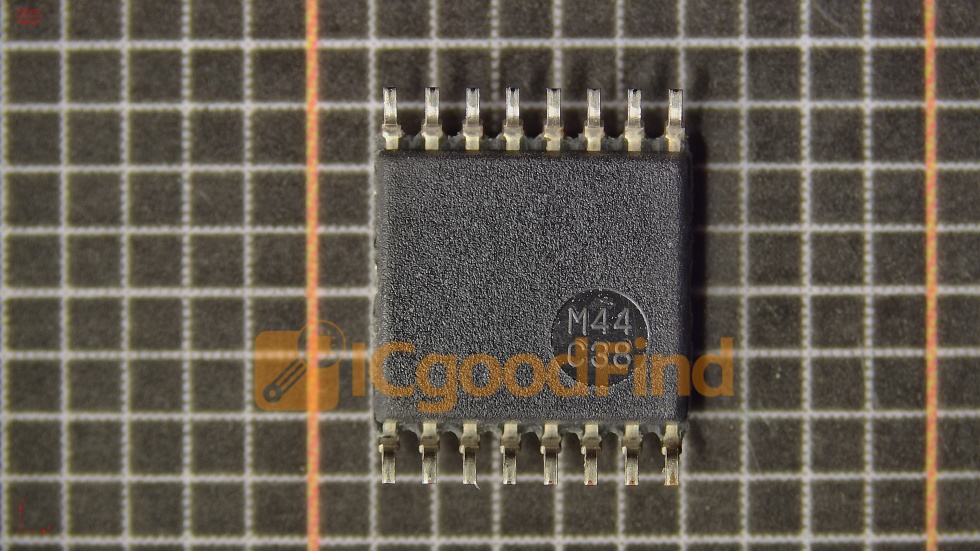

IC Chips for Industrial Automation Equipment: The Backbone of Modern Manufacturing
Introduction
In the rapidly evolving landscape of industrial manufacturing, IC chips for industrial automation equipment have emerged as the critical enablers of efficiency, precision, and intelligence. From programmable logic controllers (PLCs) to robotic arms and sensor networks, integrated circuits (ICs) form the core of every automated system. As industries push toward Industry 4.0 and smart factories, the demand for reliable, high-performance ICs has never been greater. This article explores the essential role of IC chips for industrial automation equipment, their key types, selection criteria, and future trends. For sourcing high-quality components, platforms like ICGOODFIND provide a trusted marketplace for engineers and procurement professionals.
Part 1: Understanding the Role of IC Chips in Industrial Automation
1.1 The Foundation of Automation Systems
Industrial automation relies on a hierarchy of control systems, from sensors at the field level to cloud-based analytics. At every level, IC chips for industrial automation equipment perform specific functions:
- Microcontrollers (MCUs) and Microprocessors (MPUs) act as the brains of PLCs, CNC machines, and robotic controllers. They execute control algorithms, process sensor data, and manage communication protocols.
- Analog and Mixed-Signal ICs (e.g., operational amplifiers, ADCs, DACs) convert real-world signals (temperature, pressure, vibration) into digital data for processing.
- Power Management ICs (PMICs) ensure stable voltage and current supply to sensitive components, critical in harsh industrial environments with fluctuating power.
- Communication ICs (CAN, Ethernet, RS-485, Wi-Fi, Bluetooth) enable seamless data exchange between devices, forming the backbone of industrial IoT (IIoT).
1.2 Why Industrial-Grade ICs Differ from Consumer-Grade
Unlike consumer electronics, IC chips for industrial automation equipment must withstand extreme conditions:
- Temperature Range: Industrial ICs typically operate from -40°C to +125°C (or wider), compared to 0°C–70°C for commercial parts.
- Reliability and Lifespan: Industrial automation systems often run 24⁄7 for years. ICs must have low failure rates (e.g., <10 FIT) and support extended lifecycles (10–15 years).
- Electromagnetic Compatibility (EMC): Industrial environments are noisy. ICs must resist electromagnetic interference (EMI) and emit minimal noise.
- Shock and Vibration Resistance: For applications in heavy machinery or automotive manufacturing, ICs are often encapsulated in rugged packages.
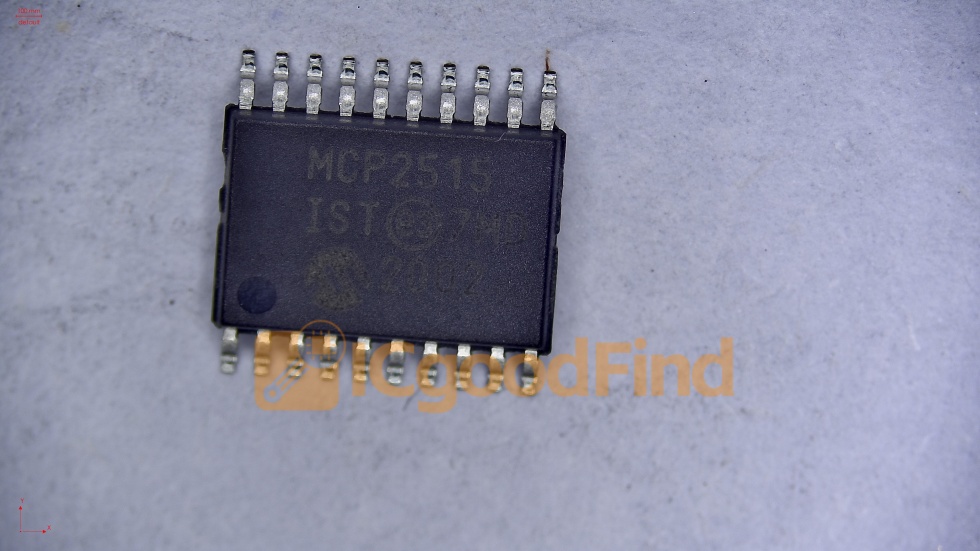
ICGOODFIND specializes in sourcing industrial-grade ICs that meet these stringent requirements, offering verified components from leading manufacturers like Texas Instruments, STMicroelectronics, NXP, and Analog Devices.
Part 2: Key Types of IC Chips for Industrial Automation Equipment
2.1 Microcontrollers (MCUs) and Microprocessors (MPUs)
MCUs are the most common IC chips for industrial automation equipment, integrating CPU, memory, and peripherals on a single chip. Popular families include:
- ARM Cortex-M series (e.g., STM32, NXP LPC) – ideal for real-time control in PLCs and motor drives.
- Renesas RL78 and RX – known for low power and high reliability in factory automation.
- Texas Instruments Tiva C and Hercules – safety-critical MCUs with dual-core lockstep for functional safety (SIL 3⁄4).
For higher computational needs, MPUs like NXP i.MX or TI Sitara run Linux or RTOS for vision systems and HMI interfaces.
2.2 Programmable Logic Devices (FPGAs and CPLDs)
Field-Programmable Gate Arrays (FPGAs) offer unparalleled flexibility for custom logic, high-speed data processing, and parallel computing. They are used in:
- Real-time image processing for quality inspection cameras.
- High-speed motor control with custom PWM algorithms.
- Protocol bridging between legacy and modern industrial networks.
Leading FPGAs from Xilinx (now AMD) and Intel (Altera) are widely available through ICGOODFIND, which stocks both active and end-of-life (EOL) parts for long-term support.
2.3 Analog and Mixed-Signal ICs
Precision analog ICs are vital for accurate measurement and control:
- Operational Amplifiers (Op-Amps) – e.g., TI OPAx series for sensor signal conditioning.
- Analog-to-Digital Converters (ADCs) – high-resolution (16–24 bit) delta-sigma ADCs for temperature and pressure sensors.
- Digital-to-Analog Converters (DACs) – for generating control voltages in servo drives.
- Isolation ICs – digital isolators (e.g., Silicon Labs Si86xx) and isolated ADCs for safety in high-voltage environments.
2.4 Power Management ICs (PMICs)
Industrial automation equipment often requires multiple voltage rails (3.3V, 5V, 12V, 24V). PMICs include:
- DC/DC Converters – wide input voltage range (e.g., 4.5V–60V) for industrial power supplies.
- LDO Regulators – low-noise for analog circuits.
- Battery Management ICs – for backup power in UPS systems.
ICGOODFIND offers a comprehensive catalog of PMICs from Maxim Integrated, Linear Technology (Analog Devices), and Infineon, ensuring reliable power delivery.
2.5 Communication and Interface ICs
Modern automation relies on robust networking:
- CAN Transceivers (e.g., TI SN65HVD230) for vehicle and factory bus systems.
- Ethernet PHYs (e.g., Microchip LAN8720) for industrial Ethernet (Profinet, EtherCAT).
- RS-485/RS-422 Transceivers for long-distance serial communication.
- Wireless ICs (Wi-Fi, BLE, LoRa) for IIoT sensors.
Part 3: Selecting and Sourcing IC Chips for Industrial Automation
3.1 Key Selection Criteria
When choosing IC chips for industrial automation equipment, engineers must evaluate:
- Operating Temperature Range: Ensure the IC meets the ambient temperature of the application (e.g., -40°C to +105°C for outdoor equipment).
- Supply Voltage and Power Consumption: Match the system’s power architecture. Low-power MCUs are preferred for battery-backed devices.
- Package Type: Surface-mount (QFN, BGA) for compact designs; through-hole (DIP) for prototyping or high-reliability connections.
- Functional Safety Compliance: For safety-critical systems (e.g., robotic arms, medical devices), ICs must support IEC 61508 or ISO 13849.
- Longevity and Availability: Industrial projects often have 10+ year lifecycles. Avoid ICs nearing end-of-life (EOL) unless you secure last-time buys.
3.2 The Challenge of Component Shortages
The global semiconductor shortage (2020–2023) highlighted the vulnerability of industrial supply chains. Many automation projects faced delays due to unavailable IC chips for industrial automation equipment. This is where ICGOODFIND adds immense value:
- Real-time inventory: Search across multiple distributors and suppliers.
- Cross-reference tools: Find alternative ICs with similar specifications.
- EOL and obsolete parts: Source hard-to-find components for legacy systems.
- Price transparency: Compare quotes from verified sellers.
3.3 Best Practices for Procurement
- Design for Availability: Choose ICs with multiple second-source options (e.g., STM32 vs. NXP LPC).
- Maintain Buffer Stock: Keep 6–12 months of critical ICs in inventory.
- Use Authorized Distributors: Avoid counterfeit parts by sourcing from ICGOODFIND or its partner distributors.
- Leverage Obsolescence Management: Plan for EOL notifications and last-time buys.

Conclusion
IC chips for industrial automation equipment are the unsung heroes of modern manufacturing, enabling everything from simple relay control to complex AI-driven robotics. As Industry 4.0 accelerates, the demand for rugged, high-performance ICs will only grow. Engineers must carefully select components based on temperature, reliability, and safety requirements, while procurement teams need reliable sourcing partners to navigate supply chain volatility.
Platforms like ICGOODFIND bridge the gap between design and production, offering a vast inventory of industrial-grade ICs, cross-referencing tools, and expert support. Whether you are building a new PLC, upgrading a CNC machine, or deploying IIoT sensors, ICGOODFIND ensures you have the right IC chips for industrial automation equipment—delivered on time and at competitive prices.
By staying informed about the latest IC technologies and sourcing strategies, manufacturers can achieve higher efficiency, lower downtime, and a faster path to smart factory transformation.