


High Temperature Industrial IC: The Backbone of Modern Extreme Environment Electronics
Introduction
In the rapidly evolving landscape of industrial electronics, high temperature industrial IC (integrated circuit) technology has emerged as a critical enabler for applications that demand reliable performance under extreme thermal conditions. From deep-well oil drilling to aerospace propulsion systems, from automotive engine compartments to steel manufacturing furnaces, the ability of electronic components to withstand ambient temperatures exceeding 125°C, and in some cases reaching 300°C, is no longer a luxury but a necessity. Traditional commercial-grade ICs typically fail above 85°C, making them unsuitable for harsh industrial environments. This article delves into the fundamentals, applications, and future trends of high temperature industrial ICs, while also highlighting how platforms like ICGOODFIND are simplifying the sourcing of these specialized components for engineers and procurement professionals worldwide.
Part 1: Understanding High Temperature Industrial IC Technology
1.1 What Defines a High Temperature Industrial IC?
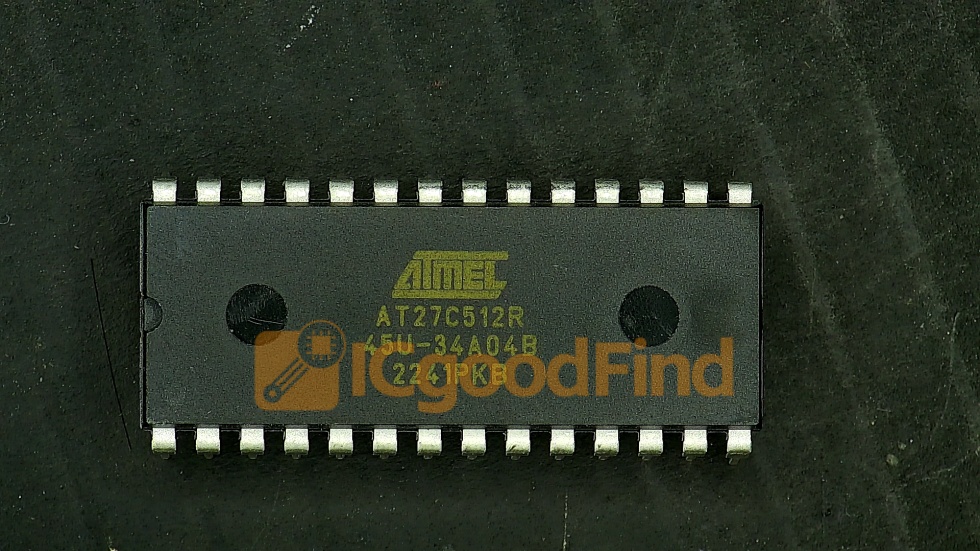
A high temperature industrial IC is a semiconductor device specifically designed, packaged, and tested to operate reliably at junction temperatures significantly higher than standard commercial or even automotive-grade components. While there is no universal standard, the industry generally classifies high-temperature ICs into three tiers:
- Extended commercial range (85°C to 125°C): Suitable for some industrial automation and telecom equipment.
- Automotive-grade (125°C to 150°C): Common in engine control units and transmission systems.
- True high-temperature industrial (150°C to 300°C): Required for downhole drilling, jet engine monitoring, and nuclear power plant instrumentation.
The key differentiator is not just the silicon die itself but the entire ecosystem—including packaging materials, interconnect technologies, and thermal management strategies. For instance, standard plastic packaging can delaminate or outgas at high temperatures, while ceramic hermetic packages (such as CQFP, CGA, or metal can packages) are preferred for extreme environments.
1.2 Design Challenges and Solutions
Designing a high temperature industrial IC involves overcoming several fundamental physical limitations:
- Leakage current: At elevated temperatures, the intrinsic carrier concentration in silicon increases exponentially, leading to higher leakage currents. Designers mitigate this through silicon-on-insulator (SOI) technology, which reduces junction capacitance and leakage by isolating transistors with a buried oxide layer.
- Electromigration: Metal interconnects can fail under high current density and temperature. Copper metallization and thicker metal layers are used to improve reliability.
- Thermal cycling: Repeated heating and cooling can cause mechanical stress and solder joint fatigue. Flip-chip bonding and high-temperature solder alloys (e.g., gold-tin or lead-tin) are common solutions.
Companies like Texas Instruments, Analog Devices, and Renesas have dedicated high-temperature product lines, but sourcing these components can be challenging due to limited distribution. This is where ICGOODFIND plays a vital role—aggregating inventory from global suppliers and providing verified datasheets for high-temperature ICs that meet MIL-STD-883 or JEDEC standards.
1.3 Key Performance Parameters
When evaluating a high temperature industrial IC, engineers should focus on:
- Junction temperature range (Tj): The maximum temperature the silicon can withstand without permanent damage.
- Thermal resistance (θja): How efficiently the package dissipates heat.
- Operating life at high temperature: Typically specified in hours (e.g., 10,000 hours at 200°C).
- Drift in key parameters: Such as offset voltage in op-amps or clock jitter in oscillators over temperature.
For example, a high-temperature operational amplifier might guarantee less than 5µV/°C offset drift, while a high-temperature voltage reference must maintain stability within 50ppm/°C. These specifications are critical for precision measurement in oil well logging or turbine control.
Part 2: Applications Driving the Demand for High Temperature Industrial ICs
2.1 Oil and Gas Exploration (Downhole Electronics)
The oil and gas industry is one of the largest consumers of high temperature industrial ICs. Downhole tools used in logging-while-drilling (LWD) and measurement-while-drilling (MWD) must operate at ambient temperatures from 150°C to 300°C, with pressures exceeding 20,000 psi. These tools contain:
- High-temperature microcontrollers for data acquisition and telemetry.
- High-temperature ADCs for converting sensor signals (pressure, temperature, gamma ray) into digital data.
- High-temperature power management ICs to regulate voltage from battery or turbine generators.
Without reliable high-temperature ICs, drilling operations would face frequent tool failures, leading to costly downtime and even well abandonment. ICGOODFIND lists specialized components from suppliers like Honeywell, GE, and custom foundries that meet API 17F standards for subsea and downhole equipment.
2.2 Aerospace and Defense
Aircraft engines, rocket propulsion systems, and hypersonic vehicles generate extreme heat. High temperature industrial ICs are used in:
- Engine health monitoring: Sensors and signal conditioning ICs near the combustion chamber.
- Flight control actuators: Motor drivers and position sensors in high-temperature zones.
- Radar and communication systems: High-power RF amplifiers that generate significant self-heating.
The aerospace sector demands radiation-hardened high-temperature ICs for space applications, where both temperature extremes and cosmic radiation pose challenges. Components must pass MIL-PRF-38534 qualification. Platforms like ICGOODFIND help procurement teams find authorized distributors for these niche parts, reducing the risk of counterfeit components.
2.3 Automotive and Electric Vehicles (EVs)
Modern vehicles contain dozens of electronic control units (ECUs), many located near the engine, transmission, or exhaust system. With the rise of electric vehicles, high-temperature ICs are also needed in:
- Battery management systems (BMS): Monitoring cell temperatures that can exceed 100°C during fast charging.
- Traction inverters: Power modules with IGBTs or SiC MOSFETs operating at junction temperatures above 175°C.
- On-board chargers and DC-DC converters: Requiring high-temperature capacitors and gate drivers.
Automotive-grade ICs are typically rated to 150°C ambient, but some under-hood applications (e.g., turbocharger actuators) require 175°C or higher. ICGOODFIND provides a searchable database of AEC-Q100 qualified high-temperature ICs, helping automotive engineers find alternatives when primary suppliers face shortages.

2.4 Industrial Automation and Heavy Machinery
Steel mills, glass manufacturing, and cement plants operate in environments where ambient temperatures can exceed 200°C near furnaces or molten material. High temperature industrial ICs are used in:
- Temperature and pressure transmitters for process control.
- Motor drives and servo controllers in high-heat zones.
- Safety systems such as flame detectors and gas sensors.
These applications often require extended temperature range (e.g., -55°C to +225°C) to handle both cold starts and extreme heat. ICGOODFIND offers filtering by temperature range, package type, and supply voltage, making it easier to identify suitable parts from manufacturers like Maxim Integrated, Linear Technology (now ADI), and Microchip.
Part 3: Sourcing and Future Trends in High Temperature Industrial ICs
3.1 Challenges in Sourcing High Temperature ICs
Unlike standard commercial ICs, high temperature industrial ICs are often produced in smaller volumes and have longer lead times. Common sourcing challenges include:
- Limited manufacturer options: Only a handful of semiconductor companies (e.g., Texas Instruments, Analog Devices, Renesas, and Honeywell) offer true high-temperature product lines.
- Obsolescence risk: Many high-temperature ICs are designed for specific defense or oil & gas programs and may be discontinued without notice.
- Counterfeit risk: The high price and limited availability of these components make them attractive targets for counterfeiters.
ICGOODFIND addresses these challenges by providing a verified supplier network, real-time inventory updates, and cross-reference tools. Engineers can search by part number, temperature range, or application, and access datasheets directly from manufacturers. The platform also offers obsolescence alerts and alternative part recommendations, which are invaluable for long-life industrial projects.
3.2 Emerging Technologies and Materials
The future of high temperature industrial ICs is being shaped by several technological advancements:
- Wide bandgap semiconductors: Silicon carbide (SiC) and gallium nitride (GaN) can operate at junction temperatures above 300°C with lower switching losses. SiC MOSFETs and diodes are already replacing silicon IGBTs in high-temperature power converters.
- Silicon-on-insulator (SOI) CMOS: Advanced SOI processes (e.g., 0.18µm SOI) enable digital and analog circuits to operate up to 225°C with reduced leakage.
- 3D packaging and thermal management: Integration of microfluidic cooling channels or diamond heat spreaders within the package allows higher power density at elevated temperatures.
- MEMS sensors: High-temperature MEMS accelerometers and pressure sensors are being developed for downhole and aerospace applications, with integrated signal conditioning ICs.
ICGOODFIND tracks these emerging technologies and lists early-stage products from startups and research institutions, giving engineers a glimpse into next-generation solutions.
3.3 The Role of Simulation and Testing
Designing with high temperature industrial ICs requires rigorous simulation and testing. Engineers must model:
- Thermal profiles using finite element analysis (FEA) to predict hot spots.
- Electrical performance over temperature using SPICE models provided by manufacturers.
- Reliability through accelerated life testing (ALT) at temperatures above the rated maximum.
Many high-temperature ICs are tested to 1000 hours at 200°C before release. ICGOODFIND provides access to application notes and design guides from manufacturers, helping engineers avoid common pitfalls such as inadequate derating or improper PCB layout for high-temperature operation.
Conclusion
High temperature industrial ICs are indispensable for applications that push the boundaries of conventional electronics. From the depths of oil wells to the heat of jet engines, these specialized components ensure reliable operation, safety, and efficiency in environments where standard ICs would fail within minutes. The technology continues to evolve, driven by wide bandgap materials, advanced packaging, and SOI processes, expanding the possibilities for extreme environment electronics.
For engineers and procurement professionals, sourcing these critical components can be a daunting task due to limited availability, long lead times, and counterfeit risks. ICGOODFIND simplifies this process by offering a centralized platform with verified suppliers, real-time inventory, and comprehensive technical resources. Whether you need a high-temperature op-amp for downhole logging or a SiC MOSFET for a traction inverter, ICGOODFIND helps you find the right part quickly and confidently.
As industries push further into extreme environments—deeper wells, hotter engines, and more demanding automation—the role of high temperature industrial ICs will only grow. Staying informed about the latest products, technologies, and sourcing strategies is essential for success. ICGOODFIND is your partner in navigating this complex landscape, ensuring that your next high-temperature design is built on a foundation of reliability and performance.









