


Why is SRAM More Expensive Than DRAM? A Deep Dive into Memory Costs
Introduction
In the intricate world of computer hardware, memory plays a pivotal role in determining system performance and efficiency. Among the various types of memory, Static Random-Access Memory (SRAM) and Dynamic Random-Access Memory (DRAM) are two fundamental technologies, each serving distinct purposes. A common and significant point of comparison is their cost. It is a well-established fact in the industry that SRAM is substantially more expensive than DRAM on a per-bit basis. This price disparity isn’t arbitrary; it is rooted deeply in the fundamental differences in their design, manufacturing complexity, performance characteristics, and use cases. Understanding this cost difference is crucial for engineers, system architects, and technology enthusiasts to make informed decisions about system design and optimization. For professionals seeking to navigate these complex component choices, platforms like ICGOODFIND provide invaluable resources for comparing specifications, suppliers, and market availability of such critical semiconductors.
The Core Architectural Divide: Complexity vs. Simplicity
The primary driver of the cost difference between SRAM and DRAM lies in their underlying architectural design. This foundational divergence dictates everything from transistor count to power consumption.
SRAM: The Complex, High-Performance Cell An SRAM cell is built using six transistors (6T design is most common) to store a single bit of data. This configuration typically consists of four transistors forming two cross-coupled inverters that latch the state (0 or 1), and two additional access transistors that control read and write operations to the cell. This complex structure has major implications: * High Transistor Count: Storing one bit requires at least six transistors. This directly translates to a larger silicon footprint. More silicon area per bit means fewer bits can be produced on a single wafer, increasing the per-bit cost. * No Refresh Needed: The cross-coupled inverter design is stable. As long as power is supplied, the data remains intact without any external intervention. This eliminates the need for refresh circuitry within the memory array itself, simplifying the memory controller’s job but pushing complexity into the cell. * Speed & Performance: The 6T design allows for extremely fast access times and lower latency because data is instantly available from the latching mechanism.
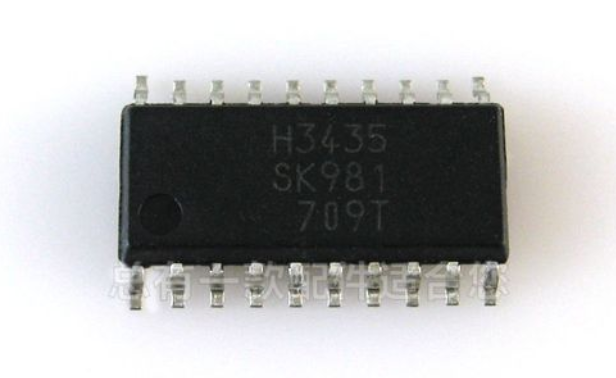
DRAM: The Minimalist, High-Density Cell In stark contrast, a DRAM cell uses only one transistor paired with one capacitor (1T1C design) to store a bit. * Minimal Transistor Count: This extreme minimalism is DRAM’s greatest strength for cost and density. The cell is tiny, allowing for millions or billions of bits to be packed onto a single chip. * The Capacitor’s Role & Weakness: The bit state is stored as an electrical charge in the capacitor. This charge leaks over time (typically within milliseconds). * The Need for Refresh: To prevent data loss, every row in a DRAM chip must be read and rewritten (refreshed) hundreds of times per second. This requires sophisticated on-die refresh circuitry and complicates the memory controller’s timing. While this adds systemic complexity, it enables the ultra-simple, dense cell design.
Cost Impact: The silicon real estate is the single largest factor in semiconductor manufacturing cost. SRAM’s six-transistor cell consumes significantly more area than DRAM’s one-transistor-one-capacitor cell, resulting in far lower bit density per wafer. Therefore, from a pure component count and density perspective, DRAM is inherently cheaper to produce per megabyte.
Manufacturing Challenges and Yield Considerations
The architectural differences cascade directly into the manufacturing process, where yield and process complexity further widen the cost gap.
SRAM Manufacturing Intricacies * Process Node Sensitivity: SRAM performance is critically tied to transistor switching speed. Consequently, SRAM is often manufactured on the latest, most advanced (and most expensive) semiconductor process nodes (e.g., 5nm, 3nm) to maximize its speed benefit for CPU caches. * Yield Challenges on Advanced Nodes: On these cutting-edge nodes, manufacturing defects are more common. A large SRAM array (like an L3 cache measuring tens of megabytes) has millions of complex 6T cells. A single defect in any part of this large area can render the entire CPU core or cache segment defective, impacting yield and raising costs. * Stability vs. Leakage: As transistors shrink, managing power leakage in the always-powered SRAM cell becomes a major design and manufacturing challenge, adding to development costs.
DRAM Manufacturing: A Specialized Path * Dedicated, Optimized Processes: DRAM fabrication has evolved down a separate path from standard logic (CPU/GPU) processes. DRAM fabs are optimized specifically for creating highly reliable, dense arrays of capacitors—a structure not needed in logic chips. * 3D Stacking Innovation: To continue increasing density cost-effectively, DRAM manufacturers like Micron, Samsung, and SK Hynix have pioneered 3D stacking technologies (e.g., through-silicon vias). Instead of just shrinking laterally, they build capacitors vertically. This allows for continued density gains without relying solely on the most expensive lithography steps used for logic transistors. * Commoditization & Scale: DRAM is a standardized commodity product produced in colossal volumes (gigabytes per module). This enormous scale allows for efficiencies and cost amortization that are impossible for SRAM, which is typically custom-integrated into larger logic dies.
Cost Impact: Manufacturing SRAM on leading-edge logic processes for performance, coupled with its lower density and yield challenges on those nodes, makes its production exponentially more costly per bit than producing DRAM on its mature, optimized, and highly scaled specialized processes.
Application Divergence: Performance Niche vs. Universal Mainstream
The final cost factor is driven by economics of scale and application-specific value, which justifies the different price points.
SRAM: The Premium Performance Enabler SRAM’s role is highly specialized: * Primary Use: CPU Cache Memory. Its blistering speed and low latency are indispensable for feeding data to high-performance processor cores. It acts as a critical buffer between the ultra-fast CPU registers and the slower main memory (DRAM). * Small Quantities, High Value: A modern CPU might only have a few tens of megabytes of SRAM cache (e.g., 32MB L3), but this small amount is crucial for performance. System designers pay a premium for this speed because it dramatically improves overall CPU throughput. * Integrated Design: SRAM is almost always embedded directly into the processor or SoC die. It is not sold as a standalone commodity chip to consumers but as an integral part of a high-margin product (CPU, GPU, AI accelerator). Its cost is absorbed into the price of that premium component.
DRAM: The High-Capacity Workhorse DRAM’s role is universal: * Primary Use: Main System Memory (RAM). It provides the expansive working memory space required by operating systems and applications. * Massive Volumes & Standardization: Systems require gigabytes of RAM. This creates a vast, competitive market for standardized DDR modules. The immense production volume drives down prices through fierce competition and manufacturing optimization. * Separate Commodity: DRAM is manufactured in dedicated fabs and sold as discrete modules or chips to system integrators and end-users. It follows classic commodity economics with cyclical supply, demand, and pricing.
Cost Impact: SRAM is a low-volume, high-value specialty component essential for peak performance in premium chips. Its cost is justified by the performance gain it enables for the final product. DRAM is a high-volume, cost-sensitive commodity where competitive pricing is paramount, driving relentless focus on lowering cost per gigabyte through density improvements and manufacturing scale.
Conclusion
The statement “SRAM is more expensive than DRAM” encapsulates a fundamental truth in semiconductor economics stemming from intrinsic technological trade-offs. SRAM’s superior speed and static operation come at the direct cost of architectural complexity (6T vs. 1T1C), leading to lower density and higher silicon area per bit. This complexity is compounded by manufacturing on expensive leading-edge logic processes where yields are challenging. Its role as a small but critical performance accelerator in high-end processors justifies its premium cost within that context. Conversely, DRAM’s ingenious simplicity allows for breathtaking density achieved through specialized, scaled manufacturing processes. Its absolute necessity in large quantities for every computing system has fostered a hyper-competitive commodity market focused relentlessly on cost reduction.
Ultimately, they are not competitors but partners in a memory hierarchy designed to balance blistering speed with massive capacity at a viable system cost. For engineers sourcing these components or designing them into systems, understanding this balance is key. Resources like ICGOODFIND can be instrumental in this process by offering detailed insights into IC specifications and supply chains, helping professionals make optimal decisions based on these critical performance-cost trade-offs.