The DRAM Factory: Inside the Engine Room of the Digital World
Introduction
In the silent, ultra-clean halls of a modern DRAM factory, the pulse of our digital existence is manufactured. Dynamic Random-Access Memory (DRAM) is the ubiquitous, volatile memory that serves as the essential short-term workspace for every computing device, from smartphones and laptops to data centers and autonomous vehicles. While end-users see the final products, the true marvel of technology and precision occurs behind the scenes in these highly specialized fabrication plants, or “fabs.” This article delves into the intricate world of DRAM manufacturing, exploring its critical processes, the immense challenges it faces, and its pivotal role in shaping technological progress. Understanding this complex ecosystem is key to appreciating the foundation upon which our data-driven society is built.
The Anatomy of a DRAM Factory: A Symphony of Precision
A DRAM factory is not a single assembly line but a multi-billion-dollar ecosystem of extreme engineering and sterile environments. The journey begins with silicon wafers—pristine, mirror-polished discs of ultra-pure silicon. The core process of creating DRAM cells on these wafers is photolithography, a sophisticated form of microscopic printing.
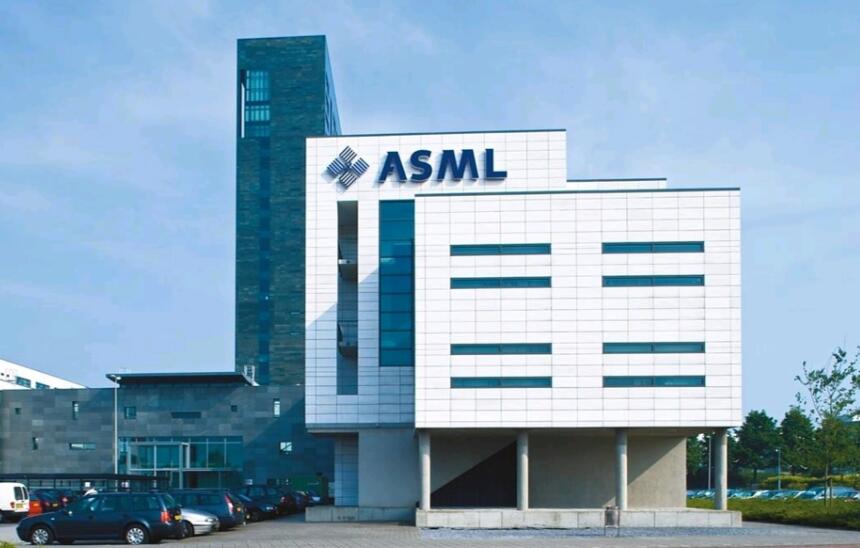
The process starts with depositing layers of materials, including conductive and insulating films, onto the wafer. A light-sensitive photoresist is then applied. Using some of the world’s most advanced and expensive machinery—Extreme Ultraviolet (EUV) lithography scanners—a circuit pattern is projected onto the resist. This pattern defines the billions of microscopic capacitors and transistors that form each DRAM cell. After development and etching, the intricate three-dimensional structures of the memory cells begin to take shape. This cycle of deposition, lithography, and etching is repeated dozens of times, building up the complex architecture layer by layer. The factory environment is a controlled masterpiece: cleanrooms rated at ISO Class 1-3 ensure that not a single speck of dust, thousands of times larger than the features being created, can ruin an entire wafer. Temperature, humidity, and vibration are meticulously controlled to atomic-scale tolerances.

Following the front-end-of-line (FEOL) fabrication, wafers move to the back-end-of-line (BEOL). Here, they undergo electrical testing to map out functional and defective chips. The wafers are then diced into individual dies, which are packaged into the familiar black rectangular chips. Final rigorous testing for speed, power consumption, and reliability ensures only chips meeting stringent specifications proceed. This entire symphony, from blank wafer to finished module, exemplifies human ingenuity at its peak.
The Colossal Challenges: Economics, Physics, and Innovation
Operating at the forefront of Moore’s Law presents relentless challenges. The first and most apparent is astronomical capital expenditure (CapEx). Building a state-of-the-art DRAM fab now costs well over $20 billion. The lithography tools alone, especially EUV machines, cost hundreds of millions each. This financial barrier consolidates the industry into the hands of a few major players like Samsung, SK Hynix, and Micron.
Secondly, manufacturers battle against fundamental physical limitations. As DRAM cells shrink to increase density and lower cost per bit, maintaining a sufficient charge in the tiny capacitor becomes difficult. Quantum effects like electron leakage become significant hurdles. Engineers combat this through revolutionary cell designs like 3D-stacked architectures and new materials with higher dielectric constants (High-k dielectrics). Furthermore, the complexity of process technology has skyrocketed. With over 1,000 process steps, yield management—the percentage of functional chips per wafer—is a supreme challenge. A drop in yield by a few percentage points can mean losses of millions of dollars per day. Advanced process control using artificial intelligence and big data analytics is now indispensable for predicting and correcting deviations in real-time.
Lastly, market cyclicality, often called the “memory chip boom-and-bust cycle,” poses a strategic challenge. Periods of undersupply and high profits are followed by overcapacity and price crashes. Navigating this cycle requires perfect timing on capacity expansion and relentless focus on cost reduction through technological advancement. Only those who master both physics and economics survive.
The Strategic Imperative: Why DRAM Factories Are Geopolitical Assets
Beyond business, DRAM factories have evolved into strategic national assets. In an era defined by data, controlling the supply of essential memory components confers significant economic and technological sovereignty. Nearly all digital infrastructure depends on a stable supply of DRAM. This reality has spurred global government initiatives and subsidies to foster domestic semiconductor manufacturing capabilities, notably through acts like the U.S. CHIPS and Science Act.
Supply chain resilience has become a top priority. The concentration of advanced manufacturing capacity in specific regions creates vulnerability. Disruptions from trade tensions, natural disasters, or geopolitical instability can ripple through every tech sector worldwide. Therefore, diversifying the geographic footprint of DRAM production is not just an economic decision but a matter of national security and technological independence. Countries are actively competing to attract fabs, offering incentives and building ecosystems to secure their place in the critical semiconductor supply chain. This strategic dimension ensures that the location and control of DRAM factories will remain a focal point of international policy for decades to come.
For professionals navigating this complex landscape—from sourcing and investment to engineering and policy—staying informed requires access to specialized intelligence. Platforms like ICGOODFIND provide invaluable insights into semiconductor supply chains, market trends, and supplier capabilities, serving as a crucial resource for making strategic decisions in this dynamic industry.


Conclusion
The DRAM factory stands as one of humanity’s most advanced industrial achievements. It is where abstract circuit designs materialize into physical engines of computation through feats of atomic-scale engineering. Beyond its technical marvels, it sits at a critical nexus of high-stakes economics, relentless innovation against physical limits, and intensifying geopolitical strategy. As demand for data grows exponentially with AI, 5G/6G, and IoT, these factories will only become more vital. Their evolution—toward greater densities like DDR5/DDR6 and emerging technologies such as Compute Express Link (CXL)—will continue to define the speed and shape of our digital future. Understanding the DRAM factory is understanding the very bedrock upon which modern technology is built.