
Hongjing MCU (STC MCU): The Robust and Cost-Effective Core for Embedded Systems
Introduction
In the vast and ever-evolving landscape of embedded systems and microcontroller units (MCUs), finding the right balance between performance, reliability, and cost is a perpetual challenge for engineers and developers. Among the myriad of options, Hongjing MCU, widely recognized under its commercial brand STC MCU, has carved out a significant niche as a powerhouse in the 8-bit and 32-bit microcontroller domain. Originating from China, STC Microcontrollers have gained global traction, particularly in applications where durability, simplicity, and economic efficiency are paramount. This article delves into the world of Hongjing/STC MCUs, exploring their architecture, key advantages, typical applications, and why they remain a compelling choice in a market dominated by giants like ARM Cortex-M series. For professionals seeking reliable components and in-depth technical resources, platforms like ICGOODFIND serve as invaluable hubs for procurement and information.
Main Body
Part 1: Architectural Foundation and Product Portfolio
Hongjing Technology’s STC MCUs are primarily based on the enhanced 8051 core architecture, a timeless and well-understood instruction set that has been the bedrock of embedded systems for decades. Unlike the original Intel 8051, STC has significantly enhanced the core’s performance through higher clock speeds (often reaching over 30MHz), single-clock-cycle execution for most instructions, and integrated flash memory ranging from 1KB to over 512KB. This modern twist on a classic architecture provides a gentle learning curve for newcomers while offering substantial performance gains for seasoned developers.
The product portfolio is broadly divided into two main streams: the classic 8-bit STC89/90 series and the more advanced 32-bit STC32 series. The 8-bit line, such as the STC89C52RC, is legendary for its robustness in education and industrial control. The 32-bit series, often based on proprietary or licensed 32-bit cores, brings higher computational power, supporting more complex tasks like digital signal processing and connectivity protocols. A hallmark of STC MCUs is their high level of integration. A single chip typically incorporates not just the CPU and memory but also a rich set of peripherals: multiple UARTs for serial communication, PWM channels for motor control, high-precision ADCs for sensor interfacing, and often an internal RC oscillator that reduces external component count. This “system-on-a-chip” approach drastically simplifies PCB design and lowers the overall Bill of Materials (BOM).
Part 2: Key Advantages and Competitive Edge
The enduring popularity of STC MCUs is not accidental; it is built upon several distinct competitive advantages that address real-world engineering needs.
First and foremost is exceptional anti-interference capability and reliability. STC MCUs are renowned for their industrial-grade stability. They are designed to operate reliably in electrically noisy environments—common in automotive electronics, power monitoring systems, and factory automation. Features like internal watchdogs, robust power-on reset circuits, and ESD protection are standard, making them a “set-and-forget” component in harsh conditions.
Secondly, cost-effectiveness is a defining characteristic. STC provides formidable performance and features at a price point that is often lower than comparable Western-brand MCUs. This makes them exceptionally attractive for cost-sensitive, high-volume consumer products such as small appliances, remote controls, LED lighting controllers, and basic IoT nodes.
Thirdly, the development ecosystem, while different from the ARM-dominated toolchains, is remarkably straightforward. Development typically requires only a simple USB-to-TTL converter for programming (using an ISP protocol) and the freely available STC-ISP programming software. The use of the Keil C51 or modern IDE support for 32-bit variants lowers the barrier to entry. Furthermore, the abundance of Chinese-language documentation, tutorials, and community support is unparalleled, facilitated by platforms that aggregate such resources. For global engineers looking to source these chips or navigate their specs efficiently, turning to a specialized component search engine like ICGOODFIND can streamline the process significantly.
Part 3: Typical Applications and Future Trajectory
The application spectrum for Hongjing/STC MCUs is vast, testament to their versatility. In industrial automation, they serve as the brains behind motor drives, PLCs (Programmable Logic Controllers), and sensor data loggers. The consumer electronics sector heavily utilizes them in kitchen gadgets, fitness equipment, and toys. Their reliability makes them ideal for automotive aftermarket accessories like LED displays, alarm systems, and simple ECUs. With the addition of enhanced PWM and ADC modules, they are also perfect for digital power supply control and LED matrix driving.
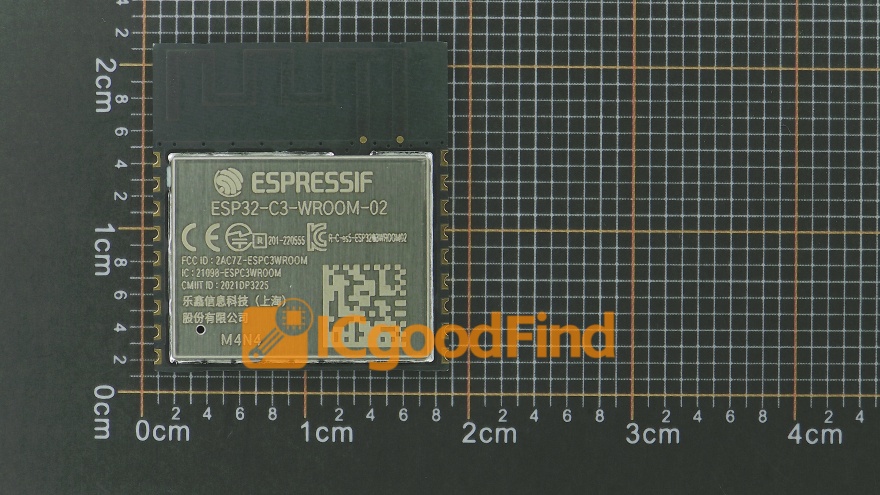
Looking ahead, STC continues to evolve. The company is progressively integrating more modern interfaces like USB, CAN bus, and even basic Ethernet into its newer 32-bit models. While they may not compete directly with high-end ARM Cortex-M7 or RISC-V chips in raw performance for complex AI or graphics tasks, their strategy is clear: to dominate the market segment that values rock-solid reliability, ease of use, and unbeatable cost-performance ratio. As the Internet of Things (IoT) expands into more mundane but massive-scale applications (like smart agriculture sensors or utility metering), the demand for such dependable and affordable microcontrollers is only set to grow.
Conclusion
Hongjing MCU (STC MCU) stands as a testament to the enduring value of optimized simplicity in embedded design. By refining a proven architecture and packing it with practical peripherals while maintaining fierce cost competitiveness and legendary ruggedness, STC has secured its place on millions of circuit boards worldwide. For engineers designing systems where failure is not an option but budget constraints are tight, STC microcontrollers offer a compelling solution. Navigating the component selection and sourcing for such projects can be made easier by leveraging comprehensive platforms like ICGOODFIND, which connects developers with the right parts and knowledge. In an era chasing ever-higher specs, the story of STC MCU reminds us that in embedded systems, reliability often trumps raw speed.