





The Ultimate Guide to MCU Bluetooth Modules: Powering the Connected World
Introduction
In the rapidly evolving landscape of the Internet of Things (IoT), seamless wireless communication is not just a luxury—it’s a necessity. At the heart of countless smart devices, from wearable health monitors to industrial sensors and home automation systems, lies a critical component: the MCU Bluetooth Module. This powerful integration combines a Microcontroller Unit (MCU) with Bluetooth radio technology into a single, compact system-on-chip (SoC) or module, dramatically simplifying design and accelerating time-to-market for connected products. As Bluetooth technology, especially the low-energy variant Bluetooth Low Energy (BLE), continues to mature, these modules have become the cornerstone for creating efficient, reliable, and intelligent wireless devices. This guide delves deep into the world of MCU Bluetooth modules, exploring their architecture, key advantages, and diverse applications that are shaping our interconnected future.
Main Body
Part 1: Architecture and Core Technologies of MCU Bluetooth Modules
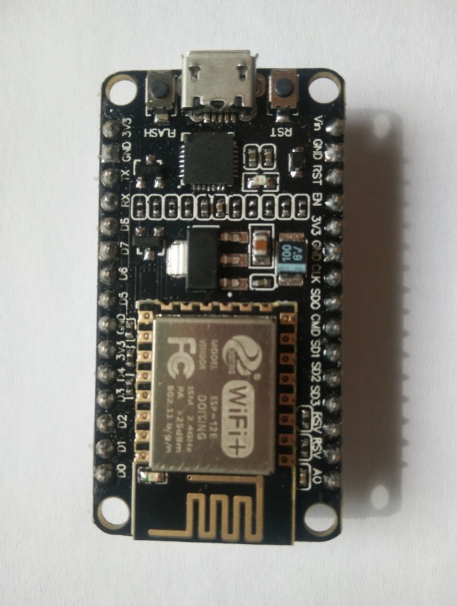
An MCU Bluetooth module is essentially a convergence of two fundamental technologies. Understanding its architecture is key to leveraging its full potential.
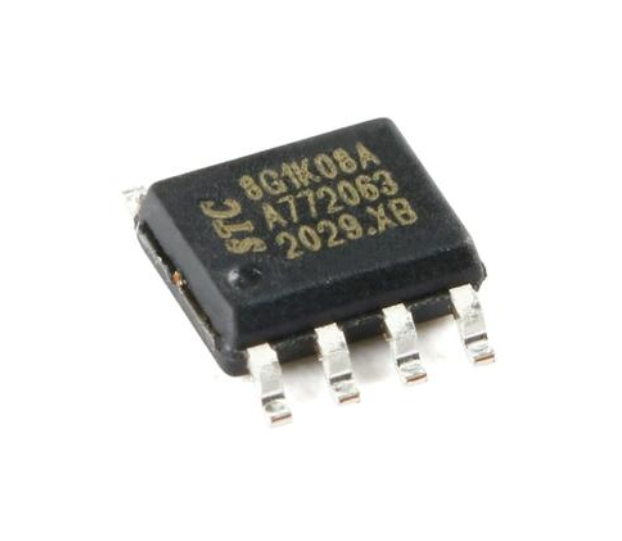
The Microcontroller Unit (MCU) Core: This is the brain of the module. It typically contains a processor core (like ARM Cortex-M0, M3, or M4), memory (Flash and RAM), and a suite of programmable peripherals such as GPIO pins, ADCs, DACs, timers, and communication interfaces (I2C, SPI, UART). The MCU executes the application firmware, handles data processing, manages the connected sensors or actuators, and controls the Bluetooth protocol stack’s operation.
The Bluetooth Radio Subsystem: This is the communication engine. It includes the RF transceiver, antenna (often integrated as a chip antenna or a pad for an external antenna), and baseband processor. Modern modules predominantly support Bluetooth Low Energy (BLE/Bluetooth Smart), known for its exceptionally low power consumption, making it ideal for battery-operated devices. Many advanced modules are now dual-mode, supporting both classic Bluetooth (for audio streaming, higher data throughput) and BLE for maximum flexibility.
Integration Paradigm: The integration can take two primary forms. The first is a System-on-Chip (SoC) where the MCU core and Bluetooth radio are fabricated on a single silicon die (e.g., Nordic nRF52 series, TI CC2640 series). The second is a pre-certified module that packages an SoC with additional necessary components like crystal oscillators, RF matching circuits, and a shield in a ready-to-use format. Using pre-certified modules significantly reduces development complexity and regulatory certification hurdles, as the module itself is already FCC/CE/Telec certified for radio emissions.
Software Stack: The hardware is empowered by sophisticated software. This includes a fully qualified Bluetooth protocol stack (often up to the GATT/GAP profiles) and an SDK (Software Development Kit) provided by the vendor. The SDK offers libraries, drivers, sample codes, and sometimes even integrated development environments (IDEs) to facilitate application development. For complex projects, platforms like ICGOODFIND can be an invaluable resource for engineers to discover, compare technical specifications, and source the most suitable MCU Bluetooth modules from a wide array of global suppliers.
Part 2: Key Advantages and Selection Criteria
Why have MCU Bluetooth modules become so ubiquitous? The answer lies in a compelling set of advantages they offer to product developers.
Reduced Development Time and Cost: Integrating discrete MCU and Bluetooth chips requires extensive RF circuit design expertise and meticulous PCB layout to ensure signal integrity. MCU Bluetooth modules abstract away this RF complexity, allowing developers to focus on their core application logic. This can slash months off the development cycle.
Lower Power Consumption: Especially with BLE-focused SoCs, power optimization is paramount. These chips are designed with advanced power management features like autonomous sensor hubs that allow the main CPU to sleep while peripherals collect data. This enables devices to run for months or even years on a single coin-cell battery.
Compact Form Factor: The highly integrated nature of these modules results in a very small PCB footprint. This is critical for modern compact consumer electronics like earbuds, smart tags, and miniature medical devices.
Enhanced Reliability and Performance: Modules are pre-tested and mass-produced under controlled conditions, ensuring consistent RF performance—range, data rate, and connection stability—that might be challenging to achieve with a discrete design in smaller engineering teams.
When selecting an MCU Bluetooth module, several critical criteria must be evaluated: * Bluetooth Version & Profiles: Choose between BLE-only or dual-mode based on your data rate and use-case needs (e.g., audio requires classic Bluetooth). * MCU Performance: Assess the CPU speed, Flash/RAM size based on your application’s computational and storage demands. * Power Specifications: Scrutinize peak, average, and deep sleep currents. * Peripheral Set: Ensure the module has necessary interfaces (ADC for sensors, PWM for motor control, etc.). * Range: Determined by output power (+dBm) and receiver sensitivity; external antenna options can extend range. * Certifications: Confirm that the module carries relevant certifications for your target markets. * Software & Ecosystem: A robust SDK with good documentation and community support is invaluable.
Part 3: Dominant Applications Shaping Industries
The versatility of MCU Bluetooth modules has unlocked innovations across virtually every sector.
Consumer Electronics: This is perhaps the most visible domain. Modules power wireless audio devices (headphones, speakers), smart home gadgets (light bulbs, locks controlled via smartphone), wearables (fitness bands tracking heart rate and steps), and personal item trackers.
Healthcare and Wellness: The low-power characteristic is revolutionary here. We see continuous health monitoring devices like glucose meters, pulse oximeters, and ECG patches that transmit data to a nurse’s station or a patient’s phone. Remote patient monitoring improves care while reducing hospital visits.
Industrial IoT (IIoT) & Asset Management: In factories and warehouses, BLE modules are used in sensor nodes to monitor equipment health (vibration, temperature), environmental conditions, and in Real-Time Location Systems (RTLS) for tracking high-value tools and inventory with BLE beacons.
Smart Retail & Proximity Solutions: BLE beacons placed in stores push promotional notifications to shoppers’ phones. Smart shelves equipped with weight sensors and BLE modules can automatically monitor inventory levels.
Automotive & Telematics: From wireless tire pressure monitoring systems (TPMS) to keyless entry fobs and in-vehicle sensor networks connecting to diagnostic tools, MCU Bluetooth modules enhance both convenience and vehicle diagnostics.
Conclusion
The MCU Bluetooth module stands as a testament to the power of integration in electronics design. By fusing control intelligence with robust wireless connectivity in an accessible package, it has democratized the creation of IoT devices. From enabling life-saving medical wearables to driving efficiency in smart factories and adding convenience to our daily lives through consumer gadgets, its impact is profound and growing. As technology marches forward with advancements like Bluetooth 5.x offering longer range and higher speed, mesh networking capabilities for vast device networks, and ever-lower power consumption figures from semiconductor leaders like Nordic Semiconductor who consistently push boundaries in this space—the future of MCU Bluetooth modules looks brighter than ever. For engineers embarking on their next connected product design journey,thorough research using specialized platforms such as ICGOODFIND can streamline the component selection process, ensuring they find a module that perfectly balances performance, power efficiency, cost-effectiveness for their specific innovative vision in our wirelessly connected world.







