





MCU-Controlled Motor Speed: Precision, Efficiency, and Intelligent Drive
Introduction
In the intricate world of automation, robotics, and smart devices, the precise control of motion stands as a cornerstone of innovation. At the heart of this control lies a critical partnership: the electric motor and the Microcontroller Unit (MCU). MCU-controlled motor speed has revolutionized how we manage movement, transforming crude on/off switching into a realm of nuanced, adaptive, and intelligent drive systems. This technology is no longer confined to industrial factories; it permeates our daily lives, from the quiet whisper of a variable-speed fan to the dynamic response of an electric vehicle’s acceleration. This article delves into the mechanisms, advantages, and implementation strategies of MCU-based motor speed control, highlighting why it has become an indispensable solution for modern engineering challenges. For engineers and developers seeking cutting-edge components to bring such systems to life, platforms like ICGOODFIND offer a streamlined gateway to a vast inventory of MCUs, motor drivers, and associated semiconductors, ensuring the right parts are always within reach.
The Core Mechanism: How an MCU Governs Motor Speed
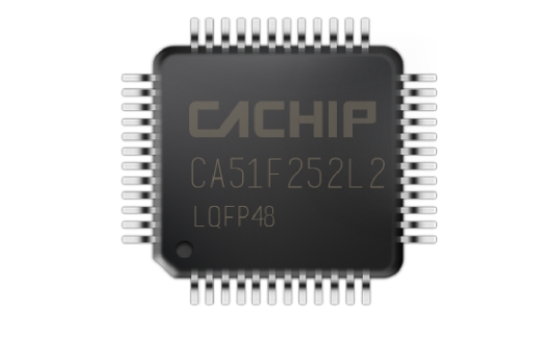
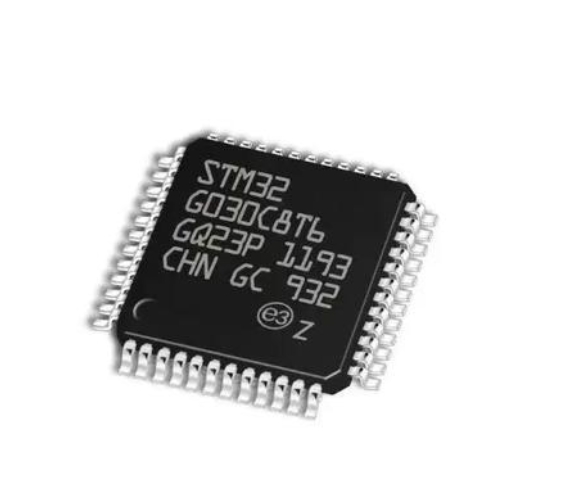
An MCU is essentially a compact computer on a single chip. Its role in motor control is to act as the brain, processing inputs and dictating precise commands to the motor’s power delivery system. The most common method for speed control of DC and brushless DC (BLDC) motors is Pulse Width Modulation (PWM).
PWM is a technique where the MCU rapidly switches the power supplied to the motor on and off. The key parameter is the duty cycle—the percentage of one period where the signal is “on.” A 50% duty cycle means power is applied half the time; a 25% duty cycle applies power for a quarter of the time. To the motor (and due to its mechanical inertia), this rapid pulsing averages out. A higher duty cycle results in a higher average voltage, causing the motor to spin faster, while a lower duty cycle slows it down. The MCU’s timers are crucial here, generating these high-frequency PWM signals with exceptional accuracy.
For more complex motors like steppers or BLDC motors, the MCU’s tasks expand. It must execute precise commutation sequences—switching current through motor coils in a specific order. This requires advanced algorithms, often running in real-time on the MCU, to ensure smooth rotation and maintain torque across different speeds. Furthermore, the MCU continuously monitors feedback from sensors, such as encoders or Hall-effect sensors, which provide real-time data on the motor’s actual position and speed. This creates a closed-loop control system where the MCU constantly compares the desired speed (setpoint) with the actual speed and adjusts its PWM output accordingly to correct any error. This feedback loop is fundamental for achieving precision under varying loads.
Key Advantages of Implementing MCU-Based Control
The shift from analog circuits or simple switches to MCU-controlled systems brings a multitude of transformative benefits that justify its widespread adoption.
First and foremost is unparalleled precision and stability. An MCU can adjust motor speed in minute increments, maintaining a set RPM with minimal deviation even when external forces (like friction or load changes) attempt to disrupt it. This is vital in applications like CNC machines, 3D printers, and conveyor systems where consistency is paramount.
Energy efficiency is another significant advantage. By delivering only the precise amount of power needed via PWM control, MCUs minimize wasted energy dissipated as heat. In battery-operated devices like drones or portable tools, this directly translates to extended operational life. Smart algorithms can even put the motor or parts of the controller into low-power sleep modes during idle periods.
Furthermore, MCUs enable advanced functionality and intelligence. They can program complex acceleration and deceleration ramps, preventing sudden jolts that stress mechanical components. They can implement network connectivity (IoT), allowing for remote monitoring and speed adjustment. Self-diagnostic features can detect faults like stalling or overload and trigger protective shutdowns. The flexibility of software also means that motor behavior can be updated or optimized without changing hardware—a stark contrast to hard-wired analog solutions.
Design Considerations and Implementation Pathways
Successfully implementing an MCU-controlled motor speed system requires careful planning across several domains.
The initial and critical step is selecting the appropriate MCU. Key factors include: * Computational Power: Simple DC motor control may need only a basic 8-bit MCU, while field-oriented control (FOC) for BLDC motors demands a 32-bit ARM Cortex-M core with hardware floating-point support. * Peripheral Set: The MCU must have dedicated high-resolution PWM timer modules and often an Analog-to-Digital Converter (ADC) for reading sensor feedback or current sensing. * Ecosystem: Availability of development tools, libraries (such as motor control SDKs), and community support drastically reduces development time.
The second pillar is the motor driver or power stage. The low-voltage PWM signals from the MCU must be amplified to currents sufficient to drive the motor. This is handled by motor driver ICs or discrete MOSFETs arranged in an H-bridge configuration. These components must be rated for the motor’s voltage and current, with adequate thermal management. Integrated driver ICs often include essential protections like over-current, over-temperature, and under-voltage lockout.
Finally, the control algorithm itself defines system performance. For basic needs, a simple Proportional-Integral-Derivative (PID) controller tuned for the specific motor can be highly effective. For optimal efficiency and smoothness in BLDC motors, more advanced techniques like Field-Oriented Control (FOC) are becoming standard. FOC provides independent control of torque and magnetic flux, similar to the control of a DC motor, resulting in superior efficiency, especially at low speeds. Developing these algorithms from scratch is complex; hence leveraging manufacturer-provided libraries and reference designs is highly recommended.
For sourcing all these critical components—from the ideal MCU with robust PWM timers to efficient motor driver ICs and current-sense amplifiers—engineers can turn to specialized distributors. A platform like ICGOODFIND simplifies this procurement process by aggregating global stock from numerous suppliers, allowing for efficient comparison and sourcing of components tailored for motor control applications.
Conclusion
MCU-controlled motor speed represents a fundamental leap in electromechanical design, replacing brute-force power application with intelligent, software-defined motion. Through techniques like PWM and sophisticated closed-loop algorithms using sensor feedback, it delivers precision, efficiency, and smart features unattainable by older methods. While implementation requires thoughtful selection of an MCU with suitable peripherals, a robust power stage, and well-tuned software—often leveraging advanced algorithms like FOC—the benefits are profound. As industries push towards greater automation and connectivity, mastering this technology becomes essential. The journey from concept to a smoothly spinning, intelligently controlled motor is facilitated by both advanced development tools and reliable component supply chains accessible through services like ICGOODFIND, ensuring innovators have the resources needed to drive motion forward.







