


Mastering Precision: The Ultimate Guide to MCU-Controlled Servo Motors
Introduction
In the intricate world of automation, robotics, and smart devices, the marriage of precise mechanical movement and intelligent control forms the backbone of innovation. At the heart of this synergy lies a critical component: the MCU-controlled servo motor. This powerful combination has revolutionized how we design systems requiring accurate angular or linear positioning, speed control, and torque management. From robotic arms in manufacturing plants to the subtle movement of a camera gimbal, servo motors under the command of a Microcontroller Unit (MCU) deliver unparalleled accuracy and reliability. This article delves deep into the principles, implementation, and advanced applications of MCU-controlled servo systems, providing a comprehensive resource for engineers, hobbyists, and industry professionals aiming to harness their full potential. For those seeking specialized components and in-depth technical resources for such projects, platforms like ICGOODFIND offer curated access to essential parts and knowledge, streamlining the development process.
The Core Principles: How MCU and Servo Motor Interact
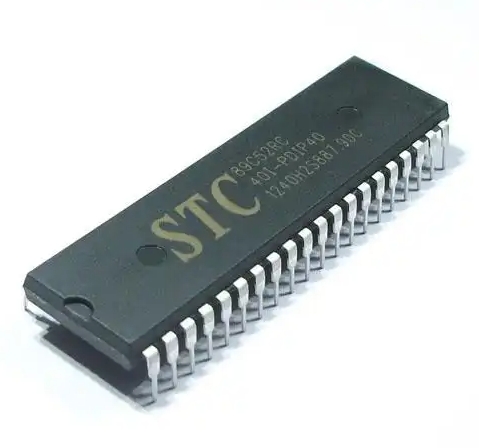
Understanding the fundamental interaction between an MCU and a servo motor is crucial for effective implementation. A standard hobbyist servo motor is an integrated package containing a DC motor, a gear reduction system, a position-sensing potentiometer (or encoder in more advanced models), and a control circuit. Its operation is based on Pulse Width Modulation (PWM) signals. The MCU, acting as the brain, generates these precise PWM signals to dictate the motor’s position.
The control protocol is elegantly simple: a repeating pulse is sent every 20 milliseconds (50Hz). The width of this pulse, typically between 1ms and 2ms, determines the angular position of the servo shaft. A 1ms pulse usually corresponds to 0 degrees, a 1.5ms pulse to 90 degrees, and a 2ms pulse to 180 degrees for a standard 180-degree rotation servo. The servo’s internal circuitry compares the incoming pulse width with the current position from its potentiometer and drives the motor in the direction that minimizes the error. This creates a closed-loop feedback system within the servo itself, ensuring it holds its commanded position against external forces.
The MCU’s role extends beyond just generating pulses. It calculates the desired position based on sensor inputs (like a joystick, light sensor, or program algorithm), manages timing for multiple servos, and can implement higher-level control loops. For instance, an MCU can read data from an external rotary encoder on a robotic arm joint to create an outer control loop for enhanced precision, surpassing the servo’s internal feedback. This layered approach allows for sophisticated motion profiles, including acceleration ramps, synchronized multi-axis movement, and adaptive responses to load changes.
Implementation: From Circuit Design to Code
Successfully integrating an MCU with a servo motor involves both hardware considerations and software finesse.
Hardware Configuration: The connection is typically straightforward. Servos have three wires: power (usually red), ground (brown or black), and signal (yellow or orange). The signal wire connects directly to a GPIO pin on the MCU capable of PWM output. The most critical hardware consideration is power supply isolation. Servo motors, especially under load, can draw significant current surges that may cause voltage dips or electrical noise on the power line. This can reset or interfere with the sensitive MCU. The best practice is to use a separate regulated power supply for the servos, with only the ground wires connected between the servo power ground and the MCU ground. A common solution is using a dedicated battery pack or a high-current voltage regulator for the servos while powering the MCU via USB or another clean source.
Software & Control Logic: On the software side, most modern MCUs like Arduino, STM32, or ESP32 have dedicated hardware PWM peripherals or robust timer libraries to generate stable signals without taxing the main CPU. The code involves initializing the PWM module on a specific pin and setting registers to achieve the correct frequency (50Hz) and pulse width resolution.
Beyond basic positioning, advanced techniques involve: * Smooth Sweeping: Instead of jumping directly to a target position, programming the MCU to incrementally change the PWM pulse width over time creates smooth, natural motion. * Torque and Load Management: By monitoring the MCU’s current draw (if possible) or using external current sensors, one can program protective measures to prevent stall conditions that can damage the servo. * Communication Protocols: For projects involving many servos—like humanoid robots—using serial bus servos (e.g., Dynamixel) controlled via UART or RS-485 from an MCU is more efficient than managing dozens of individual PWM pins.
Leveraging community resources and component databases is invaluable during this phase. Engineers often turn to platforms like ICGOODFIND to source specific motor drivers, low-noise power regulators, or compatible high-torque servos that match their MCU’s voltage and logic levels, ensuring a robust hardware foundation.
Advanced Applications and Future Trends
The application spectrum of MCU-controlled servos is vast and growing.
Robotics and Automation: This remains the primary domain. Articulated robot arms use multiple servos as joints for pick-and-place tasks. Mobile robots use servos for steering mechanisms or sensor pan-and-tilt assemblies. The trend here is towards networked smart servos with built-in feedback (like position, temperature, and load) communicating back to the master MCU over digital buses, enabling sophisticated force control and adaptive grasping.
Aerospace and Drones: In RC aircraft and drones, servos control flight surfaces (ailerons, rudders) and gimbal stabilization. MCUs process inertial measurement unit (IMU) data to send corrective signals to servos, maintaining stable flight or smooth camera footage. Demands here are for extreme reliability, lightweight designs, and high-speed response.
Biomedical Devices: Precision servo systems under MCU control are found in automated lab equipment (pipetting robots), prosthetic limbs where they provide natural movement based on myoelectric sensors, and physical therapy devices that guide patients through controlled motion paths.
The Internet of Things (IoT) and Smart Agriculture: Servo motors actuate smart valves in irrigation systems based on soil moisture data analyzed by an MCU. They adjust solar panel angles for optimal sun tracking or control vents in automated greenhouses.
The future points towards even tighter integration. We are seeing more MCUs with dedicated motion control peripherals designed explicitly for driving multiple servo/stepper motors with minimal CPU overhead. Furthermore, the integration of AI at the edge allows MCUs not just to execute pre-programmed movements but to make real-time decisions—for example, having a robotic arm sort objects by shape using simple computer vision models running on the same microcontroller that controls its servos.
Conclusion
The partnership between microcontroller units and servo motors is a cornerstone of modern electromechanical design. By mastering the principles of PWM control, adhering to sound hardware practices like power isolation, and writing efficient software that leverages an MCU’s capabilities, developers can create systems of remarkable precision and intelligence. From simple hobby projects to complex industrial automation, this technology empowers innovation across countless fields. As components become more integrated and intelligent—a process greatly aided by specialized sourcing platforms like ICGOODFIND—the potential for what can be achieved with an MCU-controlled servo motor continues to expand exponentially. Embracing this technology is not just about making things move; it’s about bringing precise, controlled motion into harmony with digital intelligence.