





Unlocking the Power of 8051 MCU Schematic Diagrams: A Comprehensive Guide
Introduction
The 8051 microcontroller unit (MCU) stands as one of the most enduring and influential architectures in the embedded systems landscape. Since its introduction by Intel in 1980, this 8-bit microcontroller has powered countless devices across industrial, automotive, consumer electronics, and educational sectors. At the heart of every successful 8051-based project lies a well-designed schematic diagram—the blueprint that transforms theoretical concepts into functional hardware. Understanding 8051 MCU schematic diagrams is fundamental for engineers, students, and hobbyists looking to harness the full potential of this versatile microcontroller. These visual representations not only illustrate how components interconnect but also serve as critical documentation throughout the design, debugging, and manufacturing processes. As we navigate through this comprehensive guide, we’ll explore the essential components, design principles, and practical applications of 8051 schematic diagrams while highlighting how resources like ICGOODFIND can streamline your component selection process. Whether you’re designing a simple sensor interface or a complex embedded system, mastering schematic creation will significantly enhance your development efficiency and project success.
The Anatomy of an 8051 MCU Schematic Diagram
Core Components and Their Representation
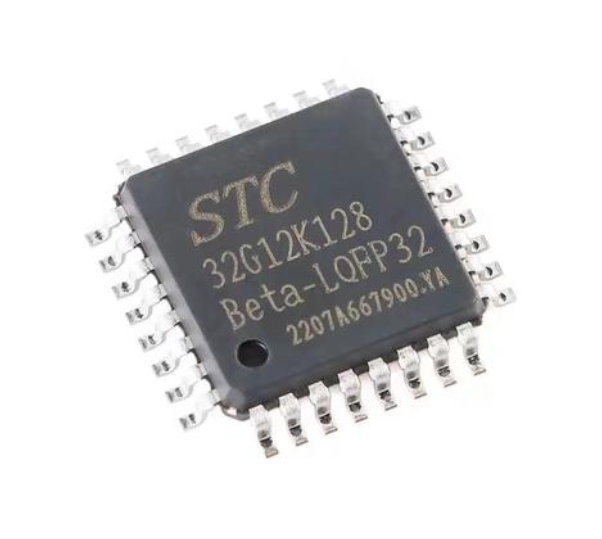
A typical 8051 MCU schematic diagram consists of several fundamental components that work in harmony to create a functional system. At the center sits the 8051 microcontroller itself, represented by a rectangular symbol with multiple pins extending from its sides. The 8051’s pin configuration forms the foundation of any schematic, with pins categorized into four primary ports (P0, P1, P2, and P3), each serving multiple functions depending on configuration. Port 0 typically serves as both address and data bus in external memory applications, while Port 2 provides the higher-order address bytes. Port 3 deserves special attention as it houses essential control signals like interrupts, serial communication pins, and timer inputs.
Surrounding the MCU, several critical components complete the system. The clock circuit represents one of the most crucial elements, typically consisting of a crystal oscillator connected between pins XTAL1 and XTAL2, along with appropriate loading capacitors to stabilize oscillation frequency. This circuit determines the execution speed of instructions and synchronizes all operations within the microcontroller. Equally important is the reset circuit, which ensures the MCU starts in a known state upon power-up or manual reset. A simple reset implementation might include a resistor-capacitor network that holds the reset pin high for a specific duration during power initialization.
Power supply considerations form another vital aspect of 8051 schematic design. Most 8051 variants operate at 5V DC, requiring proper decoupling capacitors placed near power pins to filter noise and ensure stable operation. The placement and values of these capacitors—typically 0.1μF ceramic capacitors in parallel with larger electrolytic capacitors—significantly impact circuit reliability. Additionally, depending on the specific 8051 variant, some implementations may require an external memory interface comprising address latches and program memory (ROM) or data memory (RAM). Understanding how to properly represent these components and their interconnections forms the basis of creating effective 8051 schematic diagrams that translate seamlessly from design to functional hardware.
Signal Flow and Interconnection Strategies
Proper signal routing represents a critical aspect of schematic design that directly impacts circuit performance and manufacturability. In 8051-based systems, signals can be broadly categorized into power signals, clock signals, data/address buses, control signals, and I/O connections. Each category requires specific consideration during schematic capture. Power traces should be sufficiently wide to handle expected current loads, while high-frequency clock signals need careful routing to minimize electromagnetic interference and signal degradation.
The 8051’s multiplexed address/data bus (Port 0) requires particular attention in systems with external memory. Address latch enable (ALE) signal management is essential for demultiplexing the bus using an external latch such as the 74HC373. The schematic must clearly illustrate how ALE controls the latch to separate address information from data during memory access cycles. Similarly, control signals like PSEN (Program Store Enable) for external program memory access and EA (External Access) for determining whether to use internal or external program memory must be properly connected according to system requirements.
For I/O expansion—a common requirement in 8051 projects—the schematic should clearly depict how peripheral devices interface with the microcontroller. Systematic signal labeling significantly enhances schematic readability and helps prevent connection errors during PCB layout. For example, rather than simply showing lines connecting components, using net labels like “LCD_RS,” “ADC_START,” or “MOTOR_PWM” makes the schematic self-documenting and easier to troubleshoot. Grouping related signals into buses can further simplify complex connections, especially when dealing with multiple peripheral devices or external memory interfaces. This organizational approach becomes increasingly valuable as circuit complexity grows beyond basic implementations.
Design Principles for Effective 8051 Schematics
Best Practices for Schematic Organization
Creating a well-organized schematic diagram goes beyond simply connecting components correctly—it involves implementing structural principles that enhance readability, maintainability, and error detection. Hierarchical design approach represents one of the most effective strategies for managing complexity in 8051-based systems. Rather than placing all components on a single sheet, breaking the design into functional blocks (power supply, clock generation, MCU core, memory interface, I/O peripherals) allows for focused attention on each subsystem while maintaining a clear overview of how they interconnect.
Consistent symbol creation and placement significantly impact schematic usability. While most EDA tools provide standard symbols for common components, creating custom symbols for specialized peripherals or using manufacturer-recommended symbols ensures accuracy in representation. When placing components, grouping related elements together—such as positioning crystals and loading capacitors adjacent to the MCU’s clock pins—creates visual cues about functional relationships. Similarly, arranging pins on custom symbols in logical order (grouping power pins together, organizing I/O by function rather than pin number) can dramatically improve schematic comprehension.
Annotation represents another critical organizational aspect. Comprehensive labeling and documentation transform a mere connection diagram into a true design document that can be understood by multiple stakeholders throughout the product lifecycle. Every net should have a descriptive name that reflects its function rather than relying solely on graphical connections. Adding text notes to explain non-obvious design decisions, such as why specific pull-up resistor values were chosen or how timing requirements were met, provides invaluable context for future modifications or debugging sessions. Implementing a consistent naming convention for components (e.g., R1, R2 for resistors; C1, C2 for capacitors; U1, U2 for integrated circuits) with more descriptive labels in comments fields creates both standardization and clarity.
Error Prevention and Design Verification
Despite careful planning, schematic errors can lead to costly PCB revisions or non-functional prototypes. Implementing systematic verification procedures helps catch mistakes before they progress to manufacturing. The first line of defense involves electrical rules checking (ERC), available in most modern EDA tools, which automatically identifies common issues like unconnected pins, conflicting outputs, or power supply problems. However, ERC alone cannot catch all potential errors, necessitating manual review processes.
Cross-referencing pin functions against datasheets represents a crucial verification step that catches subtle errors automated tools might miss. For example, verifying that PSEN is properly connected when using external program memory or ensuring that Port 0 pins have appropriate pull-up resistors when functioning as an output can prevent frustrating debugging sessions later. Similarly, confirming that all power and ground pins are properly connected—including often-overlooked analog supply pins in AD-equipped variants—ensures reliable operation across all operating conditions.
Another valuable verification technique involves signal integrity analysis at the schematic stage, particularly for critical signals like clock lines and high-speed interfaces. While full signal integrity analysis typically occurs during PCB layout, schematic designers can anticipate issues by ensuring proper termination strategies are incorporated for longer traces or higher-frequency signals. Additionally, creating review checklists specific to 8051 implementations—covering items like reset circuit timing validation, crystal loading capacitor calculations, and external memory interface timing compatibility—establishes a systematic approach to quality assurance. Partnering with component sourcing platforms like ICGOODFIND during this phase can provide access to updated datasheets and application notes that inform these verification processes.
Practical Applications and Implementation Examples
Basic 8051 Implementation Schematic
For those new to 8051 microcontroller design, starting with a minimal implementation provides a solid foundation before advancing to more complex applications. A minimal 8051 system requires surprisingly few external components to become operational—primarily consisting of the MCU itself, reset circuit, clock generation components, and power supply filtering. In such implementations, the focus shifts to proper connection of the core elements that enable the microcontroller to execute programmed instructions.
The reset circuit typically employs a simple RC network where a capacitor connected between VCC and the reset pin (with a resistor to ground) creates a power-on reset pulse. The time constant (determined by R × C) must be sufficient to keep the reset pin high until the power supply and clock stabilize—generally requiring at least two machine cycles. For manual reset capability, adding a push-button switch parallel to the capacitor allows for intentional reset triggering. Meanwhile, the clock circuit’s implementation varies depending on accuracy requirements: while ceramic resonators offer cost-effective solutions for timing-insensitive applications, crystal oscillators provide superior frequency stability for serial communications or precise timing operations.
I/O port configuration demands careful consideration even in basic implementations. When using ports as inputs, enabling internal pull-up resistors (available on Ports 1, 2, and 3 in many variants) or adding external pull-ups establishes known states for floating pins. For output applications, understanding current sourcing/sinking limitations prevents port damage—the 8051 typically sources less current than it sinks, making active-low configurations often more efficient for driving LEDs or other small loads. In such basic schematics, clearly documenting these design decisions through notes directly on the schematic sheet helps prevent implementation errors during prototyping and serves as educational reference for future projects.
Advanced Interfaces and Peripheral Integration
As 8051 projects grow in complexity, schematics must accommodate various peripheral interfaces while maintaining signal integrity and minimizing interference. External memory expansion represents one common advanced requirement, particularly for data-intensive applications exceeding the limited internal RAM of basic 8051 variants. The schematic must properly implement the multiplexed address/data bus using an external latch controlled by ALE while also managing control signals like RD (Read), WR (Write), and PSEN according to timing specifications detailed in the microcontroller’s datasheet.
Analog interfaces introduce another layer of complexity to 8051 schematics. While some modern 8051 variants include integrated analog-to-digital converters (ADCs), many implementations still require external ADC or DAC chips interfaced through parallel or serial connections. Proper analog/digital ground separation becomes crucial in such mixed-signal designs—a principle that should be represented in the schematic even though full implementation occurs during PCB layout. Similarly, when integrating sensors with low-level outputs, the schematic should include provisions for signal conditioning circuits such as amplifiers or filters adjacent to the sensor interfaces before connecting to the MCU’s digital pins.
Communication interfaces form another frequent addition to advanced 8051 schematics. The built-in UART facilitates serial communication with PCs or other microcontrollers, but proper level-shifting circuitry (such as MAX232 chips for RS-232 compatibility) must be included in the schematic when interfacing with standard serial ports. For I²C or SPI peripherals—often implemented in software through bit-banging on standard I/O pins—the schematic should clearly identify which pins are dedicated to these functions and include appropriate pull-up resistors for open-drain protocols like I²C. Throughout these advanced implementations,maintaining clear documentation of interface protocolsand signal requirements ensures successful integration of multiple peripheral types within a single system.
Conclusion
The 8051 microcontroller continues to maintain its relevance decades after its introduction precisely because of its versatility and well-understood architecture—qualities that are fully expressed through carefully crafted schematic diagrams.Mastering 8051 MCU schematic creation represents an essential skillfor anyone working in embedded systems development,supporting everything from simple educational projects to complex industrial applications.The journey from basic implementations to advanced peripheral integration demonstrates how systematic approaches to schematic organization,signal management,and verification procedures directly translate to more successful prototypesand reduced development cycles.
As we’ve explored throughout this guide,the schematic serves as much more than a connection diagram—it functions asa central communication toolthat bridges conceptual design,tangible implementation,and future modifications.Employing best practices like hierarchical designcomprehensive annotation,and systematic verification establishesa foundation for creating schematics that not only accurately representcircuit connections but also enhance collaborationand troubleshooting efficiency throughoutthe product lifecycle.Furthermore,tapping into resources like ICGOODFINDfor component selectionand technical documentationcan significantly streamlinethe design processwhile ensuring accessto up-to-date informationon various 8051 variantsand compatible peripherals.
While software often receivesthe spotlightin embedded systems discussions,the hardware foundationestablished through quality schematicdesign remains equally crucialto project success.Whether you’re designingyour first 8051-based circuitor refining advanced implementations,the principles outlinedin this guide providea frameworkfor creating schematics that effectively balance technical accuracywith practical usability.As technology continuesto evolvearound new architecturesand capabilities,the fundamental understandingof howto visually representand documentelectronic systemsremainsan enduringly valuablecompetencyacrossthe embedded landscape.