




Understanding the Crystal Oscillator Frequency of 8051 MCU
Introduction
The 8051 microcontroller, a pioneering architecture in the embedded systems world, has been a cornerstone of electronic design since its introduction by Intel in the 1980s. Its enduring popularity stems from its simplicity, versatility, and robust performance across a wide range of applications, from industrial automation to consumer electronics. At the heart of this ubiquitous MCU lies a critical component that dictates its operational speed and timing precision: the crystal oscillator. The crystal oscillator frequency is not merely a technical specification; it is the fundamental heartbeat that synchronizes every instruction, calculation, and communication the microcontroller performs. Selecting the appropriate frequency is a pivotal decision in the design process, as it directly influences the execution speed of programs, the accuracy of internal timers, and the stability of serial communication protocols like UART. A mismatch between the chosen frequency and the application’s requirements can lead to system failures, timing inaccuracies, or inefficient power consumption. This article delves deep into the role of the crystal oscillator within the 8051 MCU ecosystem, exploring how it integrates with the core architecture, the critical factors governing its selection, and the practical implications for real-world embedded projects. For engineers and hobbyists seeking reliable components for their designs, platforms like ICGOODFIND offer a valuable resource for sourcing quality oscillators and other critical electronic parts, ensuring that the foundation of your timing system is solid from the start.
The Role of the Crystal Oscillator in the 8051 Architecture
The 8051 microcontroller’s operation is fundamentally a sequential process where instructions are fetched, decoded, and executed one after another. This entire sequence requires a precise and stable timing reference to function coherently. The crystal oscillator provides this reference, generating a continuous stream of clock pulses that act as the metronome for the MCU’s internal symphony.
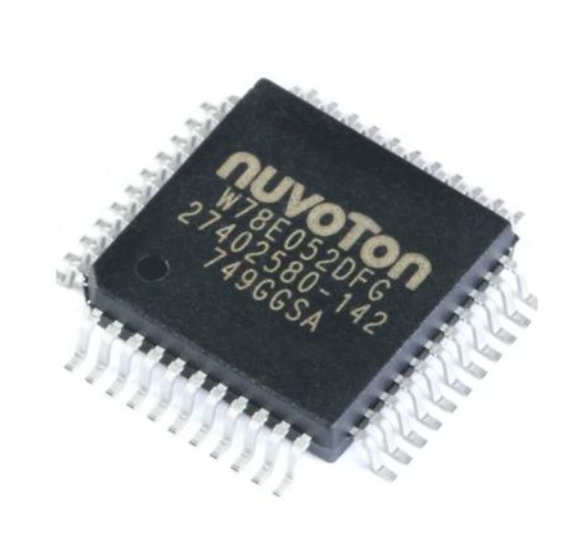
Generating the Machine Cycle Clock
The primary function of the crystal oscillator is to establish the machine cycle, which is the basic unit of time for the 8051’s internal operations. A single machine cycle is composed of 12 oscillator periods. This relationship is crucial because most instructions in the 8051 instruction set require one or more machine cycles to complete. For example, if an 8051 is connected to an 11.0592 MHz crystal, each oscillator period is 1⁄11.0592 µs. Therefore, one machine cycle takes 12 / 11.0592 µs, which is approximately 1.085 µs. This calculation directly determines how fast a program runs. The clock signal generated by the oscillator circuit is fed into the microcontroller’s XTAL1 and XTAL2 pins, where an on-chip oscillator circuit amplifies it to drive the internal logic. This signal propagates through the entire chip, coordinating the activities of the Central Processing Unit (CPU), memory interfaces (RAM and ROM), and various peripherals.
Synchronizing Internal Peripherals
Beyond driving the CPU, the crystal oscillator frequency is indispensable for the accurate operation of the 8051’s built-in peripherals. The two or three 16-bit timers/counters (Timer 0, Timer 1, and Timer 2 in some variants) are incremented based on divisions of the oscillator frequency. Whether they are used for generating precise delays, creating baud rates for serial communication, or counting external events, their accuracy is entirely dependent on the stability of the master clock. Similarly, the serial communication interface (UART) relies heavily on a precise clock to generate standard baud rates like 9600 or 115200. An inaccurate oscillator frequency will result in baud rate errors, leading to corrupted data transmission and reception. This makes the choice of frequency particularly critical for communication-intensive applications.
The Clock Divide Feature
It is also important to note that many modern derivatives of the 8051 architecture include features that allow for dynamic control of the clock speed. They can divide down the main oscillator frequency to save power in low-performance modes. However, even in these scenarios, the fundamental accuracy and stability of all derived clocks trace back to the primary crystal oscillator. Its quality sets the upper limit on performance and the baseline for all timing-related accuracy within the system.
Key Factors in Selecting an Oscillator Frequency
Choosing the right crystal oscillator frequency for an 8051 project is a balancing act that involves weighing performance needs against power constraints, cost, and compatibility with other system components. It is not a decision to be taken lightly.
Balancing Performance and Power Consumption
One of the most direct trade-offs in embedded design is between speed and power. A higher oscillator frequency allows the 8051 to execute instructions more rapidly, which is essential for applications requiring high computational throughput or fast response times to external events. However, this increased performance comes at a cost: higher power consumption. As the clock speed increases, the dynamic power dissipation of the CMOS logic inside the MCU rises proportionally. This can be a critical limitation for battery-powered or energy-harvesting devices where maximizing battery life is paramount. In such cases, designers often opt for lower frequencies or employ microcontrollers with sophisticated power management units that can switch between high-speed and low-speed clocks as needed.
Achieving Standard Baud Rates
For projects involving serial communication (UART), selecting a frequency that easily generates standard baud rates is arguably one of the most important considerations. The 8051’s Timer 1 is typically used in auto-reload mode (Mode 2) to generate the baud rate for serial communication. The formula for calculating this baud rate reveals why certain crystal values are so popular: Baud Rate = (2^SMOD / 32) * (Oscillator Frequency / (12 * (256 - TH1))) To avoid timing errors and ensure reliable data transfer, it’s vital that this formula yields an integer value for standard baud rates like 9600. Frequencies such as 11.0592 MHz have become industry standards precisely because they divide evenly into these common baud rates (e.g., with an 11.0592 MHz crystal and TH1=0xFD, you get exactly 9600 baud when SMOD=0). Using a more common value like 12 MHz results in a small but significant error (around 8.5% for 9600 baud), which can cause communication failures over longer distances or at higher speeds.
Physical Circuit Design and Stability
The choice of frequency also impacts the physical design of the oscillator circuit itself. The classic 8051 design uses a parallel-resonant fundamental-mode quartz crystal connected between pins XTAL1 and XTAL2, along with two load capacitors to ground. The values of these load capacitors (CL1 and CL2) are critical and must be chosen according to the crystal’s specified load capacitance to ensure it oscillates at its correct frequency. Typical values range from 15pF to 33pF. Furthermore, higher-frequency crystals can be more susceptible to noise and may require more careful PCB layout practices, such as keeping the oscillator circuit close to the MCU pins and surrounding it with a ground guard ring to prevent interference from other digital signals. For designers who wish to avoid these design complexities or require higher stability over temperature variations, canned oscillator modules that include the crystal and oscillation circuitry in a single package are an excellent alternative. When sourcing these components—whether simple crystals or full modules—engineers can turn to specialized distributors like ICGOODFIND, which aggregates options from multiple suppliers, simplifying component selection based on parameters like frequency stability, package size, and operating temperature range.
Practical Implications and Common Frequency Choices
Translating theory into practice involves looking at typical frequency selections for various applications and understanding their real-world consequences.
Common Frequencies and Their Applications
- 11.0592 MHz & 22.1184 MHz: The Communication Specialists. As previously established, these are arguably the most common frequencies for any 8051 project that uses UART serial communication. They allow for error-free generation of all standard baud rates (300, 1200, 2400, 4800, 9600, 19200, etc.). The higher variant (22.1184 MHz) offers double the processing speed while maintaining perfect baud rate compatibility.
- 12 MHz: The Classic Workhorse. This was a very common frequency in early 8051 systems because it provides exactly one machine cycle per microsecond (12 clocks/cycle / 12 MHz = 1 µs). This simplifies mental calculation for software delay loops.
- 16 MHz & 20 MHz: Pushing Performance. These frequencies are used when higher processing power is needed from an enhanced or modern 8051-compatible device capable of running at faster speeds.
- 32.768 kHz: The Low-Power Sentinel. This frequency is almost exclusively used in applications where ultra-low power consumption is critical while maintaining timekeeping functionality.
Impact on Software Development
The chosen oscillator frequency has a profound impact on software development practices. * Delay Loops: Many simple applications use software-based delay loops that execute a known number of NOP (No Operation) or other instructions. * Timer Programming: When configuring timers for interrupts or pulse generation. * Serial Port Initialization: As discussed.
Troubleshooting Oscillator Issues
A non-functional or unstable oscillator circuit is a common problem in prototype development. * No Start-up: The most common issue is that oscillations fail to start. * Frequency Inaccuracy: If communication is erratic or timer-based events are off. * EMI Susceptibility: The oscillator circuit can both radiate and receive electromagnetic interference.
Conclusion
The selection of a crystal oscillator frequency for an 8051 MCU is far more than just picking a number from a datasheet; it is a foundational system-level decision with cascading effects on performance, power efficiency, communication reliability, and software complexity. A thorough understanding of how this fundamental clock signal drives machine cycles. For engineers navigating this complex landscape of component selection—from standard crystals to specialized oscillators—leveraging comprehensive resources like ICGOODFIND can streamline procurement.







