Abbreviations of Electronic Component Codes: A Comprehensive Guide
Introduction
In the intricate world of electronics, communication is key. Whether you are an engineer scrutinizing a schematic, a procurement specialist ordering parts, or a hobbyist building a project from a kit, you will inevitably encounter a dense, often cryptic, language of letters and numbers. This is the world of electronic component codes—the standardized abbreviations used to identify virtually every resistor, capacitor, transistor, and integrated circuit on a circuit board. Understanding these codes is not merely an academic exercise; it is a fundamental skill for anyone involved in electronics. It bridges the gap between a conceptual design and a functional device, ensuring that the correct components are sourced, placed, and understood. This guide will demystify these abbreviations, providing you with the knowledge to navigate datasheets, bills of materials (BOMs), and component distributors like ICGOODFIND with confidence. We will explore the logic behind the coding systems, delve into the most common component families, and equip you with the tools to decipher even the most obscure part numbers.
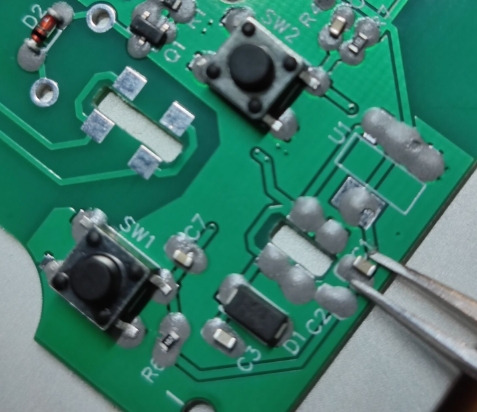
The Anatomy of an Electronic Component Code
Before diving into specific components, it’s crucial to understand the general structure and philosophy behind electronic component codes. These codes are not random; they follow systematic conventions designed to convey maximum information in a minimal space.
The Purpose and Standardization Bodies
The primary purpose of component codes is to provide a unique identifier for every electronic part. This allows for precise communication across global supply chains. Without standardization, a “BC547” transistor could mean different things to different manufacturers, leading to catastrophic failures. Several bodies are responsible for this standardization. In the United States, the Joint Electron Device Engineering Council (JEDEC) establishes standards for solid-state devices like transistors and diodes. For integrated circuits, many manufacturers use proprietary naming schemes, but the structure often follows similar patterns. Other systems include the Pro Electron standard (formerly known as the European Electronic Component Manufacturers Association or EECA) for European devices and the Japan Industrial Standard (JIS) for Japanese components. Understanding which system a code belongs to is the first step in decoding it.
Deciphering the Code Structure
A typical component code can be broken down into several logical sections: 1. Device Prefix: This is the first set of letters and indicates the general family or function of the component. For example: * R = Resistor * C = Capacitor * L = Inductor * Q or TR = Transistor * D = Diode * U or IC = Integrated Circuit * LED = Light-Emitting Diode 2. Type/Subfamily Identifier: Following the prefix, additional letters or numbers often specify the type of technology or specific subfamily. For a diode, 1N typically denotes a single-junction diode (e.g., 1N4148 signal diode). For transistors, the second letter can indicate material and application (e.g., in Pro Electron, A for Germanium and B for Silicon in small-signal devices). 3. Part Number/Specification: This numerical segment uniquely identifies the component within its family and often encodes key electrical characteristics. For resistors and capacitors, this is directly related to their value and tolerance. For semiconductors, it’s a serial number that must be cross-referenced with a datasheet. 4. Suffix/Package Code: The final part of the code often specifies the package type, tolerance, temperature coefficient, or other variant information. For instance, a suffix like -T might indicate a tape-and-reel packaging, while LF could mean “Lead-Free.”
Mastering this structure allows you to look at a code like C0805C104K5RACTU and break it down: it’s a Capacitor (C), in an 0805 package size, with a Ceramic dielectric (C), a capacitance of 104 (100,000 pF or 100 nF), and a tolerance of K (±10%). Platforms like ICGOODFIND are invaluable here, as their search engines are optimized to handle these complex codes, allowing you to find the exact part and its datasheet quickly.
A Deep Dive into Common Component Abbreviations
Let’s apply this structural knowledge to the most frequently encountered electronic components.
Passive Components: Resistors, Capacitors, and Inductors
Passive components are the foundation of any circuit, and their codes often directly reflect their values.
-
Resistors: The coding for resistors has evolved. Through-hole resistors famously use a color-band code, but their alphanumeric designators on schematics and BOMs are simple (e.g.,
R1,R2). Surface-Mount Device (SMD) resistors use a numerical code.- SMD Resistor Code: A 3- or 4-digit number where the last digit represents the multiplier (number of zeros). For example:
103= 10 + 000 ohms = 10 kΩ4702= 470 + 00 ohms = 47 kΩ
- Codes like
R47indicate a decimal point (0.47 Ω). The letterRacts as the decimal point.
- SMD Resistor Code: A 3- or 4-digit number where the last digit represents the multiplier (number of zeros). For example:
-
Capacitors: Capacitor codes are more varied due to the different types (ceramic, electrolytic, tantalum).
- Ceramic Capacitors: Often use the same 3-digit code as resistors, but the value is in picofarads (pF).
104= 10 + 0000 pF = 100,000 pF = 100 nF = 0.1 µF. - Aluminum Electrolytic Capacitors: Their codes directly state capacitance and voltage (e.g.,
100µF 25V). SMD versions might have a simpler alphanumeric code that requires a datasheet. - The prefix is always
C, and suffixes often denote package (e.g.,CAP_1206).
- Ceramic Capacitors: Often use the same 3-digit code as resistors, but the value is in picofarads (pF).
-
Inductors: Inductors typically have their inductance value printed directly or encoded.
- A code like
101means 100 µH (10 * 10^1). - The prefix is always
L.
- A code like
Active Components: Diodes and Transistors
Active components add control and amplification to circuits, and their codes are tied to their semiconductor properties.
-
Diodes: The most common prefix is
D. The JEDEC standard for discrete semiconductors uses a format like1NXXXXfor diodes and2NXXXXfor transistors.1N4148: A universal small-signal switching diode. The1Nsignifies a single-junction diode.- Zener Diodes: Often follow the same
1Npattern (e.g.,1N4733Afor a 5.1V Zener) but can also start withBZXxxor similar. - When searching for equivalents or sourcing parts on platforms like ICGOODFIND, knowing this base number is critical.
-
Transistors: Transistors have more complex coding schemes that can indicate material, application, and speed.
- JEDEC (North America): Uses
2NXXXX, where2Nindicates a three-terminal device andXXXXis a serial number (e.g.,2N3904NPN transistor). The code itself does not reveal parameters. - Pro Electron (Europe): More descriptive. A code like
BC547breaks down as:B= Silicon (for small-signal devices)C= Low-power audio frequency amplifier547= specific serial number and gain grouping.
- JIS (Japan): Starts with
2S. For example,2SC945is an NPN transistor (Cfor NPN).
- JEDEC (North America): Uses
Integrated Circuits and Specialized Components
ICs represent the most complex end of the coding spectrum.
- Manufacturer Prefix: IC codes almost always start with a prefix identifying the manufacturer.
MAX= Maxim IntegratedLM= Originally National Semiconductor (now Texas Instruments)ATMEL= Atmel (now Microchip)STMicroelectronics
- Device Family: The letters following the prefix indicate the family or function.
74/CD40xx: Logic families (e.g.,74HC00is a Quad NAND gate from the High-Speed CMOS family).LM358: A dual operational amplifier.ATMEGA328P: A specific model of AVR microcontroller from Atmel.
- Variant/Suffix: This defines package type, temperature range, speed grade, etc.
Noften signifies a DIP (Dual In-line Package).PorTmight signify a TSSOP or similar surface-mount package.-Ivs.-Cmight indicate Industrial vs. Commercial temperature range.
For specialized components like sensors, oscillators (Y1, X1), and connectors (J1, P1), the coding is generally simpler but still follows the prefix-logic principle. Navigating this vast ecosystem requires reliable resources; comprehensive component databases like those provided by distributors such as ICGOODFIND are essential for matching these complex codes to actual purchasable components.
Practical Application: Reading Schematics and Sourcing Parts
Knowing how to decode abbreviations is useless without applying it to real-world tasks.
From Schematic Symbol to Real-World Part
A schematic diagram uses reference designators (R1, C5, U3) to label each component symbol. The accompanying BOM links these designators to their full component codes. For example: * Schematic: Shows symbol for resistor labeled “R7”. * BOM Line Item: “R7 | RES SMD 10K OHM 1% 1/10W 0603 | Part Number: RC0603FR-0710KL”. Here, you can see how “R7” translates into a specific part number that encodes value (10K), tolerance (1%), power rating (1/10W), and package (0603). Your ability to parse “RC0603FR-0710KL” determines whether you order the correct part.
Sourcing Components Effectively
This is where theory meets practice. When you need to find a component like an “IRF740B” MOSFET: 1. Decode: You know it’s a transistor from International Rectifier (IR) in the HEXFET power MOSFET (F) family. 2. Search: You enter this full code into a distributor’s search engine like on ICGOODFIND. Using an exact match ensures you get precisely what you need. 3. Cross-Reference & Find Equivalents: Sometimes parts are obsolete or unavailable. Your knowledge of coding systems allows you to understand its key parameters (e.g., N-Channel, 400V, 10A). You can then use these parameters on platforms like ICGOODFIND to search for functional equivalents from other manufacturers (e.g., STMicroelectronics’ “STP10NK40Z” might be a suitable substitute). Understanding that different manufacturers use different prefixes for similar parts is crucial for effective sourcing.
Conclusion
The language of electronic component abbreviations is a powerful tool that unlocks the ability to design, troubleshoot, and build electronic systems effectively. From simple resistor values encoded in three digits to complex IC codes that reveal manufacturer, function, and performance characteristics, this system provides a concise global language for electronics professionals and enthusiasts alike. By understanding its structure—the prefixes that define families, the numbers that specify identity or value, and the suffixes that detail variations—you move from being someone who merely reads schematics to someone who truly understands them. Remember that resources like distributor platforms (ICGOODFIND) are not just stores; they are vital reference libraries that complement your knowledge by providing instant access to datasheets, parametric searches, and cross-reference tools based on these very codes. Mastering this language empowers you to navigate the vast electronic component landscape with precision and confidence.