


Which Electronic Components Are Sensitive to Static Electricity?
Introduction
Static electricity, often perceived as a minor nuisance in daily life, poses a significant threat to the integrity and functionality of modern electronic components. As electronic devices become increasingly miniaturized and complex, their susceptibility to electrostatic discharge (ESD) has grown exponentially. ESD occurs when a sudden flow of electricity passes between two electrically charged objects, typically resulting from contact, electrical shorting, or dielectric breakdown. This phenomenon, which can generate voltages ranging from hundreds to tens of thousands of volts, is particularly dangerous because it can damage electronic components without any visible signs of destruction. Understanding which components are most vulnerable to static electricity is crucial for engineers, technicians, and anyone involved in the handling, manufacturing, or repair of electronic devices. This knowledge forms the foundation for implementing effective ESD protection strategies, ensuring product reliability, and reducing costly failures in the field. In this comprehensive guide, we will explore the various electronic components that are highly sensitive to static electricity, the mechanisms of ESD damage, and the best practices for safeguarding these critical parts.
Main Body
Part 1: The Most Vulnerable Components - Integrated Circuits (ICs) and MOSFETs
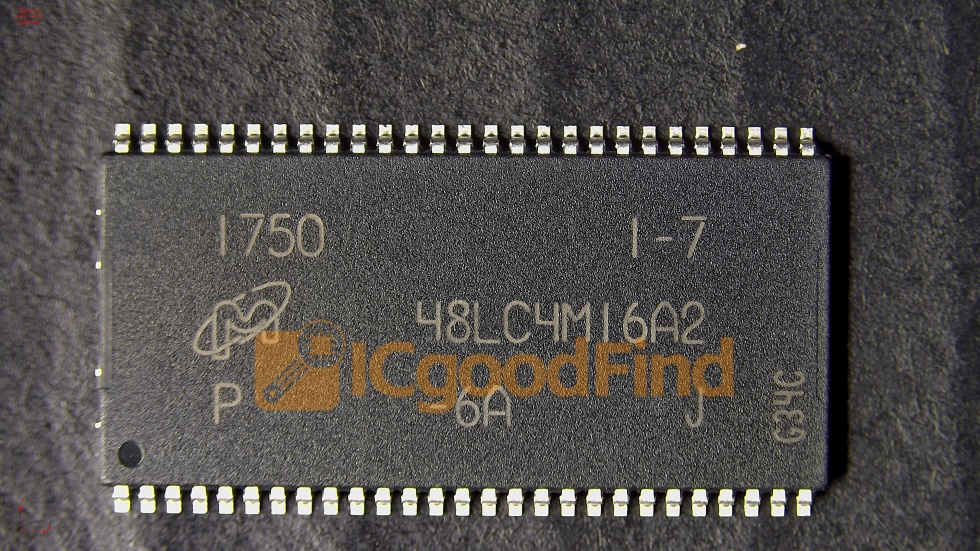
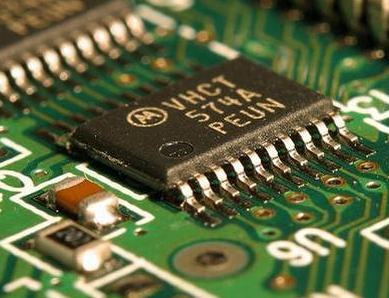
Integrated Circuits (ICs) are arguably the most well-known victims of electrostatic discharge. These complex components, which form the brains of modern electronics like microprocessors, memory chips, and logic gates, are fabricated with incredibly thin oxide layers and microscopic conductive pathways. The gate oxide layers in CMOS (Complementary Metal-Oxide-Semiconductor) ICs are exceptionally thin and can be permanently ruptured by ESD voltages as low as 100 volts. This damage can lead to immediate catastrophic failure or, more insidiously, a latent defect that weakens the component and causes it to fail prematurely during its operational life. The damage often occurs at the input/output pins where external signals are received.
Similarly, MOSFETs (Metal-Oxide-Semiconductor Field-Effect Transistors) are extremely ESD-sensitive due to their fundamental structure. The gate terminal of a MOSFET is isolated from the channel by a very thin layer of silicon dioxide, which acts as a dielectric. This insulation is vital for the transistor’s operation but makes it highly vulnerable. A static discharge to the gate can easily puncture this oxide layer, destroying the transistor’s ability to control current flow. The extremely high input impedance of the gate offers no path for the static charge to dissipate safely, causing the entire voltage potential to build up across this fragile oxide. For both ICs and MOSFETs, the damage is often cumulative; multiple small, undetected ESD events can degrade the oxide over time until the component finally fails.
Protecting these components requires a multi-faceted approach. Using anti-static mats, wrist straps, and grounded workstations is non-negotiable in environments where these parts are handled. Furthermore, ICs are often shipped and stored in conductive foam or special shielding bags that prevent charge buildup. When designing circuits, engineers incorporate on-chip ESD protection structures like diodes and transient voltage suppression (TVS) circuits at the pin interfaces to shunt damaging currents away from the sensitive internal circuitry.
Part 2: Sensitive Discrete Components and Optoelectronics
Beyond complex ICs, several discrete components are also highly susceptible to ESD damage. Precision components and those relying on delicate semiconductor junctions fall squarely into this category.
Junction Field-Effect Transistors (JFETs) and Insulated-Gate Bipolar Transistors (IGBTs) share a similar vulnerability with MOSFETs. While JFETs have a slightly different structure without an insulated gate, their PN junctions can be damaged by reverse-biasing from an ESD pulse. IGBTs, combining aspects of MOSFETs and BJTs, contain a sensitive MOS gate structure that is just as fragile.
Another critical component class is Laser Diodes and LEDs (Light Emitting Diodes). The active region of a laser diode, where light amplification occurs, is incredibly sensitive to overcurrent conditions, including those caused by ESD. A static discharge can instantly destroy the optical cavity, rendering the laser useless or significantly degrading its output power and lifespan. While standard LEDs are somewhat more robust, high-brightness and high-efficiency LEDs still contain delicate semiconductor junctions that can be damaged by ESD.
Perhaps the most surprising entry on this list is Resistors. While standard carbon-film or metal-film resistors are quite robust, modern Precision Thin-Film Resistors are not. These resistors are manufactured with extremely thin metallic films to achieve high precision and low temperature coefficients. An ESD event can vaporize a microscopic section of this thin film, causing a permanent and often significant change in the resistor’s value. This drift can throw off the calibration of an entire circuit, such as in precision measurement equipment or analog-to-digital converters, leading to silent system failures.
For professionals seeking reliable information on sourcing and protecting these sensitive components from suppliers who understand ESD protocols, platforms like ICGOODFIND can be an invaluable resource for connecting with reputable distributors.
Part 3: The Mechanisms of Damage and System-Level Impacts
Understanding how ESD damages components is key to preventing it. The primary failure modes fall into three categories:
- Thermal Secondary Breakdown: This is the most common cause of catastrophic failure. The immense current of an ESD pulse (which can be several amperes for a very short duration) is concentrated in a tiny area of the semiconductor. This generates intense local heat, melting the silicon or metal interconnects and creating a permanent short or open circuit.
- Dielectric Breakdown: As previously mentioned, this occurs when the high electric field from an ESD pulse exceeds the dielectric strength of an insulating layer, such as the gate oxide in a MOSFET or CMOS IC. This punctures the layer, causing an immediate and irreversible short.
- Latent Damage: This is the most dangerous type of failure because it is not detected during initial testing. The ESD event weakens the component but does not completely destroy its function. The component may pass quality control checks but then fail unexpectedly weeks or months later under normal operating conditions, leading to costly field returns and reputational damage.
The impact of ESD is not limited to individual components. A seemingly minor ESD event can disrupt the operation of an entire system without causing permanent hardware damage. This is known as an Upset or Latch-up event. In an Upset, the ESD pulse induces enough noise to flip a bit in a memory cell or cause a microprocessor to malfunction temporarily. A Latch-up is a more serious condition where a parasitic silicon-controlled rectifier (SCR) inherent in CMOS structures is triggered by the ESD pulse. This creates a low-impedance path between the power supply rails, causing high current flow, excessive heat generation, and potential destruction if power is not removed immediately.
Therefore, robust ESD protection must be considered at every level—from the on-die protection circuits designed into the chip itself, to board-level TVS diodes and ferrite beads, all the way up to system-level shielding and grounding practices.
Conclusion
In conclusion, static electricity is a pervasive and invisible enemy of modern electronics. The list of sensitive components is extensive, headlined by Integrated Circuits (ICs), MOSFETs, and other delicate transistors whose microscopic internal structures are easily destroyed by electrostatic discharge. This vulnerability extends to precision thin-film resistors and critical optoelectronic devices like laser diodes. The damage mechanisms—thermal breakdown, dielectric puncture, and latent failure—can lead to both immediate catastrophic failure and costly long-term reliability issues.
The fight against ESD is won through relentless vigilance and adherence to established best practices. Creating an Electrostatic Protected Area (EPA) with grounded workstations, using personal grounding equipment like wrist straps and heel straps, and employing proper anti-static packaging for storage and transport are fundamental steps. For anyone involved in electronics—from engineers and technicians to hobbyists—cultivating an “ESD-aware” mindset is as important as any single tool. Recognizing that a component’s sensitivity often bears no relation to its size or cost is the first step toward preventing damage. By understanding which components are at risk and rigorously implementing protective measures throughout a product’s lifecycle—from design and assembly to repair and handling—we can ensure the reliability and longevity of the electronic devices that power our world.