EPCQ16ASI8N: The Complete Guide to This Altera Configuration Flash Memory Chip
Introduction
In the world of FPGA (Field-Programmable Gate Array) design and embedded systems, configuration memory plays a critical role in ensuring that devices power up correctly and operate reliably. One such component that has gained significant attention is the EPCQ16ASI8N, a serial configuration flash memory device from Altera (now Intel). This chip is widely used to store configuration data for various FPGA families, offering a reliable, non-volatile solution for system designers.
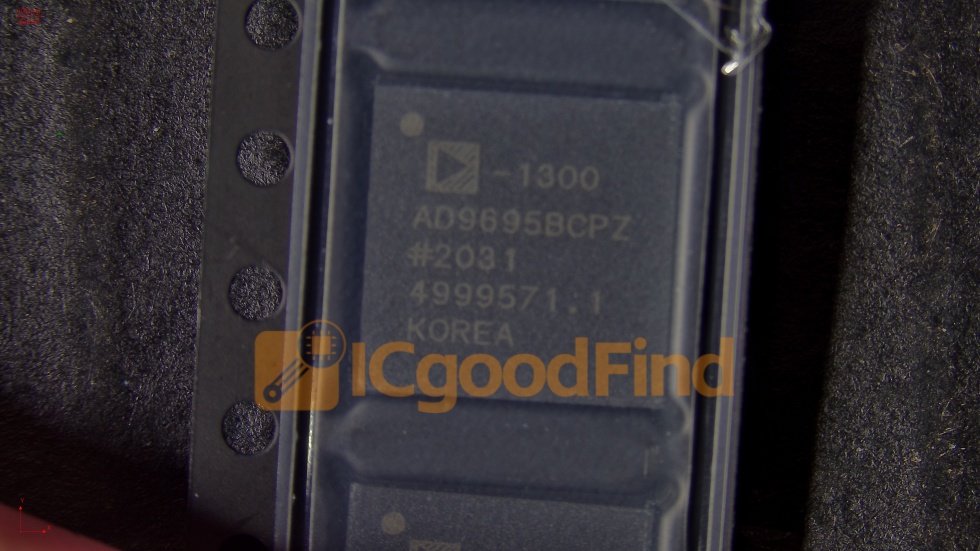
The EPCQ16ASI8N is part of the EPCQ series, which stands for Erasable Programmable Configurable Quad SPI Flash. It provides 16 Megabits (2 MB) of storage, making it suitable for a broad range of FPGA configuration applications. Whether you are designing industrial control systems, communication infrastructure, or consumer electronics, understanding the EPCQ16ASI8N can help you make informed decisions about your memory architecture.
In this article, we will explore the EPCQ16ASI8N in depth, covering its key features, typical applications, and practical design considerations. We will also highlight how platforms like ICGOODFIND can assist engineers in sourcing this component efficiently. By the end, you will have a comprehensive understanding of why the EPCQ16ASI8N remains a popular choice for FPGA configuration.
Main Body
Part 1: Key Features and Technical Specifications of EPCQ16ASI8N
The EPCQ16ASI8N is a 16 Mb serial configuration flash memory designed specifically for Altera FPGAs. It operates using the Quad SPI (Serial Peripheral Interface) protocol, which allows for fast data transfer rates and efficient configuration. Let’s break down its most important technical specifications.
Memory Capacity and Organization: The EPCQ16ASI8N offers 16 Megabits of storage, which translates to 2 Megabytes. This capacity is sufficient for configuring many mid-range FPGAs, such as the Cyclone IV, Cyclone V, and Arria series. The memory is organized into sectors and blocks, allowing for flexible erase and program operations. The device supports page programming with a page size of 256 bytes, enabling efficient data writes.
Voltage and Power Characteristics: The EPCQ16ASI8N operates at a supply voltage of 2.7V to 3.6V, making it compatible with common 3.3V logic levels. It features low power consumption, which is critical for battery-powered or energy-efficient designs. The device also includes a deep power-down mode, reducing current draw to minimal levels when the FPGA is not being configured.
Performance and Speed: With Quad SPI, the EPCQ16ASI8N can achieve read speeds up to 100 MHz (or higher depending on the mode). This allows for rapid FPGA configuration, reducing boot times in systems that require quick startup. The device supports continuous read mode, which further enhances performance by eliminating the need to send command bytes for every read operation.
Packaging and Pinout: The EPCQ16ASI8N comes in an 8-pin SOIC (Small Outline Integrated Circuit) package, which is compact and easy to integrate into space-constrained PCBs. Its pinout includes serial clock (SCLK), chip select (CS), data lines (IO0-IO3), and power/ground pins. The “N” suffix in the part number typically indicates a lead-free (RoHS-compliant) package, making it suitable for environmentally friendly products.
Reliability and Endurance: The EPCQ16ASI8N is designed for high reliability, with 100,000 erase/program cycles and 20-year data retention. This makes it ideal for applications that require long-term storage of configuration data without frequent updates. The device also includes error detection and correction features to ensure data integrity.
Compatibility: One of the standout features of the EPCQ16ASI8N is its seamless compatibility with Altera FPGAs. It can be used with Quartus Prime software, allowing designers to program the flash memory directly through the FPGA’s JTAG interface. This simplifies the development process and reduces the need for external programmers.
In summary, the EPCQ16ASI8N combines high capacity, fast performance, low power, and robust reliability in a compact package. These features make it a go-to choice for FPGA configuration in a wide range of applications.
Part 2: Typical Applications and Use Cases for EPCQ16ASI8N
The EPCQ16ASI8N is not just a generic flash memory chip; it is specifically optimized for FPGA configuration. As such, it finds its way into numerous systems where FPGAs are used. Let’s explore some of the most common applications.
Industrial Automation and Control: In industrial environments, FPGAs are used for real-time control, motor drives, and machine vision. The EPCQ16ASI8N stores the configuration bitstream that defines the FPGA’s logic. Because industrial systems often require high reliability and long-term availability, the EPCQ16ASI8N’s 20-year data retention and robust design make it an excellent fit. For example, a PLC (Programmable Logic Controller) might use a Cyclone FPGA configured by an EPCQ16ASI8N to handle multiple I/O channels and communication protocols.
Communication Infrastructure: Telecom and networking equipment often rely on FPGAs for packet processing, signal modulation, and protocol conversion. The EPCQ16ASI8N provides the necessary configuration memory to ensure that these FPGAs boot correctly after power cycles. In 5G base stations, optical transport networks, and routers, the EPCQ16ASI8N helps maintain uptime and fast reconfiguration.
Consumer Electronics: From digital cameras to smart TVs, FPGAs are used for image processing, video scaling, and interface bridging. The EPCQ16ASI8N offers a cost-effective way to store configuration data without adding significant board space. Its low power consumption is particularly beneficial for portable devices.
Automotive Systems: Modern vehicles contain numerous electronic control units (ECUs) that use FPGAs for advanced driver-assistance systems (ADAS), infotainment, and powertrain control. The EPCQ16ASI8N meets the automotive-grade reliability requirements (though specific automotive-grade versions may exist). Its wide temperature range (typically -40°C to +85°C or higher) ensures operation in harsh environments.
Test and Measurement: FPGAs are ubiquitous in oscilloscopes, spectrum analyzers, and automated test equipment. The EPCQ16ASI8N allows these instruments to be reconfigured for different test scenarios, providing flexibility and future-proofing.
Aerospace and Defense: In satellite communications, radar systems, and avionics, FPGAs offer high performance and reconfigurability. The EPCQ16ASI8N provides rad-hard or radiation-tolerant options (depending on variant) for critical missions. Its non-volatile nature ensures that configuration is retained even after power loss.
Prototyping and Development: For engineers working with Altera FPGA development boards, the EPCQ16ASI8N is often the default configuration device. It allows quick iteration and programming via Quartus Prime Programmer. This makes it invaluable for university labs, startups, and R&D departments.
In all these applications, the EPCQ16ASI8N serves as the trusted boot companion for FPGAs. Its 16 Mb capacity is enough for most mid-range FPGAs, and its Quad SPI interface ensures fast configuration. When designers need to source this component, they often turn to specialized distributors. For example, ICGOODFIND is a platform that helps engineers and procurement specialists locate EPCQ16ASI8N and other electronic components from verified suppliers, ensuring authenticity and competitive pricing.
Part 3: Design Considerations and Best Practices for Using EPCQ16ASI8N
Integrating the EPCQ16ASI8N into your FPGA design requires careful attention to several factors. In this section, we will discuss hardware design, software configuration, and sourcing strategies to help you get the most out of this device.
Hardware Design Guidelines: - Power Supply Decoupling: Place a 0.1 µF ceramic capacitor close to the VCC pin of the EPCQ16ASI8N to filter high-frequency noise. Additionally, a 10 µF bulk capacitor may be used for low-frequency stability. - Signal Integrity: Keep the Quad SPI traces (SCLK, CS, IO0-IO3) as short as possible and match their lengths to avoid skew. Use series termination resistors (e.g., 22-33 ohms) if signal reflections are a concern. - Pull-up Resistors: The CS line should have a pull-up resistor (e.g., 10k ohms) to keep the device deselected during power-up. Similarly, IO lines may need pull-ups depending on the FPGA’s configuration. - JTAG Interface: To program the EPCQ16ASI8N via the FPGA’s JTAG port, ensure that the JTAG signals (TCK, TMS, TDI, TDO) are properly routed and terminated. Altera recommends specific JTAG chain configurations for indirect programming. - Voltage Compatibility: The EPCQ16ASI8N operates at 3.3V, but some FPGAs use 1.8V or 2.5V I/O. In such cases, level shifters may be required. Always check the FPGA’s configuration voltage requirements.
Software Configuration: - Quartus Prime Settings: In Quartus Prime, select the EPCQ16ASI8N as the configuration device. The software will generate a .jic (JTAG Indirect Configuration) file that can be programmed into the flash. - Programming Methods: You can program the EPCQ16ASI8N using Active Serial (AS) mode or JTAG Indirect Configuration (JIC). AS mode requires a dedicated programmer (e.g., USB-Blaster), while JIC mode uses the FPGA’s JTAG port. - Configuration Modes: Ensure that the FPGA’s MSEL pins are set correctly for the desired configuration scheme (e.g., AS or PS). The EPCQ16ASI8N supports AS x1, AS x4, and fast AS modes. - Data Compression: To reduce configuration time, enable bitstream compression in Quartus Prime. The EPCQ16ASI8N’s Quad SPI interface can then decompress the data on the fly.
Sourcing and Quality Assurance: - Counterfeit Risk: The electronics industry faces a growing problem of counterfeit flash memory. Always purchase the EPCQ16ASI8N from authorized distributors or trusted platforms. - ICGOODFIND Advantage: Platforms like ICGOODFIND aggregate inventory from franchised distributors and independent sources, providing traceability and quality checks. This is especially important for long-lifecycle products where the EPCQ16ASI8N may be discontinued or allocated. - Lead-Free and RoHS: The “N” suffix in EPCQ16ASI8N indicates lead-free construction. Ensure that your assembly process is compatible with RoHS requirements. - Temperature Grades: The standard EPCQ16ASI8N is rated for industrial temperature range (-40°C to +85°C). For automotive or military applications, check for AEC-Q100 or military-grade variants.

Debugging Tips: - If the FPGA fails to configure, check the EPCQ16ASI8N’s status register using a programmer. Common issues include write protection, incomplete erase, or corrupted data. - Use an oscilloscope to verify that the SCLK and CS signals are toggling correctly during configuration. - Ensure that the FPGA’s configuration clock (DCLK) is within the EPCQ16ASI8N’s specified range (typically up to 100 MHz for Quad SPI).
By following these best practices, you can ensure reliable operation of the EPCQ16ASI8N in your FPGA system. Remember that proper sourcing is just as important as design—platforms like ICGOODFIND can save you time and reduce risk when procuring this critical component.
Conclusion
The EPCQ16ASI8N is a versatile, reliable, and high-performance configuration flash memory that has become a staple in Altera FPGA designs. With 16 Mb of storage, Quad SPI interface, low power consumption, and robust endurance, it meets the demands of applications ranging from industrial automation to consumer electronics. Its compatibility with Quartus Prime and seamless integration with Altera FPGAs make it a preferred choice for engineers worldwide.
In this article, we covered the key features of the EPCQ16ASI8N, explored its typical applications, and discussed design considerations including hardware layout, software configuration, and sourcing. We also highlighted how ICGOODFIND can assist in locating genuine EPCQ16ASI8N components from trusted suppliers, ensuring that your project stays on track.
As FPGA technology continues to evolve, the need for dependable configuration memory will only grow. The EPCQ16ASI8N stands as a proven solution that balances capacity, speed, and reliability. Whether you are designing a new system or maintaining an existing one, understanding this chip is essential for successful FPGA deployment.