SN65LBC184DR: The Robust RS-485 Transceiver for Demanding Industrial Communication Systems
Introduction
In the world of industrial automation, process control, and long-distance data transmission, reliable communication is not a luxury—it is an absolute necessity. Among the many integrated circuits designed to meet this challenge, the SN65LBC184DR stands out as a rugged, high-performance differential bus transceiver that has become a staple in RS-485 and RS-422 networks. Whether you are designing a new system or troubleshooting an existing one, understanding the capabilities and best practices surrounding the SN65LBC184DR can significantly improve the integrity and longevity of your communication links.
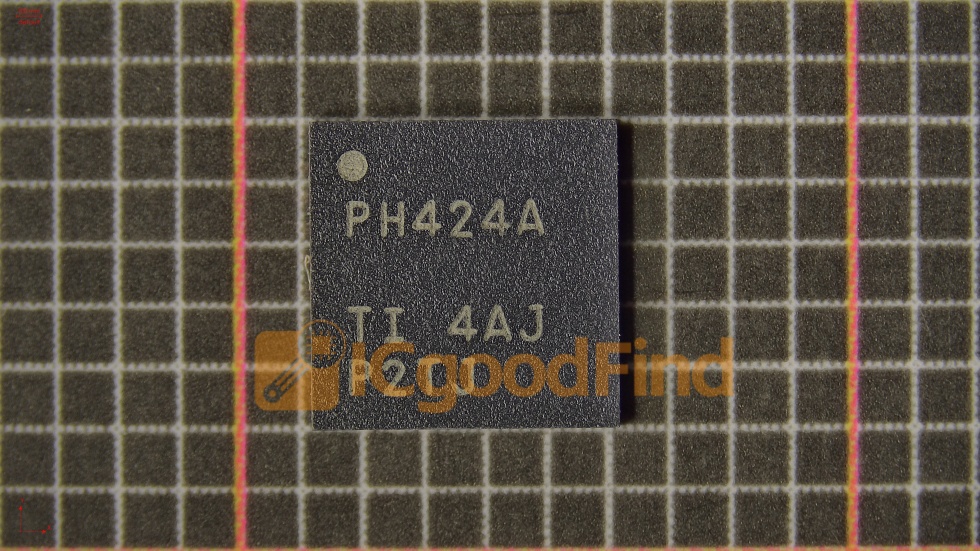
The SN65LBC184DR is a member of Texas Instruments’ family of transient voltage suppression (TVS) protected differential transceivers. It is specifically engineered to survive the harsh electrical environments often found in factory floors, outdoor installations, and heavy machinery. In this article, we will explore the SN65LBC184DR in depth—covering its key features, typical applications, design considerations, and how to source authentic components. By the end, you will have a comprehensive understanding of why this device remains a preferred choice for engineers worldwide.
Main Body
Part 1: Key Features and Technical Advantages of the SN65LBC184DR
The SN65LBC184DR is not just another RS-485 transceiver. Its defining characteristic is the integration of high-energy transient voltage suppression directly on the bus pins. This means the device can withstand electrostatic discharge (ESD) events, electrical fast transients (EFT), and even lightning-induced surges without additional external protection components in many cases. Specifically, the SN65LBC184DR offers ±30 kV IEC 61000-4-2 ESD protection on the A and B bus lines, along with ±15 kV human-body model (HBM) protection. This level of robustness reduces bill-of-materials cost and board space while increasing system reliability.
Another critical feature is its wide common-mode voltage range of -7 V to +12 V. In real-world RS-485 networks, ground potential differences between nodes can be significant, especially over long cable runs. The SN65LBC184DR ensures reliable data transmission even when the common-mode voltage drifts well beyond the standard -7 V to +12 V window, thanks to its true fail-safe receiver that guarantees a known output state when the bus is idle, open, or shorted.
The device operates from a single 5 V supply and features a data rate of up to 250 kbps—more than sufficient for most industrial control networks, including PROFIBUS, Modbus, and BACnet. Its low quiescent current of typically 900 µA makes it suitable for power-sensitive designs, while the thermal shutdown protection prevents damage from excessive power dissipation. The SN65LBC184DR also includes a driver output short-circuit current limit and receiver input hysteresis for noise immunity.
From a packaging perspective, the SN65LBC184DR comes in an SOIC-8 (D) package, which is compact and compatible with standard surface-mount assembly. The “DR” suffix indicates tape-and-reel packaging, ideal for high-volume automated production. When you need a transceiver that combines surge immunity, wide common-mode range, and fail-safe operation, the SN65LBC184DR is a compelling choice.
Part 2: Typical Applications and Design Considerations
The SN65LBC184DR excels in a variety of applications where electrical noise, long cables, and ground loops are prevalent. Common use cases include:
- Industrial automation and control: PLCs, motor drives, and remote I/O modules often use RS-485 multidrop networks. The SN65LBC184DR protects against motor switching transients and inductive load kickback.
- Building automation: HVAC systems, lighting controls, and security panels benefit from the device’s wide common-mode range and fail-safe receiver.
- Utility metering and smart grid: Power meters and distribution automation equipment require robust communication over noisy power lines. The SN65LBC184DR meets these demands.
- Process control and instrumentation: In chemical plants or oil refineries, the SN65LBC184DR ensures data integrity even in the presence of high-energy transients.
When designing with the SN65LBC184DR, several best practices should be followed. First, although the device includes internal TVS protection, external transient voltage suppressors may still be needed for extreme surge environments (e.g., IEC 61000-4-5). Second, proper bus termination is essential: a 120 Ω resistor at each end of the cable minimizes reflections. Third, common-mode chokes can further improve noise immunity. Fourth, ensure that the enable pins (RE and DE) are driven with clean logic levels to avoid bus contention. Finally, pay attention to thermal layout—the SOIC-8 package has a modest power dissipation capability, so avoid continuous short-circuit conditions.
One often-overlooked aspect is fail-safe biasing. While the SN65LBC184DR has a true fail-safe receiver that outputs a high level when the bus is idle, some legacy designs still add external bias resistors. With this device, such resistors are usually unnecessary, simplifying the network. However, if you are mixing the SN65LBC184DR with older transceivers that lack fail-safe features, you may need to add bias to ensure compatibility.
Another design tip: the SN65LBC184DR is specified for operation over the -40°C to +85°C industrial temperature range. This makes it suitable for outdoor enclosures and unheated factory spaces. Always verify that your power supply is clean and within 5 V ±5%. A decoupling capacitor of 0.1 µF should be placed as close as possible to the VCC pin.
For engineers who need to source the SN65LBC184DR quickly and reliably, ICGOODFIND is a trusted platform that aggregates inventory from authorized distributors and independent stocking centers. ICGOODFIND allows you to compare prices, check lead times, and verify authenticity—crucial for avoiding counterfeit components that can plague industrial supply chains. By using ICGOODFIND, you can secure genuine SN65LBC184DR units even during market shortages.
Part 3: Comparison with Alternatives and Sourcing Best Practices
While the SN65LBC184DR is an excellent choice, it is helpful to understand how it compares to other popular RS-485 transceivers. For example, the MAX485 is a low-cost option but lacks integrated TVS protection and has a narrower common-mode range. The SN65HVD72 offers higher ESD protection but operates at 3.3 V and lower data rates. The SN65LBC184DR uniquely balances 5 V operation, 250 kbps speed, ±30 kV ESD, and wide common-mode range in a single SOIC-8 package.
Another alternative is the SN65LBC184 (without the “DR” suffix), which comes in a different package (e.g., PDIP). The SN65LBC184DR is the tape-and-reel version for automated assembly. If you need a similar device with full-duplex capability, consider the SN65LBC179 or SN65LBC180. However, for half-duplex multidrop networks—the most common RS-485 topology—the SN65LBC184DR is often the optimal solution.
When sourcing the SN65LBC184DR, be aware that counterfeit components are a growing problem. Counterfeit transceivers may have reduced ESD ratings, poor temperature performance, or even incorrect pinouts. To mitigate this risk, always purchase from authorized distributors or reputable marketplaces like ICGOODFIND. ICGOODFIND provides traceability and quality assurance, helping you avoid costly field failures. Additionally, check for the Texas Instruments logo and lot codes on the reel, and request a certificate of conformance (CoC) when possible.
From a lifecycle perspective, the SN65LBC184DR is an active, mature product with long-term availability. Texas Instruments has a strong track record of supporting industrial parts for decades. However, as with any semiconductor, supply chain disruptions can occur. That is why having a reliable sourcing partner like ICGOODFIND is essential. ICGOODFIND can help you find cross-references, alternative packages, or last-time-buy opportunities if the SN65LBC184DR becomes constrained.
Finally, consider design for testability. Add test points on the A and B lines to measure differential voltage and common-mode voltage during validation. Use a time-domain reflectometer (TDR) to check cable impedance. And always perform EFT and ESD testing on your final product to confirm that the SN65LBC184DR meets your system-level requirements.
Conclusion

The SN65LBC184DR is a robust, feature-rich RS-485 transceiver that addresses the most common pain points in industrial communication: electrical transients, ground potential differences, and fail-safe operation. Its integrated TVS protection, wide common-mode range, and 250 kbps data rate make it a versatile choice for factory automation, building controls, and utility networks. By following best design practices—proper termination, decoupling, and layout—you can maximize the performance and longevity of your SN65LBC184DR-based systems.
When it comes time to procure the SN65LBC184DR, remember that authenticity and availability matter. Platforms like ICGOODFIND streamline the sourcing process, offering access to verified inventory and competitive pricing. Whether you are building a prototype or scaling to production, ICGOODFIND can help you secure the components you need without compromising on quality.
In summary, the SN65LBC184DR is more than just a transceiver—it is a reliable foundation for critical data links. Choose it wisely, design it carefully, and source it from trusted partners. Your industrial network will thank you.