




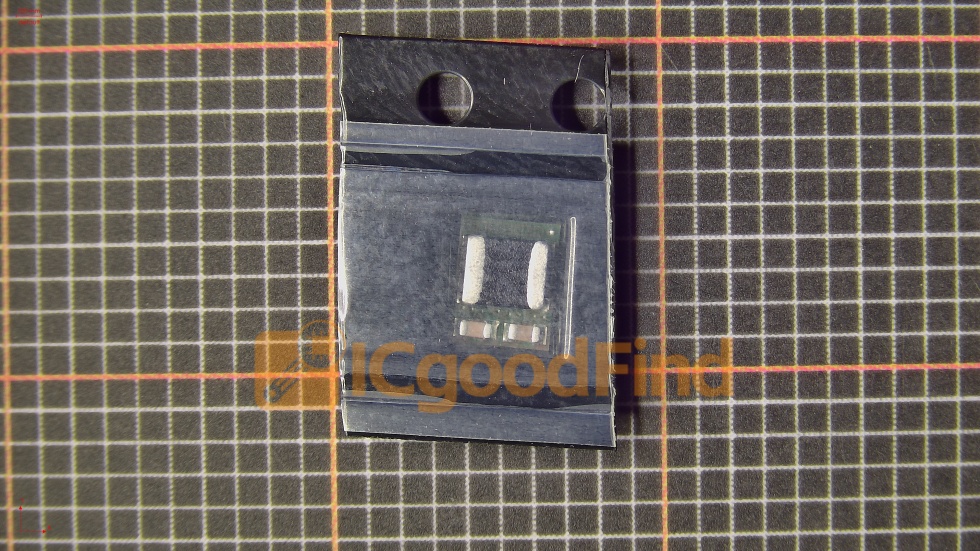

TPS563200DDCR: The Compact 17V, 3A Step-Down Converter That Redefines Power Efficiency
Introduction
In the fast-evolving world of power management, selecting the right DC-DC converter can make or break your design’s thermal performance, battery life, and overall reliability. Among the myriad of options available, Texas Instruments’ TPS563200DDCR stands out as a high-efficiency, synchronous step-down converter that delivers up to 3A of continuous output current from a 4.5V to 17V input range. Packaged in a tiny SOT-23-6 (DDC) footprint, this device is engineered for space-constrained applications such as set-top boxes, LCD TVs, networking equipment, and industrial sensors. But what truly sets the TPS563200DDCR apart is its D-CAP2™ mode control architecture, which provides fast transient response without the need for external compensation components. In this article, we will dive deep into its features, application benefits, and design considerations—while also highlighting how ICGOODFIND can help you source this component reliably for your next project.
Main Body
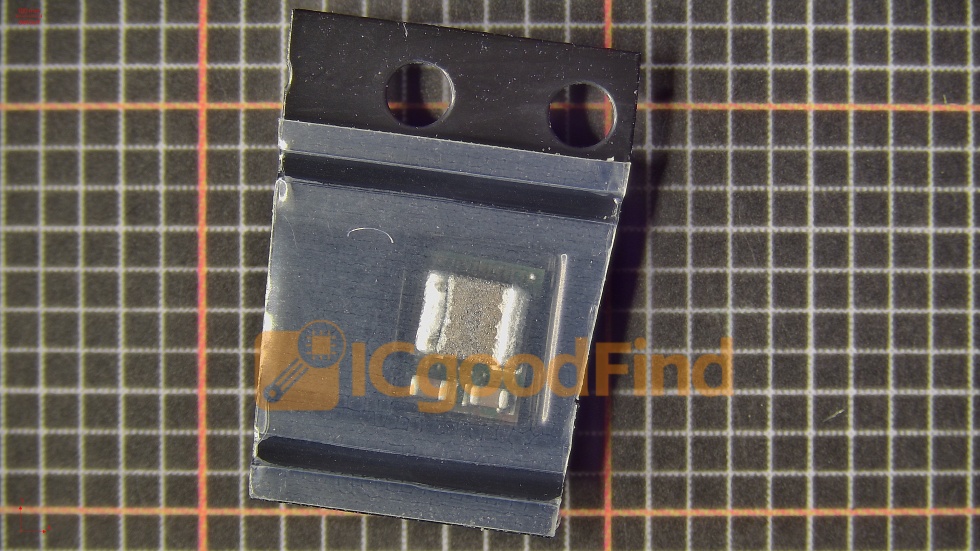
Part 1: Core Features and Technical Specifications
The TPS563200DDCR is not just another buck converter; it is a precision-engineered power solution that balances simplicity with performance. Let’s break down its key specifications:
- Input Voltage Range: 4.5V to 17V – This wide range makes it suitable for both 5V and 12V rails, covering a broad spectrum of consumer and industrial power buses.
- Output Current: 3A Continuous – With a low RDS(on) of 92mΩ (high-side) and 58mΩ (low-side) MOSFETs, it achieves up to 95% conversion efficiency at typical load conditions.
- Reference Voltage Accuracy: ±1% – Ensures precise output regulation, critical for powering sensitive loads like FPGAs or RF transceivers.
- Switching Frequency: 580kHz – A fixed frequency that balances efficiency and external component size, allowing the use of small inductors (e.g., 2.2µH to 10µH).
- D-CAP2™ Mode Control – This proprietary architecture provides fast load-step response and eliminates the need for a separate compensation network, reducing BOM count and design time.
- Protection Features – Includes cycle-by-cycle overcurrent limit, thermal shutdown, and under-voltage lockout (UVLO) with hysteresis.
One of the most underrated aspects of the TPS563200DDCR is its SOT-23-6 package. Measuring only 2.9mm × 1.6mm, this package is ideal for high-density PCB layouts where board space is at a premium. Moreover, the device’s eco-mode™ pulse-skipping function improves light-load efficiency, making it an excellent choice for battery-powered devices that spend most of their time in standby.
From a design perspective, the TPS563200DDCR requires only a handful of external components: an input capacitor, an output inductor, an output capacitor, and a feedback resistor divider. This simplicity is a huge advantage for rapid prototyping and mass production. For engineers looking to minimize design risk, the device’s predictable startup behavior (soft-start time of 1ms) ensures smooth inrush current control.
Part 2: Application Scenarios and Performance Benefits
Where does the TPS563200DDCR truly shine? Let’s explore three primary application domains:
2.1 Consumer Electronics: Set-Top Boxes & Smart TVs
Modern set-top boxes and smart TVs require multiple low-voltage rails (e.g., 3.3V, 1.8V, 1.0V) to power application processors, DDR memory, and Wi-Fi modules. The TPS563200DDCR’s 17V input rating allows it to step down directly from a 12V adapter or an intermediate bus, eliminating an extra conversion stage. Its fast transient response (typically < 30µs recovery time) ensures that voltage dips do not occur when the CPU suddenly switches from idle to full load during 4K video decoding. Furthermore, the 580kHz fixed frequency keeps switching noise out of the sensitive RF bands, which is critical for Wi-Fi and Bluetooth coexistence.
2.2 Industrial & Networking Equipment
In industrial control systems and PoE (Power over Ethernet) switches, the input voltage can fluctuate significantly due to long cable runs or motor inrush currents. The TPS563200DDCR’s wide input range (up to 17V) provides excellent line regulation, while its cycle-by-cycle current limit protects the converter from short-circuit events. For networking equipment that requires 24⁄7 operation, the device’s thermal shutdown (triggered at 160°C junction temperature) adds a layer of safety. Additionally, the eco-mode™ feature reduces switching losses at light load, which is beneficial for equipment that operates in low-power idle states for extended periods.
2.3 Battery-Powered Portable Devices
Although the input voltage starts at 4.5V, the TPS563200DDCR can be used in 2-cell Li-ion battery applications (6.0V to 8.4V range). Its high efficiency at light loads (e.g., >85% at 10mA load) extends battery life in IoT sensors and handheld diagnostic tools. The SOT-23-6 package allows the entire power stage to fit on a PCB area smaller than a postage stamp, which is a game-changer for wearable devices. Moreover, the ±1% output voltage accuracy ensures that the processor’s core voltage remains within specification even as the battery discharges.
A key performance metric that engineers often overlook is the output voltage ripple. With a proper output capacitor (e.g., 22µF ceramic), the TPS563200DDCR achieves ripple below 10mV peak-to-peak, which is clean enough for noise-sensitive analog front-ends. This is achieved thanks to the D-CAP2™ control that uses an internal ripple injection network, making the design less sensitive to the ESR of the output capacitor.
Part 3: Design Guidelines, PCB Layout, and Sourcing with ICGOODFIND
3.1 Practical Design Recommendations
To get the best out of the TPS563200DDCR, follow these layout and component selection tips:
- Input Capacitor: Place a 10µF X5R ceramic capacitor as close as possible to the VIN and GND pins. For high-voltage transients, add a 0.1µF low-ESL capacitor in parallel.
- Output Inductor: Choose an inductor with a saturation current rating 20% higher than the peak current. A 4.7µH / 3.5A inductor is a good starting point for 3.3V output.
- Output Capacitor: Use two 22µF ceramic capacitors (X5R or X7R) to keep the output ripple low. Avoid high-ESR electrolytic capacitors unless required for bulk storage.
- Feedback Resistors: Use 1% tolerance resistors with values around 10kΩ to 100kΩ to set the output voltage. The formula is Vout = 0.76V × (1 + R1/R2).
- Thermal Management: The SOT-23-6 package has a thermal resistance (θJA) of about 150°C/W on a standard FR4 board. For high ambient temperatures, ensure adequate copper area on the PCB around the GND pin.
Layout is critical: Keep the high-current path (VIN → Inductor → VOUT) short and wide. The feedback trace should be routed away from the switch node (SW) to avoid noise coupling. A solid ground plane underneath the device is mandatory for optimal thermal and electrical performance.
3.2 Why Choose ICGOODFIND for Sourcing the TPS563200DDCR?
When you are ready to move from prototype to production, component sourcing becomes a bottleneck. This is where ICGOODFIND steps in. As a global electronic components distributor, ICGOODFIND offers:
- Authentic TI parts with full traceability – no counterfeit risks.
- Real-time inventory and competitive pricing for both small-quantity samples and bulk orders.
- Fast global shipping with anti-static packaging.
- Technical datasheets and application notes available for download directly from the product page.
By using ICGOODFIND, you can search for the TPS563200DDCR by part number, check its RoHS compliance, and even compare alternate package options like the TPS563201DDCR (different frequency) or TPS563208DDCR (different current limit). The platform’s BOM matching tool also helps you identify drop-in equivalents if you face supply chain shortages. For design engineers, ICGOODFIND provides a secure checkout process and dedicated customer support for volume pricing quotes. In today’s volatile semiconductor market, having a reliable sourcing partner like ICGOODFIND ensures your production line never stops.

3.3 Comparative Analysis: TPS563200DDCR vs. Competitors
To fully appreciate this part, let’s compare it with two common alternatives:
| Parameter | TPS563200DDCR | TI TPS5430 | ON Semi NCP3063 |
|---|---|---|---|
| Input Voltage | 4.5V – 17V | 5.5V – 36V | 3.0V – 40V |
| Output Current | 3A | 3A | 1.5A |
| Control Architecture | D-CAP2™ (no comp) | Voltage Mode (needs comp) | Current Mode (needs comp) |
| Package | SOT-23-6 | SOIC-8 | SOIC-8 |
| Light Load Efficiency | Excellent (Eco-mode) | Good | Poor |
| External Components | Minimal | Moderate | High |
As the table shows, the TPS563200DDCR offers the best power density and simplest design for applications with input voltages below 17V. The NCP3063 is older and less efficient, while the TPS5430 requires more board space and external compensation. For new designs, the TPS563200DDCR is clearly the modern choice for 3A-class point-of-load converters.
Conclusion
The TPS563200DDCR is a testament to Texas Instruments’ commitment to practical innovation. It combines a wide input range, high efficiency, fast transient response, and a tiny footprint into a single, easy-to-use package. Whether you are designing a smart home hub, an industrial sensor node, or a high-end audio DAC power supply, this converter simplifies your power tree while improving reliability. The D-CAP2™ control eliminates the need for compensation design, reducing your time-to-market. And with its eco-mode™ and thermal protection, it is robust enough for harsh environments.
For your next project, don’t let sourcing challenges derail your schedule. Visit ICGOODFIND today to check real-time stock, request a quote, or download the full datasheet for the TPS563200DDCR. With ICGOODFIND’s reliable logistics and authentic parts guarantee, you can focus on what you do best—designing exceptional products. Remember, in power design, every millivolt and every milliamp counts. Choose the TPS563200DDCR for your 3A step-down needs, and experience the difference of precision, simplicity, and performance.







