



LAN8720AI-CP-TR: The Ultimate Ethernet PHY Solution for Embedded Systems and IoT
Introduction
In the rapidly evolving world of embedded networking, selecting the right physical layer (PHY) transceiver is critical for ensuring reliable, high-speed data transmission. Among the myriad of options available, the LAN8720AI-CP-TR stands out as a cost-effective, low-power, and highly integrated 10⁄100 Ethernet PHY designed specifically for RMII (Reduced Media Independent Interface) applications. Manufactured by Microchip Technology (formerly SMSC), this compact chip has become the go-to choice for developers working on STM32, Raspberry Pi, ESP32, and other MCU-based projects that require wired network connectivity. Whether you are building an industrial controller, a smart home gateway, or a prototyping board, understanding the full capabilities of the LAN8720AI-CP-TR is essential. In this article, we will dive deep into its key features, practical integration strategies, and performance considerations, while also highlighting how ICGOODFIND—a trusted electronic component sourcing platform—can help you secure authentic parts for your next design.
Part 1: Core Architecture and Technical Specifications
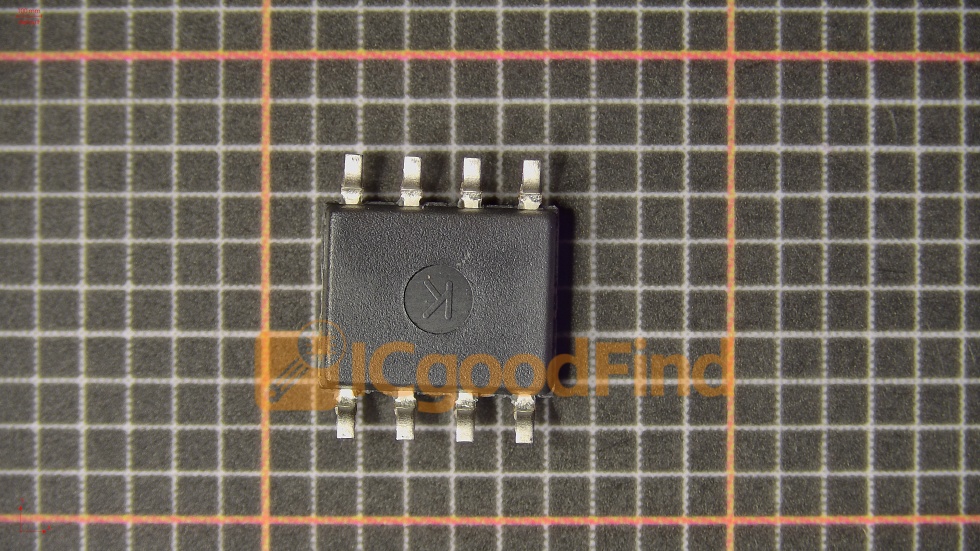
1.1 What Makes the LAN8720AI-CP-TR Unique?
The LAN8720AI-CP-TR is a single-chip 10BASE-T/100BASE-TX Ethernet PHY that operates with a 3.3V supply voltage while supporting 1.8V or 2.5V I/O voltage levels via an integrated voltage regulator. This flexibility makes it compatible with a wide range of host controllers. Unlike older PHYs that require complex parallel interfaces, this chip uses the RMII interface, which reduces the number of pins needed from 16 (MII) to just 7—significantly simplifying PCB layout and reducing BOM cost.
Key technical parameters include: - Data rate: 10⁄100 Mbps (auto-negotiation supported) - Interface: RMII (Rev. 1.2 compliant) with 50 MHz reference clock - Package: 24-pin QFN (4x4 mm) – extremely space-saving - Operating temperature: -40°C to +85°C (industrial grade) - Power consumption: < 150 mW typical in active mode, with Energy-Efficient Ethernet (EEE) support for idle low-power states - Built-in loopback and cable diagnostic features for easy testing
1.2 Internal Block Diagram and Signal Path
The LAN8720AI-CP-TR integrates the physical coding sublayer (PCS), physical medium attachment (PMA), and twisted-pair transceiver all on one die. It also includes a digital clock recovery circuit and an adaptive equalizer that compensates for signal distortion over long cable runs (up to 150 meters). The chip automatically detects the cable polarity, crossover (MDI/MDIX), and link status, which reduces firmware complexity.
For designers, the most important pins are: - TXD[1:0] & RXD[1:0] – RMII data lines - TX_EN – transmit enable - MDC/MDIO – management interface for register configuration - REF_CLK – 50 MHz reference clock (can be input or output) - nINT – interrupt output for link change or error events
1.3 Why Choose This PHY Over Competitors?
Compared to alternatives like the DP83848 (TI) or KSZ8081 (Microchip), the LAN8720AI-CP-TR offers a better balance of price, size, and thermal performance. Its 4x4 mm QFN package is 40% smaller than the DP83848’s LQFP-48, making it ideal for compact IoT modules. Additionally, its RMII-only interface eliminates the need for a 25 MHz crystal in some designs (if the host provides a 50 MHz clock), further reducing component count. For hobbyists and professionals alike, the abundant open-source drivers (e.g., for STM32 HAL, Zephyr RTOS, and Linux) mean you can get your network stack running in minutes, not days.
Part 2: Practical Integration – Hardware Design and Software Bring-Up
2.1 Schematic Design Essentials
When integrating the LAN8720AI-CP-TR, pay attention to the following critical design rules:
- Magnetics (Transformer): You must use a 1:1 isolation transformer with integrated common-mode chokes (e.g., Pulse J0011D21 or Bel Fuse 0826-1G1T-43-F). The center tap on the transformer’s primary side should be connected to 3.3V via a 1kΩ resistor (for Bob Smith termination) to reduce EMI.
- Crystal or Clock Source: If you choose to use an external 25 MHz crystal, connect it between XI and XO pins with two 18 pF load capacitors. Alternatively, you can drive REF_CLK from the MCU (50 MHz) and leave the crystal pins floating—this is the preferred method for STM32F4/F7/H7 designs.
- Power Decoupling: Place a 10 µF bulk capacitor and a 0.1 µF ceramic capacitor as close as possible to the VDD pins. The VDDIO pin (for I/O voltage) should be tied to the same rail as your MCU’s I/O supply (e.g., 3.3V or 1.8V) to ensure correct logic levels.
- LED Indicators: The chip provides nLINK and nSPEED pins that can directly drive LEDs through 330Ω resistors, giving you visual link/activity feedback without extra GPIOs.
2.2 Software Bring-Up with STM32 (HAL Example)
The most common host for the LAN8720AI-CP-TR is the STM32F407/F429 with built-in Ethernet MAC. Here is a simplified bring-up sequence:
- Enable GPIO clocks for the RMII pins (PA1, PA2, PA7, PC4, PC5, etc.) and configure them as alternate function (AF11 for Ethernet).
- Configure the MAC in HAL:
heth.Init.MediaInterface = HAL_ETH_RMII_MODE;and set the MAC address. - Initialize the PHY by writing to its registers via MDIO. The LAN8720AI-CP-TR has a default PHY address of 0x00 (strapped by pins PHYAD0/1). Use
HAL_ETH_ReadPHYRegisterto verify the PHY ID (should be 0x0007 for LAN8720). - Perform auto-negotiation by setting register 0 (control) bit 12 to 1, then wait for register 1 (status) bit 5 (auto-negotiation complete).
- Start the MAC with
HAL_ETH_Start(&heth)and then run a simple ping test.
Common Pitfall: If you don’t see a link, check the REF_CLK frequency with an oscilloscope. Many boards fail because the 50 MHz clock is not stable or is missing. Also, ensure the PHY reset pin (nRST) is held low for at least 10 ms after power-up, then released.
2.3 Using ICGOODFIND for Component Sourcing
When you are ready to move from prototype to production, sourcing genuine LAN8720AI-CP-TR parts is crucial. Counterfeit or refurbished PHYs can cause intermittent link drops or thermal failures. This is where ICGOODFIND becomes your trusted partner. ICGOODFIND is a professional electronic components search engine and supplier that aggregates real-time inventory from authorized distributors and vetted brokers. By searching for “LAN8720AI-CP-TR” on ICGOODFIND, you can instantly compare pricing, lead times, and stock quantities from multiple sources. The platform also provides datasheets, PCB footprints, and lifecycle status, helping you avoid end-of-life surprises. For high-volume orders, ICGOODFIND offers factory-direct procurement and incoming inspection reports, ensuring every reel of LAN8720AI-CP-TR meets Microchip’s original specifications. Whether you need 10 pieces for a hobby run or 100,000 for mass production, ICGOODFIND streamlines the entire supply chain process.
Part 3: Performance Optimization and Real-World Applications
3.1 Achieving Maximum Throughput and Low Latency
To get the best performance from the LAN8720AI-CP-TR, consider the following optimization strategies:
- Use DMA (Direct Memory Access) on your MCU to transfer Ethernet frames without CPU intervention. This reduces latency to under 50 µs for small packets.
- Enable interrupt coalescing (if supported by your MAC) to reduce the number of interrupts per second, lowering CPU overhead.
- Tune the RMII clock skew: Some MCUs allow you to adjust the sampling point of the RXD lines. If you see CRC errors, try shifting the clock phase by 1-2 ns.
- Power saving: In battery-powered devices, use the PHY’s power-down mode (register 0, bit 11) during idle periods. Wake-on-LAN (WoL) is also supported via the magic packet detection feature, but only when the MAC is in low-power mode.
3.2 Application Case Studies
Case 1: Industrial Fieldbus Gateway
A manufacturer of factory automation equipment used the LAN8720AI-CP-TR to add Ethernet/IP connectivity to a legacy Modbus RTU controller. By pairing the PHY with an STM32F746, they achieved sub-10 ms cycle times for 1000+ I/O points. The industrial temperature rating (-40°C to +85°C) allowed deployment in unheated warehouses.
Case 2: Smart Home Hub
A startup building a Zigbee-to-Ethernet bridge chose the LAN8720AI-CP-TR for its small footprint on a 2-layer PCB. The RMII interface reduced routing congestion, and the integrated EEE feature cut idle power consumption by 70%, enabling the hub to be powered via USB.
Case 3: Automotive Diagnostic Tool
An automotive aftermarket company integrated the PHY into a vehicle bus analyzer that connects to a car’s OBD-II port. The LAN8720AI-CP-TR’s cable diagnostic capability (register 27-30) allowed the tool to detect open/short circuits in the Ethernet harness, saving technicians hours of troubleshooting.
3.3 Thermal and EMC Considerations
Although the LAN8720AI-CP-TR runs cool (typical junction temperature rise is only 15°C above ambient), proper PCB thermal relief is still recommended. The exposed pad on the bottom of the QFN package should be soldered to a ground plane with multiple vias to dissipate heat. For EMC, place the magnetics close to the RJ45 connector and keep the differential traces (TX+/-, RX+/-) 100Ω impedance matched with a solid ground reference underneath. Adding a ferrite bead on the 3.3V supply to the PHY can suppress high-frequency noise from switching regulators.
Conclusion
The LAN8720AI-CP-TR is more than just a PHY chip—it is the backbone of modern low-cost embedded networking. Its RMII interface, industrial temperature range, and ultra-small package make it the preferred choice for everything from hobbyist Arduino shields to commercial IoT gateways. By following the hardware design rules and software bring-up steps outlined above, you can achieve rock-solid 100 Mbps links with minimal effort. However, the success of your product ultimately depends on the authenticity and quality of the components you use. That’s why leveraging a reliable sourcing platform like ICGOODFIND is not just a convenience—it’s a strategic advantage. With ICGOODFIND, you gain access to real-time global inventory, competitive pricing, and rigorous quality checks, ensuring that your LAN8720AI-CP-TR parts are genuine and delivery is on time. Whether you are a design engineer, a procurement manager, or a maker, remember: the right PHY, sourced from the right place, makes all the difference.







