


SN65HVD230DR: The Ultimate Guide to TI’s CAN Transceiver for Robust Industrial Communication
Introduction
In the world of industrial automation, automotive electronics, and embedded networking, Controller Area Network (CAN) remains the backbone of reliable, real-time data exchange. At the heart of every CAN node lies a critical component: the CAN transceiver. Among the myriad of options available, the SN65HVD230DR from Texas Instruments stands out as a low-power, high-speed, and exceptionally robust solution. Whether you are designing a battery management system, a motor controller, or a distributed sensor network, understanding the nuances of this transceiver is essential. In this comprehensive guide, we will dissect the SN65HVD230DR’s architecture, performance metrics, application scenarios, and design best practices. Additionally, we will highlight how ICGOODFIND, a leading electronic component sourcing platform, can streamline your procurement process for this part and many others. By the end, you will have a clear roadmap for integrating this transceiver into your next project with confidence.
Part 1: Technical Deep Dive – What Makes the SN65HVD230DR Special?
1.1 Core Specifications and Pinout
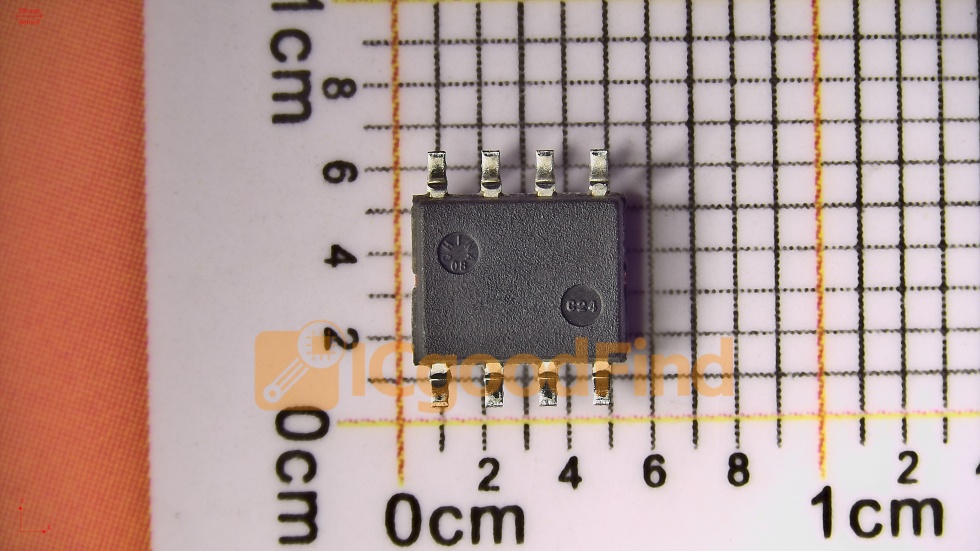
The SN65HVD230DR is a 3.3V CAN transceiver designed for ISO 11898-2 standard compliance. It comes in a compact SOIC-8 package, making it ideal for space-constrained PCBs. Key electrical characteristics include:
- Supply Voltage Range: 3.0V to 3.6V (optimized for 3.3V systems)
- Data Rate: Up to 1 Mbps (classic CAN) and compatible with CAN FD (up to 5 Mbps with proper bit timing)
- Standby Mode Current: Typically 370 µA, with a shutdown mode reducing it to µA for battery-sensitive applications
- Bus Pins (CANH, CANL): Withstand ±16V DC and ±25V transient voltages, providing excellent protection against short circuits and miswiring
The pinout is straightforward: TXD (transmit data input), RXD (receive data output), VREF (reference voltage output for the controller), RS (slope control / standby input), and the two bus lines. This simplicity allows for direct interfacing with any 3.3V MCU or DSP.
1.2 Differential Signaling and Noise Immunity
Unlike single-ended protocols, CAN uses differential signaling on a twisted pair. The SN65HVD230DR drives the bus with a dominant state (logic 0) by creating a voltage difference of 2V across CANH and CANL, and a recessive state (logic 1) by biasing both lines to 2.5V. This architecture provides superior common-mode rejection, allowing the transceiver to operate in electrically noisy environments—such as factory floors with variable-frequency drives or automotive engine bays.
The transceiver also features integrated bus fault protection. If either bus line is shorted to ground, VCC, or another signal, the device will not be damaged. Moreover, the thermal shutdown circuit prevents overheating during prolonged bus contention. These built-in safeguards reduce external component count, simplifying your BOM.
1.3 Slope Control and EMI Reduction
One of the most underrated features of the SN65HVD230DR is the RS (slope control) pin. By connecting a resistor between RS and ground, you can adjust the slew rate of the output signals. A higher resistance (e.g., 10 kΩ) yields a slower slew rate, which reduces electromagnetic interference (EMI) and is perfect for low-speed, long-cable applications (e.g., building automation). Conversely, a lower resistance (or connecting RS directly to ground) enables full-speed operation at 1 Mbps with sharper edges, suitable for high-throughput industrial control.
This flexibility means the same transceiver can be used across different product lines without redesigning the PCB—just change one resistor value. For designers targeting CISPR 25 automotive EMI standards, this feature is a game-changer.
Part 2: Application Scenarios and Design Integration
2.1 Automotive and EV Battery Management Systems (BMS)
In electric vehicles, the BMS must monitor dozens of cell modules in real time while withstanding high voltage transients. The SN65HVD230DR’s 3.3V operation aligns perfectly with modern automotive MCUs like the TMS320 or S32K series. Its low standby current ensures minimal drain on the 12V auxiliary battery when the vehicle is parked. Furthermore, the ±25V transient tolerance protects against load-dump events and inductive spikes from contactors.
A typical BMS node uses the SN65HVD230DR with a 120Ω termination resistor at both ends of the bus. The VREF pin can be used to bias the CAN controller’s comparator to the correct midpoint, eliminating the need for external voltage dividers. For isolated designs, you can pair it with a digital isolator (e.g., ISO7741) and a DC-DC converter, creating a galvanically isolated CAN node that prevents ground loops between battery packs.
2.2 Industrial Automation and Fieldbus Networks
Industrial environments demand deterministic communication over long distances (up to 1 km at 50 kbps). The SN65HVD230DR excels here due to its high common-mode input range (–12V to +12V), which allows it to tolerate ground potential differences between nodes. In a typical CANopen or DeviceNet network, each slave node uses this transceiver to interface with a PLC or gateway.
One critical design consideration is bus length vs. data rate. At 1 Mbps, the maximum bus length is about 40 meters; at 250 kbps, it extends to 250 meters. The SN65HVD230DR’s symmetrical output and controlled slew rate minimize reflections, ensuring clean eye diagrams even on marginal cabling. For redundant networks, you can use two transceivers per node with an external switch, but the SN65HVD230DR’s low propagation delay (typically 180 ns) makes this straightforward.
2.3 Medical Devices and Portable Instrumentation
While not the first sector that comes to mind, medical equipment (e.g., patient monitors, infusion pumps) increasingly uses CAN for internal module communication. The SN65HVD230DR’s 3.3V rail is ideal for battery-powered devices, and its shutdown mode (RS pin driven high) reduces current draw to under 1 µA, preserving battery life during idle periods. Additionally, the device’s fail-safe receiver ensures that if the bus is open, shorted, or idle, the RXD output defaults to a high (recessive) state, preventing false triggers in safety-critical systems.
For medical isolation requirements, you can place the SN65HVD230DR on the isolated side of a capacitive isolator, while the MCU remains on the non-isolated side. This topology meets IEC 60601-1 creepage and clearance requirements with minimal extra cost.
Part 3: Procurement, Alternatives, and Best Practices with ICGOODFIND
3.1 Why Choose ICGOODFIND for SN65HVD230DR?
Sourcing electronic components can be a headache due to counterfeit risks, long lead times, and price volatility. This is where ICGOODFIND becomes your strategic partner. As a global authorized distributor, ICGOODFIND offers:
- 100% authentic SN65HVD230DR units sourced directly from TI or authorized channels, with full traceability.
- Real-time stock visibility across multiple warehouses, ensuring you can secure parts even during global shortages.
- Competitive pricing for both prototype quantities (1–100 pcs) and mass production (10k+ pcs), with flexible shipping options.
- Technical datasheets, application notes, and reference designs available for free download, helping you accelerate your design cycle.
By using ICGOODFIND’s BOM consolidation tool, you can also source resistors, capacitors, and connectors in the same order, reducing procurement overhead. Their quality assurance team performs random electrical testing on every batch, giving you peace of mind for mission-critical applications.
3.2 Design Checklist and Common Pitfalls
To maximize the SN65HVD230DR’s performance, follow these proven best practices:
- Termination: Always place a 120Ω resistor at both physical ends of the CAN bus. Do not use “star” topologies; use a daisy-chain or backbone structure.
- Bypass Capacitors: Place a 100 nF ceramic capacitor close to the VCC pin and a 10 µF bulk capacitor at the power entry point. This prevents voltage dips during dominant state transitions.
- RS Pin Management: If you do not need slope control, tie RS directly to ground for maximum speed. For standby mode, drive RS high via a GPIO or a pull-up resistor.
- ESD Protection: Although the transceiver has internal ESD protection (8 kV HBM), add external TVS diodes (e.g., PESD1CAN) on the bus lines for system-level IEC 61000-4-2 compliance.
- Common-Mode Choke: For automotive or industrial environments, insert a bifilar common-mode choke (e.g., ACT45B-510-2P) in series with CANH and CANL to suppress radiated emissions.
3.3 Alternatives and Future-Proofing
While the SN65HVD230DR is excellent, consider these alternatives if your requirements change:
- SN65HVD232DR: Similar but without the RS pin (fixed slope), slightly cheaper for high-volume consumer applications.
- TCAN334: A newer TI part with integrated CAN FD and wake-up on bus functionality, ideal for automotive ECUs.
- ISO1042: A fully isolated transceiver with built-in DC-DC, eliminating the need for external isolation components.
However, for 90% of standard CAN applications, the SN65HVD230DR remains the best cost-performance balance. Its maturity (in production for over 15 years) means a wealth of community knowledge and long-term availability. When you are ready to move to production, ICGOODFIND can also provide lifecycle status alerts to ensure you are never caught off-guard by an EOL notice.
Conclusion
The SN65HVD230DR is more than just a transceiver—it is a reliable bridge between your microcontroller and the harsh physical world of industrial and automotive networking. Its 3.3V low-power design, robust fault tolerance, and flexible slew rate control make it a versatile choice for everything from a simple sensor node to a complex multi-ECU vehicle network. By understanding its electrical characteristics, applying proper PCB layout techniques, and sourcing from a trusted partner like ICGOODFIND, you can ensure your product meets the highest standards of performance and longevity.
Remember, the success of a CAN network depends not only on the transceiver but also on correct termination, cable quality, and firmware error handling. With the SN65HVD230DR as your foundation, and ICGOODFIND as your supply chain ally, you are well-equipped to build systems that communicate flawlessly for years to come. Whether you are a hobbyist prototyping on a breadboard or an engineer scaling to millions of units, this transceiver will not let you down.