




TPS82130SILR: The Ultimate Guide to TI’s High-Efficiency Power Module for Compact Designs
Introduction
In the rapidly evolving world of power electronics, engineers constantly seek components that combine high efficiency, small footprint, and reliable performance. The TPS82130SILR, a fully integrated step-down power module from Texas Instruments, has emerged as a go-to solution for space-constrained applications requiring up to 3A of continuous output current. This article provides an in-depth analysis of the TPS82130SILR, covering its key features, design advantages, and real-world applications. Whether you are designing for IoT devices, industrial automation, or portable electronics, understanding this module can significantly streamline your power supply design. For sourcing authentic components and competitive pricing, ICGOODFIND offers verified TPS82130SILR units with global shipping.
Main Body
Part 1: Core Specifications and Architecture of the TPS82130SILR
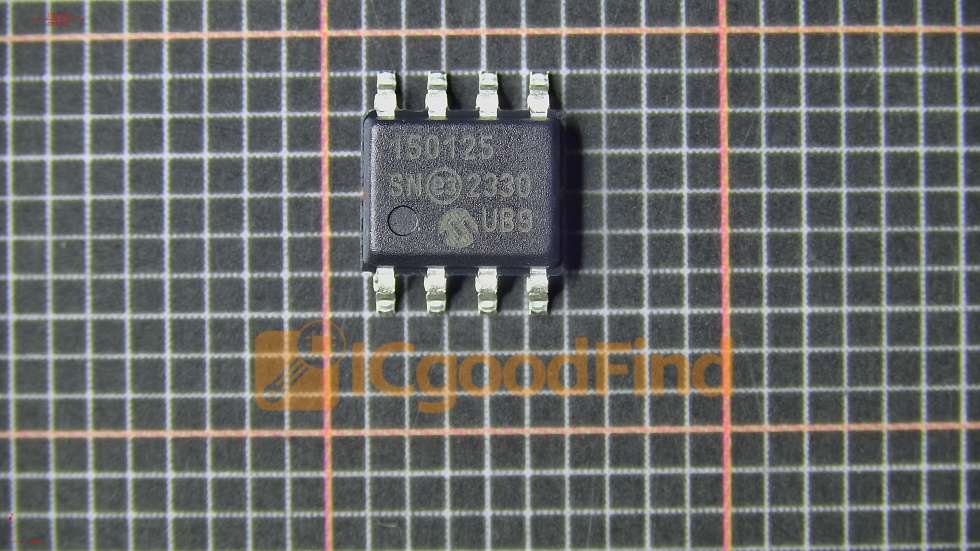
The TPS82130SILR is a MicroSiP™ power module that integrates a DC/DC converter, inductor, and passive components into a single, compact QFN package (3.5mm × 3.5mm × 1.4mm). This integration eliminates the need for external inductor selection and layout complexity, reducing design time and board space by up to 50% compared to discrete solutions.
Key electrical parameters include: - Input voltage range: 2.5V to 6V (suitable for Li-ion batteries and 5V rails) - Output voltage: Adjustable from 0.8V to 5.5V via external resistors - Output current: Up to 3A continuous (4A peak) - Switching frequency: 2.4MHz (fixed) – enables small external components and low output ripple - Efficiency: Up to 95% at 3.3V output, 1A load - Protection features: Overcurrent protection (OCP), overtemperature protection (OTP), and undervoltage lockout (UVLO)
The module uses current-mode control for fast transient response, making it ideal for powering FPGAs, DSPs, and other load-sensitive devices. Its power-save mode (PWM/PFM auto-switching) ensures high efficiency across the entire load range, from light loads to full load.
Why choose TPS82130SILR over discrete solutions?
- Reduced BOM count: Only 5 external components (input/output caps, feedback resistors) are needed. - Simplified layout: No inductor routing concerns; the module’s internal inductor is shielded for low EMI. - Thermal performance: The exposed pad package allows efficient heat dissipation to the PCB.
For engineers looking to source this module with guaranteed traceability and competitive pricing, ICGOODFIND provides a reliable supply chain for TPS82130SILR, including datasheets and application notes.
Part 2: Design Considerations and Application Circuits
Designing with the TPS82130SILR is straightforward, but certain best practices ensure optimal performance. Below are critical design steps and typical application circuits.
2.1 Output Voltage Setting
The output voltage is set by two external resistors (R1 and R2) connected to the FB pin. The formula is:
Vout = 0.8V × (1 + R1/R2)
For example, to achieve 3.3V output, use R1 = 31.6kΩ and R2 = 10kΩ (standard 1% resistors). For 1.8V output, use R1 = 12.5kΩ and R2 = 10kΩ.
2.2 Input and Output Capacitor Selection
- Input capacitor: A 10µF ceramic capacitor (X5R or X7R, 10V rating) placed close to the VIN pin is recommended. For high-ripple applications, add a 0.1µF bypass capacitor.
- Output capacitor: A 22µF ceramic capacitor (6.3V rating) provides stable operation. For lower output ripple, use two 22µF capacitors in parallel.
2.3 Layout Guidelines
- Keep the feedback resistor network close to the FB pin to avoid noise coupling.
- Use wide copper traces for power paths (VIN, VOUT, GND) to minimize resistive losses.
- Place the module’s thermal pad on a large ground plane with multiple vias for heat sinking.
2.4 Typical Application: Powering a 3.3V IoT Sensor Node
A common use case is powering a wireless sensor node from a single Li-ion battery (3.0V–4.2V). The TPS82130SILR can regulate to 3.3V with >90% efficiency, extending battery life. The module’s power-save mode reduces quiescent current to 17µA (typical) during light-load operation, ideal for sleep-mode scenarios.
2.5 Advanced Features: Enable and Soft-Start
The EN pin allows external on/off control. Connecting EN to VIN enables the module; pulling it below 0.4V shuts it down. The internal soft-start (1ms typical) prevents inrush current during startup.
For detailed design examples and simulation files, ICGOODFIND offers comprehensive technical resources alongside the TPS82130SILR product page, including reference designs for industrial sensors and portable medical devices.
Part 3: Real-World Applications and Competitive Advantages
The TPS82130SILR excels in applications where size, efficiency, and reliability are paramount. Below are three key market segments where this module is widely adopted.
3.1 Portable and Battery-Powered Devices
- Wearables: Smartwatches, fitness trackers, and hearing aids benefit from the module’s small footprint (3.5mm × 3.5mm) and low quiescent current.
- Handheld instruments: Multimeters, barcode scanners, and portable test equipment require stable 3.3V or 1.8V rails from single-cell Li-ion batteries.
3.2 Industrial Automation and Sensors
- Field transmitters: 4-20mA loop-powered sensors often need a regulated 3.3V for the microcontroller and wireless module. The TPS82130SILR’s wide input range (2.5V–6V) accommodates varying battery voltages.
- PLC modules: Space-constrained I/O modules use this module to generate local 1.2V or 1.8V for FPGAs and ASICs.
3.3 Networking and Telecommunications
- Small cell base stations: The module powers low-voltage rails for RF transceivers and baseband processors.
- PoE-powered devices: With input from 5V PoE converters, the TPS82130SILR provides clean 3.3V for Ethernet controllers.
Competitive Comparison vs. Similar Modules:
| Feature | TPS82130SILR | Competitor A (e.g., LTM8023) | Competitor B (e.g., ISL8203M) |
|---|---|---|---|
| Package size | 3.5mm × 3.5mm | 9mm × 6.25mm | 4mm × 4mm |
| Max output current | 3A | 2A | 3A |
| Efficiency at 3.3V/1A | 95% | 92% | 93% |
| Quiescent current | 17µA | 30µA | 25µA |
| Price (1k units) | ~$1.50 | ~$3.00 | ~$2.20 |
The TPS82130SILR clearly offers the best size-to-performance ratio and cost efficiency for high-volume designs. For prototyping or production, ICGOODFIND ensures you receive genuine TI parts with fast delivery and technical support.
Conclusion
The TPS82130SILR from Texas Instruments represents a breakthrough in power module integration, delivering 3A output, 95% efficiency, and a tiny 3.5mm × 3.5mm package that simplifies PCB design. Its ease of use, combined with robust protection features, makes it an ideal choice for battery-powered devices, industrial sensors, and space-constrained electronics. By eliminating external inductor selection and reducing BOM count, engineers can accelerate time-to-market while maintaining high reliability.
For sourcing the TPS82130SILR with confidence, ICGOODFIND offers a trusted platform with authentic components, competitive pricing, and global logistics. Whether you need samples for prototyping or bulk quantities for production, their dedicated support team ensures a seamless procurement experience.
Key takeaways: - High integration saves board space and design effort. - Wide input range supports Li-ion and 5V systems. - Low quiescent current extends battery life in sleep modes. - Thermal performance is excellent for 3A continuous operation.
Embrace the future of power design with the TPS82130SILR – a module that proves big performance can come in small packages3.







