

Passive Components for Printed Circuit Board: The Backbone of Modern Electronics
Introduction
In the world of electronics, passive components for printed circuit board (PCB) are the unsung heroes that enable every device—from smartphones to industrial machinery—to function reliably. Unlike active components such as transistors and integrated circuits, passive components do not require an external power source to operate; instead, they store, filter, or dissipate energy. Resistors, capacitors, inductors, and transformers are the most common types, and their proper selection and placement on a PCB directly impact signal integrity, power stability, and overall circuit performance. As the demand for miniaturization and higher frequencies grows, understanding these components becomes critical for engineers, hobbyists, and procurement professionals alike. For those seeking high-quality sourcing solutions, ICGOODFIND offers a comprehensive platform to discover and compare passive components from verified global suppliers, ensuring both reliability and cost-effectiveness.
Main Body
Part 1: Resistors – Controlling Current and Voltage
Resistors are the most fundamental passive components for printed circuit board designs. Their primary function is to limit the flow of electric current, divide voltages, and terminate transmission lines. In a typical PCB, resistors are used in voltage dividers, pull-up/pull-down networks, and current-sensing circuits. The two most common types are through-hole resistors (e.g., carbon film or metal film) and surface-mount resistors (SMD), with the latter dominating modern high-density designs due to their small footprint.
When selecting resistors for a PCB, key parameters include resistance value (measured in ohms), tolerance (e.g., ±1% or ±5%), power rating (e.g., 1/8W, 1/4W), and temperature coefficient (ppm/°C). For high-frequency applications, parasitic inductance and capacitance become significant, so thin-film resistors with low noise and tight tolerances are preferred. In power circuits, wirewound resistors can handle higher currents but generate more heat, requiring careful thermal management on the PCB layout.
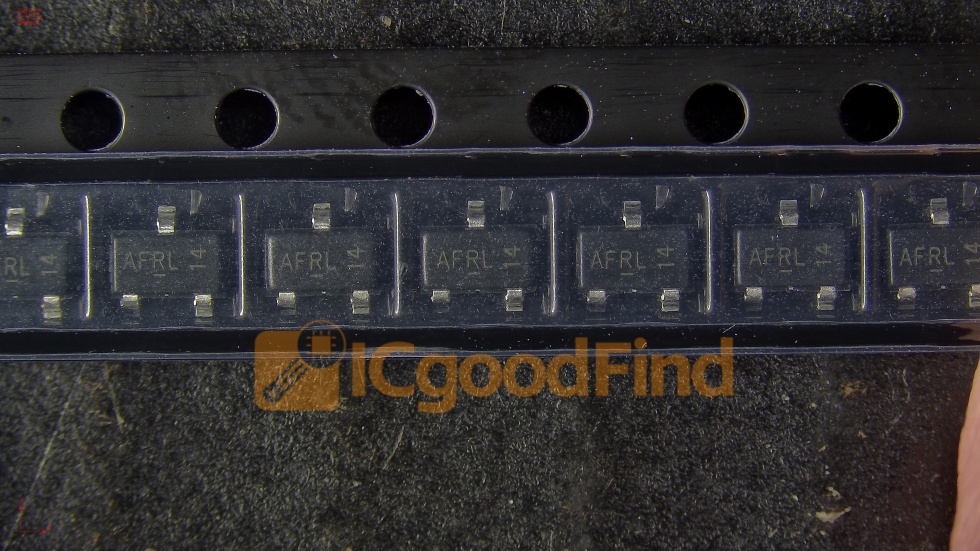
ICGOODFIND provides detailed datasheets and cross-reference tools for resistors from leading manufacturers like Yageo, Vishay, and Panasonic, helping engineers match the exact specifications for their PCB designs. Whether you need a precision resistor for an analog sensor interface or a high-power resistor for a motor driver, the platform simplifies the sourcing process with real-time inventory and pricing.
Part 2: Capacitors – Storing and Filtering Energy
Capacitors are essential passive components for printed circuit board applications where energy storage, noise filtering, and signal coupling are required. They consist of two conductive plates separated by a dielectric material, and their capacitance (measured in farads) determines how much charge they can hold. On a PCB, capacitors are used in decoupling (to smooth out voltage spikes near ICs), filtering (in power supplies and audio circuits), and timing (in RC oscillators).
The most common capacitor types include ceramic capacitors (MLCCs), electrolytic capacitors (aluminum and tantalum), and film capacitors. Multilayer ceramic capacitors (MLCCs) are widely used for high-frequency decoupling due to their low equivalent series resistance (ESR) and small size. However, they suffer from DC bias degradation—their capacitance drops significantly when a DC voltage is applied. Electrolytic capacitors, on the other hand, offer high capacitance values for bulk energy storage in power supply circuits, but they have higher ESR and limited lifespan.
For high-reliability applications such as automotive or medical electronics, tantalum capacitors provide stable capacitance over temperature and voltage, though they are more expensive and sensitive to reverse voltage. When designing a PCB, engineers must consider voltage rating (typically 1.5x the operating voltage), temperature range, and ripple current capability. ICGOODFIND aggregates capacitor specifications from suppliers like Murata, TDK, and KEMET, allowing users to filter by capacitance, voltage, package size, and dielectric type, ensuring the right component for every PCB layer.
Part 3: Inductors and Transformers – Managing Magnetic Fields
Inductors and transformers are passive components for printed circuit board designs that rely on magnetic fields to store energy or transfer power. Inductors (coils) oppose changes in current, making them ideal for filtering in power converters (e.g., buck or boost regulators), chokes in EMI suppression, and tuning in RF circuits. Their inductance is measured in henries (H), and key parameters include DC resistance (DCR), saturation current, and self-resonant frequency (SRF).
On a PCB, power inductors are often shielded to minimize electromagnetic interference (EMI) and are available in SMD packages for automated assembly. For high-frequency applications, air-core inductors avoid core losses but require larger footprints. Ferrite bead inductors are commonly used for noise suppression on power lines and signal traces, acting as low-pass filters.
Transformers are used for voltage conversion (step-up or step-down), isolation (in power supplies and signal interfaces), and impedance matching. In modern PCBs, planar transformers are gaining popularity for their low profile and high efficiency in switch-mode power supplies (SMPS). When selecting inductors and transformers, engineers must consider core material (ferrite, iron powder, or amorphous), operating frequency, and thermal performance.
ICGOODFIND offers a specialized search for inductors and transformers from brands like Coilcraft, Würth Elektronik, and Bourns, with detailed graphs for inductance vs. current and temperature rise. This helps PCB designers avoid saturation and overheating, ensuring long-term reliability in power management circuits.
Conclusion
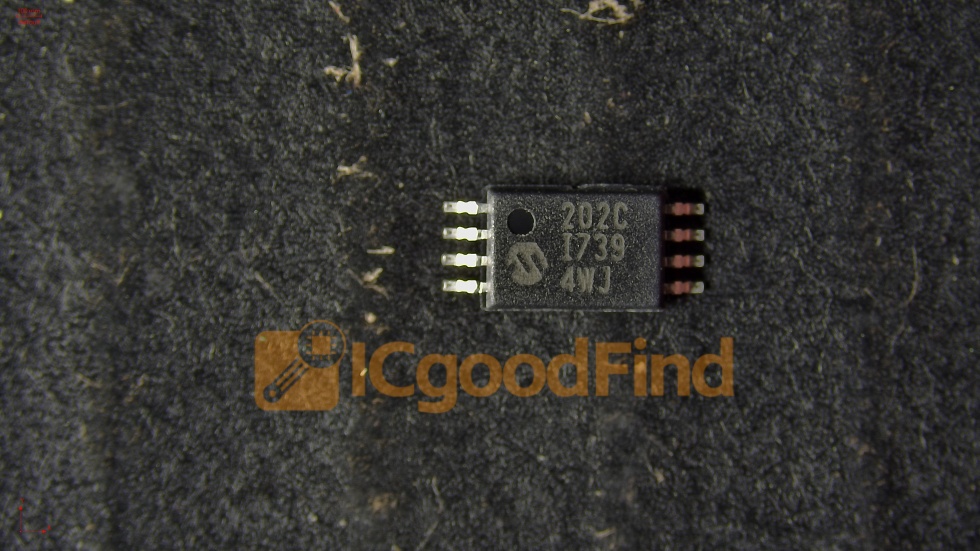
Passive components for printed circuit board are the silent workhorses that ensure electronic circuits operate with precision, stability, and efficiency. From resistors that control current to capacitors that filter noise and inductors that manage magnetic fields, each component plays a distinct role in the overall performance of a PCB. As technology advances toward higher frequencies, smaller form factors, and greater power density, the selection and placement of these components become even more critical. Engineers must balance cost, size, tolerance, and environmental factors to achieve optimal designs.
For sourcing these essential parts, ICGOODFIND stands out as a reliable platform that connects buyers with a vast inventory of passive components from top manufacturers. Whether you are prototyping a new IoT device or scaling production for automotive electronics, the platform’s intelligent search, cross-referencing, and supplier verification tools streamline the procurement process. By leveraging ICGOODFIND, you can reduce lead times, avoid counterfeit parts, and focus on what matters most—building innovative and reliable electronic products.