
The Ultimate Guide to Microcontroller (MCU): Core, Applications, and Future Trends
Introduction
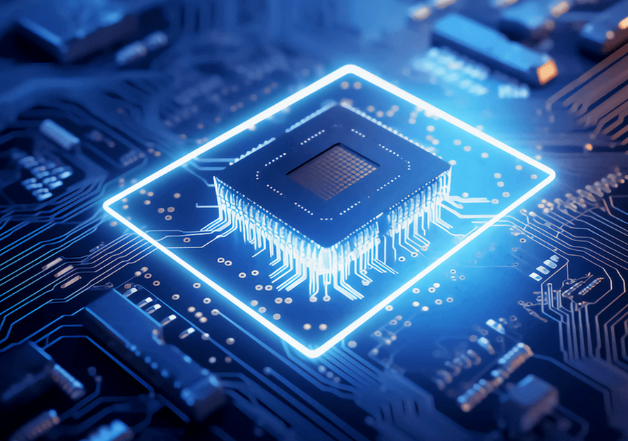
In the era of smart devices, the microcontroller (MCU) stands as the silent brain behind billions of electronic products. From your microwave oven to your car’s engine control unit, from wearable fitness trackers to industrial robots, the MCU is the compact, cost-effective computing solution that makes embedded intelligence possible. Unlike a full-fledged computer processor, a microcontroller integrates a CPU, memory (RAM and ROM/Flash), and programmable input/output peripherals on a single chip. This all-in-one design makes it ideal for dedicated control tasks where power efficiency, size, and reliability are paramount.
According to industry reports, the global MCU market is projected to exceed $40 billion by 2028, driven by the explosion of IoT, automotive electronics, and smart home devices. Whether you are an electronics hobbyist, an embedded engineer, or a business owner looking to integrate smart features into your products, understanding the microcontroller landscape is essential. For those seeking reliable sourcing and component insights, platforms like ICGOODFIND offer comprehensive databases and market intelligence for MCU selection and procurement.
This article will explore the microcontroller in three critical dimensions: its core architecture and types, its dominant application domains, and the emerging trends that will shape its future. By the end, you will have a clear roadmap for leveraging MCU technology in your projects.
Part 1: Core Architecture and Types of Microcontroller (MCU)
1.1 The Anatomy of an MCU
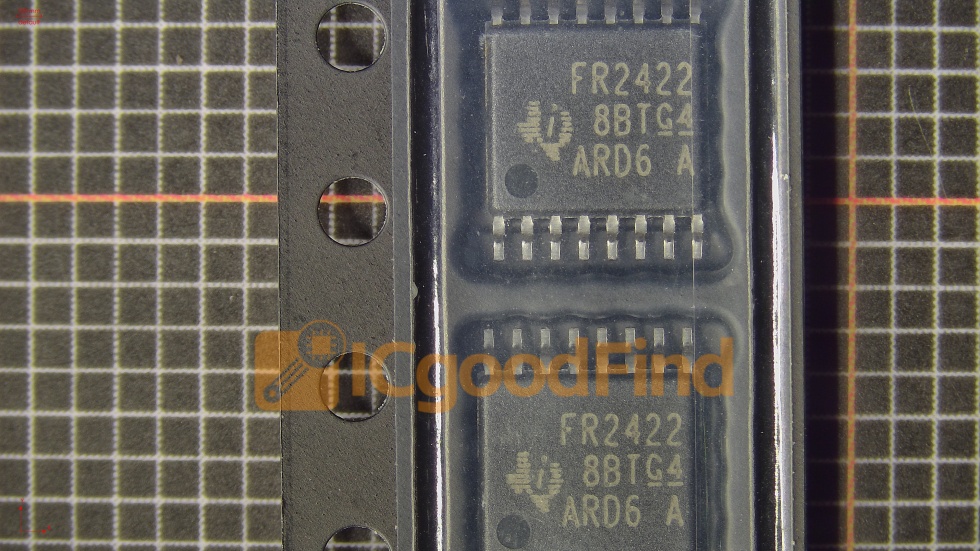
At its heart, a microcontroller is a system-on-chip (SoC) designed for embedded control. The key components include:
- Central Processing Unit (CPU) Core: The brain that executes instructions. Common architectures include ARM Cortex-M (dominant in low-power applications), AVR (popular in Arduino boards), PIC (from Microchip), and RISC-V (open-source, gaining traction).
- Memory: Flash memory stores the program code (non-volatile), while SRAM holds runtime data (volatile). Some MCUs also include EEPROM for small amounts of non-volatile data storage.
- Peripherals: These are the interfaces that connect the MCU to the outside world. Common peripherals include GPIO (general-purpose input/output), ADC (analog-to-digital converter), PWM (pulse-width modulation), UART, SPI, I2C, USB, and CAN (for automotive).
- Clock Source: An internal or external oscillator that synchronizes operations. Many modern MCUs include an internal RC oscillator, reducing external component count.
The beauty of a microcontroller lies in its deterministic real-time behavior. Unlike a general-purpose CPU running an operating system, an MCU can guarantee response times to external events, making it perfect for safety-critical applications like airbag deployment or motor control.
1.2 Classification by Bit Width
MCUs are typically categorized by their data bus width:
- 8-bit MCUs: The classic workhorses. Examples: ATmega328P (Arduino Uno), PIC16F877A. They are extremely low-cost, low-power, and sufficient for simple control tasks like temperature monitoring or LED control. However, they struggle with complex algorithms or large data processing.
- 16-bit MCUs: A middle ground offering better performance and memory addressing. Used in automotive body electronics and industrial sensors. Example: MSP430 from Texas Instruments, known for ultra-low power consumption.
- 32-bit MCUs: The modern standard. ARM Cortex-M series dominates this space. They offer high performance (up to several hundred MHz), large memory (up to several MB of Flash), and rich peripheral sets. Examples: STM32 (STMicroelectronics), ESP32 (Espressif, with built-in Wi-Fi/BT), NXP i.MX RT (crossover processors). These are used in IoT gateways, drones, and advanced medical devices.
1.3 Specialized MCU Families
Beyond bit width, MCUs are tailored for specific needs:
- Low-power MCUs: Designed for battery-operated devices. Examples: STM32L0/L4 series, MSP430, Ambiq Apollo. They feature multiple sleep modes and sub-microamp standby currents.
- Wireless MCUs: Integrate radio transceivers. The ESP32 (Wi-Fi + BLE) and nRF52840 (BLE + Thread) are hugely popular for IoT. Silicon Labs and TI also offer MCUs with Zigbee, Z-Wave, or LoRa support.
- Automotive MCUs: Must meet AEC-Q100 qualification and operate at extended temperatures (-40°C to +125°C or higher). Infineon TriCore, NXP S32K, and Renesas RH850 are leaders in this segment.
- Security MCUs: Include hardware cryptographic accelerators, secure boot, and tamper detection. Used in payment terminals and smart meters. NXP LPC55S series and Microchip SAM L11 are examples.
For engineers and buyers looking to compare specifications, pricing, and availability across these families, ICGOODFIND provides a powerful search engine that aggregates datasheets and real-time stock data from global distributors.

Part 2: Dominant Application Domains of Microcontroller (MCU)
2.1 Internet of Things (IoT) and Smart Home
The MCU is the cornerstone of the IoT revolution. Billions of connected devices rely on microcontrollers to sense, process, and communicate data.
- Smart Home Devices: Thermostats (e.g., Nest uses an ARM Cortex-M), smart locks, light bulbs, and voice assistants all contain MCUs. The ESP32 and ESP8266 are particularly popular for Wi-Fi-enabled devices due to their low cost and integrated connectivity.
- Wearables: Fitness bands, smartwatches, and medical patches use ultra-low-power MCUs like the Ambiq Apollo4 or Nordic nRF52 series. These MCUs can run for weeks on a tiny coin-cell battery.
- Industrial IoT (IIoT): Sensors monitoring vibration, temperature, or pressure in factories use MCUs to preprocess data and transmit it via LoRa, NB-IoT, or BLE. The STM32WL series even integrates a LoRa transceiver on-chip.
2.2 Automotive Electronics
Modern vehicles contain 100+ MCUs on average, controlling everything from engine management to infotainment.
- Powertrain and Safety: 32-bit MCUs like the Infineon TC3xx handle real-time control of fuel injection, braking (ABS/ESC), and airbag deployment. These require high reliability and functional safety certification (ISO 26262 ASIL-D).
- Body Electronics: Window lifts, seat controls, and lighting systems use 16-bit or 32-bit MCUs with CAN or LIN interfaces. The NXP S32K family is widely adopted.
- ADAS and Infotainment: High-performance MCUs (or MPUs with MCU cores) process camera data and manage touchscreens. The Renesas R-Car series and TI TDA4 are examples.
The automotive MCU market is experiencing a shift toward domain controllers and zonal architectures, where fewer, more powerful MCUs replace dozens of smaller ones. This trend increases demand for MCUs with high core counts and advanced security features.
2.3 Industrial Control and Automation
MCUs are the brains behind programmable logic controllers (PLCs), motor drives, and robotics.
- Motor Control: MCUs with dedicated PWM timers and ADC channels enable precise control of brushless DC (BLDC) motors. STM32G4 and TI C2000 series are optimized for this task, supporting field-oriented control (FOC) algorithms.
- Human-Machine Interface (HMI): MCUs drive TFT displays, touchscreens, and keypads. The NXP i.MX RT crossover MCU offers application-processor-level performance with MCU-like real-time capability.
- Programmable Logic Controllers (PLCs): Industrial MCUs like the Renesas RX series handle ladder logic execution and communication protocols (EtherCAT, Profinet, Modbus).
2.4 Consumer Electronics and Medical Devices
- Consumer: Gaming peripherals (keyboards, mice), drones, and smart speakers all use MCUs. The Raspberry Pi Pico (RP2040 MCU) has become a favorite for hobbyists.
- Medical: Insulin pumps, pulse oximeters, and hearing aids require ultra-low-power MCUs with high reliability. The TI MSP430 and STM32L4 are common choices.
Across all these domains, the ability to quickly source the right MCU at the right price is critical. ICGOODFIND helps engineers and procurement teams filter by architecture, memory size, package type, and operating temperature, ensuring the selected microcontroller meets both technical and budgetary requirements.
Part 3: Emerging Trends and Future of Microcontroller (MCU)
3.1 Rise of RISC-V Architecture
The open-source RISC-V instruction set architecture (ISA) is disrupting the MCU market. Unlike ARM, which requires licensing fees, RISC-V is free and customizable. Companies like SiFive, Espressif (with the ESP32-C5), and GigaDevice are releasing RISC-V MCUs that compete directly with ARM Cortex-M parts.
Advantages: - No licensing costs → lower BOM for high-volume products. - Custom instructions → can accelerate specific algorithms (e.g., AI inference, cryptography). - Transparency → ideal for government and defense applications.
However, the RISC-V ecosystem (tools, middleware, and community support) is still maturing compared to ARM. For now, ARM Cortex-M remains the dominant choice for most commercial MCU designs, but RISC-V is expected to capture 10-15% of the MCU market by 2030.
3.2 Integration of AI and Machine Learning (TinyML)
The MCU is becoming a platform for edge AI. TinyML refers to running machine learning models on ultra-low-power MCUs (e.g., ARM Cortex-M4/M7 or RISC-V with vector extensions). This allows devices to perform tasks like keyword spotting, anomaly detection, and image classification without sending data to the cloud.
Key enablers: - Neural network accelerators: Some MCUs now include hardware for matrix multiplication (e.g., STM32N6 with NPU, NXP i.MX RT with Cadence Tensilica). - Software frameworks: TensorFlow Lite Micro, Edge Impulse, and STM32Cube.AI allow developers to deploy models on MCUs with as little as 256 KB of Flash. - Use cases: Predictive maintenance (vibration analysis), smart agriculture (plant disease detection), and voice-controlled interfaces.
3.3 Advanced Security and Functional Safety
As MCUs connect to the internet, security becomes non-negotiable. Future MCUs will integrate: - Hardware Secure Enclaves (e.g., ARM TrustZone for Cortex-M23/M33). - Physically Unclonable Functions (PUF) for unique device identity. - Secure Boot and Firmware Over-the-Air (FOTA) update capabilities.
In automotive and industrial domains, functional safety standards (ISO 26262, IEC 61508) are driving MCUs with dual-core lockstep architectures and built-in self-test (BIST) features. Infineon and Renesas already offer MCUs with ASIL-D certification.
3.4 Crossover Processors: Blurring the Line Between MCU and MPU
Traditional MCUs have limited memory and lack an MMU (memory management unit), preventing them from running full operating systems like Linux. However, crossover processors like the NXP i.MX RT and TI AM64x combine MCU-like real-time performance with application-processor-level features (DDR memory support, GPU, and high-speed interfaces). These devices can run both a real-time OS (e.g., FreeRTOS) and Linux on separate cores, enabling complex applications like industrial gateways and edge servers.
3.5 Supply Chain Resilience and Multi-Sourcing
The global chip shortage (2020-2023) highlighted the vulnerability of relying on a single MCU supplier. As a result, engineers are now designing for multi-sourcing—using MCUs from different vendors with compatible pinouts and software abstraction layers. Platforms like ICGOODFIND are invaluable here, offering cross-reference tools that suggest alternative MCUs from different manufacturers, along with real-time stock and lead-time data.
Conclusion
The microcontroller (MCU) is far more than a simple chip—it is the invisible engine driving the digital transformation of our world. From its compact architecture integrating CPU, memory, and peripherals, to its vast application in IoT, automotive, industrial, and consumer electronics, the MCU continues to evolve at a breathtaking pace.
We have seen how 8-bit, 16-bit, and 32-bit MCUs serve different performance and cost niches, and how specialized families like wireless, automotive, and security MCUs address specific market needs. The future promises even greater integration: RISC-V will democratize processor design, TinyML will bring AI to the edge, and crossover processors will blur the line between embedded and application computing.
For engineers, product managers, and procurement professionals, staying ahead means not only understanding the technical capabilities of MCUs but also navigating the complex supply chain. Whether you are prototyping with an ESP32 or scaling production with an STM32, having access to reliable component data and market intelligence is crucial. That is where ICGOODFIND comes in—a platform designed to help you find, compare, and source the right microcontroller for your next innovation.
The MCU revolution is just beginning. Are you ready to harness its power?