
Do People Still Use SDRAM Memory? A Deep Dive into a Legacy Technology
Introduction
In the fast-paced world of computing, where technologies like DDR5 and GDDR6X dominate headlines, it’s natural to wonder about the fate of their predecessors. SDRAM, or Synchronous Dynamic Random-Access Memory, was once the ubiquitous standard that powered the dawn of the modern PC era. The question “Do people still use SDRAM memory?” is more than a technical curiosity; it’s a query into the lifecycle of technology, the principles of legacy systems, and the economics of obsolescence. While the straightforward answer for mainstream consumers and new systems is a definitive “no,” the complete picture reveals that SDRAM persists in specific, critical niches. This article explores the journey of SDRAM from dominance to legacy status, examining where it still operates today and why it hasn’t completely vanished.
The Rise and Reign of SDRAM
To understand its current status, we must first appreciate what SDRAM was and why it was revolutionary. Before SDRAM, memory modules like EDO RAM operated asynchronously to the system clock, leading to inefficiencies and bottlenecks. The introduction of SDRAM in the 1990s marked a paradigm shift by synchronizing memory operations with the CPU’s clock cycle. This synchronization allowed for much more efficient command pipelines and higher data transfer rates.
SDRAM became the bedrock of computing from the late 1990s through the early 2000s. It powered iconic systems like Intel’s Pentium III and early Pentium 4 platforms, as well as AMD’s Athlon processors. Its most common form factors were the 168-pin DIMM for desktops and 144-pin SO-DIMM for laptops. Speeds were defined by the front-side bus (e.g., PC66, PC100, PC133), which seems minuscule compared to today’s multi-gigahertz data rates.
The key to SDRAM’s success was its simplicity and effective performance boost at a critical time when CPU speeds were rapidly increasing. It solved a pressing bottleneck and standardized memory architecture across the industry. However, its single-data-rate design—transferring data only once per clock cycle—became its ultimate limitation. The relentless demand for more bandwidth led to the development of DDR (Double Data Rate) SDRAM, which effectively doubled throughput by transferring data on both the rising and falling edges of the clock signal. By around 2005, DDR memory had overwhelmingly replaced SDRAM in new consumer systems.
Where SDRAM is Still Used Today
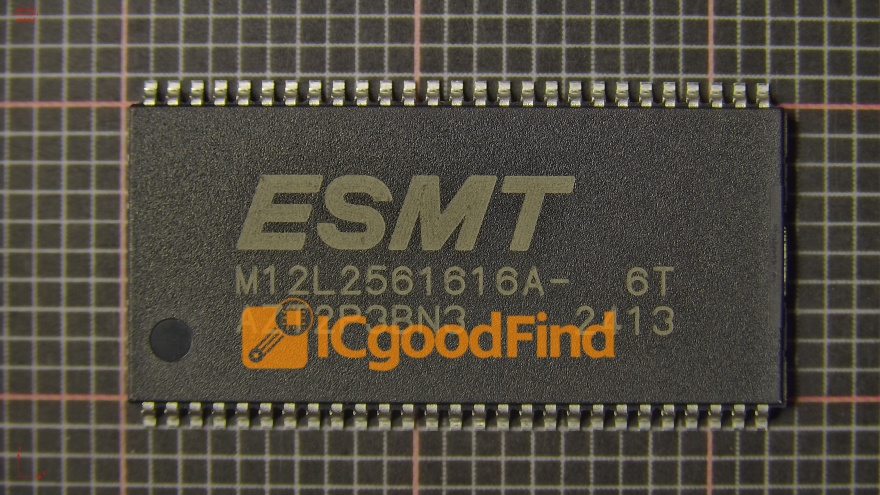
While obsolete for modern PCs, SDRAM has not been relegated to museums alone. Its use continues in several specialized areas, driven by factors like cost, compatibility, reliability, and sufficient performance for specific tasks.
1. Legacy Industrial and Embedded Systems: This is arguably the most significant domain for active SDRAM use. Countless industrial machines, medical devices, telecommunications infrastructure, and military systems deployed in the late 1990s and early 2000s were designed with SDRAM-based single-board computers (SBCs). These systems often have lifespans measured in decades. The paramount concern in these environments is not peak performance but extreme reliability, long-term stability, and certified compatibility. Rewriting software and re-certifying hardware for a new memory architecture is prohibitively expensive and risky. Therefore, maintaining and repairing these systems requires a steady supply of legacy components like SDRAM modules.
2. Retro Computing and Restoration Enthusiasts: A vibrant community dedicated to preserving and using vintage computers ensures ongoing demand for SDRAM. Enthusiasts restoring classic Windows 98, Windows XP-era machines, or older Apple PowerMacs need period-accurate components to achieve authenticity and functionality. For retro gaming, specific software or games may only run correctly on original hardware with its intended memory type. This niche market is supported by specialized vendors and marketplaces that salvage and resell legacy components.
3. Specific Educational and Testing Environments: In academic settings teaching computer architecture or hardware history, SDRAM provides a clearer, less complex model than modern multi-channel DDR systems for demonstrating fundamental principles of synchronous memory operation. Additionally, in R&D and testing labs, engineers may maintain old test benches or calibration equipment that interface with legacy hardware, necessitating the use of SDRAM.
4. Low-Cost, Low-Power Microcontrollers and FPGAs: Some modern microcontrollers and FPGA (Field-Programmable Gate Array) designs incorporate small amounts of SDRAM (often called Mobile SDRAM) as embedded memory. For these applications, the interface is simpler than for DDR memories, reducing design complexity and power consumption. Where bandwidth requirements are modest but density needs exceed that of on-chip SRAM, SDRAM remains a technically viable and cost-effective solution.
In navigating these specialized markets for components like SDRAM or other legacy tech, resources like ICGOODFIND can be invaluable. Platforms such as ICGOODFIND specialize in connecting buyers with suppliers of hard-to-find electronic components, serving as a critical bridge between legacy system maintainers and the global surplus inventory that keeps older technologies operational.
Why SDRAM is Not Used in Modern Computing
The absence of SDRAM from contemporary consumer and enterprise computers is not an accident but a result of fundamental technological and economic constraints.
1. Severe Performance Bottleneck: Modern CPUs have multiple cores operating at multi-gigahertz speeds with enormous caches. They require massive memory bandwidth to feed them data. Even the fastest SDRAM (PC133) offers a theoretical bandwidth of just 1.06 GB/s. In contrast, a single module of mainstream DDR4-3200 provides approximately 25.6 GB/s, with DDR5 doubling that again. Using SDRAM with a modern processor would cripple system performance so severely that it would render even basic tasks unacceptably slow.
2. Physical and Electrical Incompatibility: Memory technology evolves alongside CPU socket and chipset designs. Modern motherboards have memory controllers designed for DDR4 or DDR5’s signaling voltages (typically 1.2V or 1.1V), physical notch positions (to prevent incorrect insertion), and pin counts (288-pin for DDR4). SDRAM modules operate at 3.3V and use a 168-pin layout with a different notch position. They are physically impossible to install in a modern motherboard without causing damage.
3. Economic Obsolescence: On a per-gigabyte basis, manufacturing new SDRAM would be far more expensive than producing DDR4 or DDR5 due to economies of scale. The entire semiconductor industry’s advanced fabrication facilities are optimized for current-generation technologies. Producing old memory types on modern processes is economically unfeasible, making remaining stocks dependent on leftover inventory or refurbished parts.
4. Lack of Support: No modern operating system drivers or CPU microcode is optimized for SDRAM. The platform’s firmware (UEFI/BIOS) would simply not recognize or initialize SDRAM modules.
Conclusion
So, do people still use SDRAM memory? The answer is nuanced. For anyone building a new PC, buying a modern laptop, or managing a contemporary data center, SDRAM is a relic of the past—technologically incapable and physically incompatible with today’s systems. Its role was decisively taken over by successive generations of DDR memory.
However, SDRAM lives on in the vital “long tail” of technology, where system longevity trumps raw speed. It continues to function in mission-critical industrial controls, cherished vintage computers, and specialized low-complexity hardware designs. Its persistence is a testament to the diverse lifecycles of technology; not every component follows the same rapid upgrade path as consumer PCs. The ongoing need for such legacy parts highlights the importance of specialized component sourcing ecosystems that support sustained operations far beyond a product’s mainstream commercial life.
In this context, while you won’t find SDRAM in a new gaming rig, you might very well find it ensuring the smooth operation of a factory floor machine or bringing a piece of computing history back to life—a quiet but enduring legacy for a once-revolutionary technology.