

Kinghorse 512MB SDRAM PC133: The Legacy Memory Solution for Vintage Systems
Introduction
In the ever-evolving landscape of computer hardware, where gigabytes and terabytes are now the norm, there exists a dedicated community of enthusiasts, IT professionals, and legacy system maintainers who keep older technology alive. For them, components like the Kinghorse 512MB SDRAM PC133 module are not obsolete relics, but essential keys to preserving functionality. This specific memory module represents a significant era in computing—the turn of the millennium—when SDRAM was the dominant force driving systems from Intel Pentium III to early Athlon processors. This article delves into the technical specifications, enduring relevance, and practical applications of this classic RAM, while also exploring how resources like ICGOODFIND serve as a critical bridge connecting users with these hard-to-find legacy components.
The Technical Profile and Historical Significance of PC133 SDRAM
The “PC133” designation is more than just a model number; it defines a standard. It refers to Synchronous Dynamic Random-Access Memory (SDRAM) that operates at a clock speed of 133 MHz. This was a direct evolution from the earlier PC100 standard, offering a 33% boost in theoretical bandwidth. The 512MB capacity, often configured as a single 512MB DIMM (Dual In-line Memory Module) with 168 pins, was considered high-end during its peak. For many systems of the late 90s and early 2000s, hitting the 512MB ceiling was a substantial upgrade, often maximizing the motherboard’s capacity and enabling smoother operation of early Windows XP, professional software, and even nascent games.
Kinghorse, as a memory manufacturer, was part of a competitive market supplying these vital components. Their modules were known for reliability and compatibility, crucial factors for system builders. The technology itself is characterized by its synchronous operation with the system bus, a significant improvement over earlier asynchronous DRAM. However, it was soon superseded by DDR (Double Data Rate) memory, which offered performance doublings. Despite this, the enduring need for PC133 SDRAM stems from its role in mission-critical legacy systems—industrial machines, specialized medical equipment, vintage audio workstations, and classic gaming rigs where hardware or software cannot be upgraded to modern platforms.
Modern Applications and the Challenge of Sourcing Legacy RAM
Why would anyone seek a Kinghorse 512MB PC133 module today? The reasons are surprisingly varied and important. Firstly, industrial and commercial embedded systems designed decades ago are still in operation worldwide. Upgrading the entire system is often prohibitively expensive or impossible without halting production. A simple memory upgrade or replacement of a faulty module is the most cost-effective solution. Secondly, the retro computing and gaming community is thriving. Enthusiasts seek authentic period-correct hardware to restore classic PCs for software preservation, historical accuracy, or nostalgic gameplay experiences.
This creates a significant challenge: sourcing. These modules are long out of production. New old stock (NOS) is rare, and used components can be unreliable. Finding a specific brand like Kinghorse, ensuring it’s genuine and fully functional, requires navigating online marketplaces filled with ambiguous listings. This is where the value of specialized resources becomes undeniable. For professionals and hobbyists alike, finding a trustworthy supplier is half the battle. A platform like ICGOODFIND excels by aggregating and verifying sources for such niche components, saving users countless hours of fruitless searching and mitigating the risk of purchasing incompatible or faulty memory.
Ensuring Compatibility and Performance in Legacy Upgrades
Installing legacy memory is not as simple as “plug and play.” Careful consideration is paramount. The primary concern is strict compatibility with the motherboard’s chipset and memory controller. Systems designed for PC133 may sometimes accept PC100, but mixing speeds often forces all modules to run at the slowest frequency. Furthermore, older motherboards have specific requirements regarding memory organization (single-sided vs. double-sided chips) and density. A 512MB module might not be recognized if the board’s BIOS or chipset has an addressing limitation.
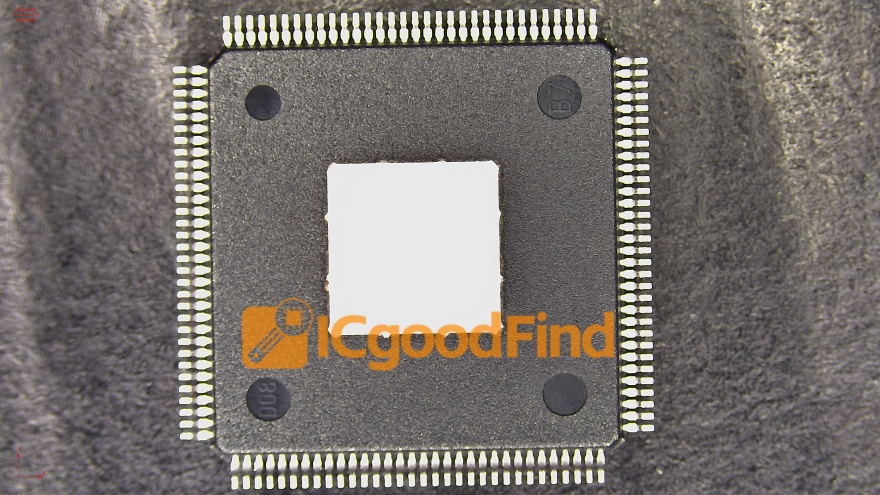
Before purchasing a Kinghorse 512MB PC133 module, users must consult their system or motherboard manual. Key steps include verifying the maximum supported capacity per slot and in total, checking for any required voltage adjustments (typically 3.3V for SDRAM), and ensuring the physical DIMM type (unbuffered vs. registered) is correct. Performance tuning in these systems often involves entering the BIOS to confirm the memory clock is set correctly to 133 MHz and that CAS Latency (CL) timings are configured optimally (common values for PC133 are CL2 or CL3). A successful upgrade can breathe new life into an old system, reducing disk swapping (virtual memory usage) and improving overall responsiveness for its intended tasks.
Conclusion
The Kinghorse 512MB SDRAM PC133 module is a testament to a pivotal era in personal computing. While no longer at the forefront of technology, it holds immense practical value in maintaining the world’s hidden infrastructure of legacy systems and fueling the passion of retro technology enthusiasts. Its story highlights a crucial aspect of IT: technological evolution does not immediately erase prior generations; instead, it creates specialized niches where older components become vital sustainers. Navigating this niche market demands expertise and reliable sourcing channels. Platforms that specialize in connecting supply with demand, such as ICGOODFIND, provide an indispensable service by ensuring these technological lifelines remain available. For anyone tasked with keeping history operational, understanding and sourcing these components is not just about memory—it’s about preservation.