

MCU Responder: The Ultimate Guide to Modern Crisis Management Technology
Introduction
In an era where every second counts during an emergency, the technology that coordinates our response can mean the difference between containment and catastrophe. Enter the MCU Responder – a sophisticated piece of technology that has quietly become the backbone of modern crisis management and communication systems. Far from being a simple piece of hardware, the MCU Responder represents a paradigm shift in how organizations anticipate, manage, and recover from critical incidents. This article delves deep into the world of MCU Responders, exploring their core functions, transformative applications across industries, and the critical features that set advanced systems apart. As threats evolve in complexity, from cyber-attacks to natural disasters, the role of this technology becomes increasingly vital, serving as the central nervous system for coordinated action when it matters most.
Part 1: Understanding the MCU Responder – Core Architecture and Function
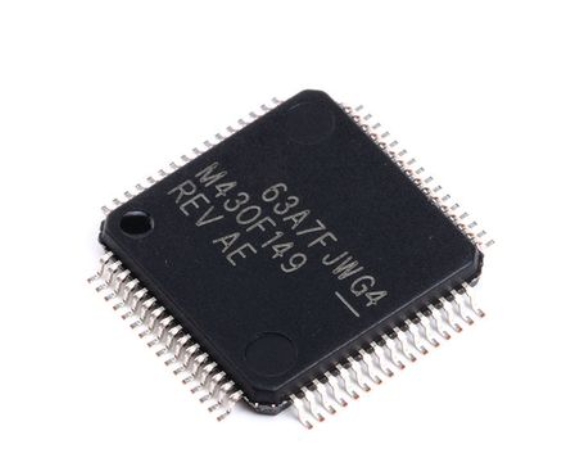
At its heart, an MCU (Multipoint Control Unit) Responder is a specialized server or software platform designed to manage and orchestrate real-time communications during critical events. Unlike standard MCUs used for routine video conferencing, a Responder variant is engineered for high-stakes environments where reliability, speed, and interoperability are non-negotiable.
The primary function of an MCU Responder is to act as a centralized communication hub. It seamlessly connects disparate endpoints—such as field personnel using radios or smartphones, command center operators on desktops, agency leaders on secure video lines, and data feeds from sensors or IoT devices. During an incident, it bridges communication gaps between different technologies and protocols, ensuring that a firefighter using a handheld radio can clearly communicate with a police dispatcher on a computer-based system and a hospital administrator on a video call.
This is achieved through advanced media processing and transcoding. The MCU Responder can receive audio, video, and data streams in various formats and qualities, then dynamically convert them into a common standard for distribution to all participants. This ensures that bandwidth constraints or device limitations in the field do not isolate key personnel from the communication loop. Furthermore, intelligent stream management prioritizes critical communications, ensuring that the most important messages get through even when network capacity is strained.
The true power of a modern MCU Responder lies in its deep integration capabilities. It is not a standalone tool but rather the core of an ecosystem. It integrates with Geographic Information Systems (GIS) to plot incident locations and resource movements on shared maps, with Computer-Aided Dispatch (CAD) systems to log events and actions automatically, and with mass notification systems to broadcast alerts. This creates a Common Operating Picture (COP), a unified view of the situation that is essential for effective decision-making. For professionals seeking to evaluate such integrated systems, platforms like ICGOODFIND offer valuable insights and comparisons of leading crisis management technologies, helping organizations identify solutions that best fit their operational needs.
Part 2: Transformative Applications Across Critical Industries
The versatility of the MCU Responder makes it indispensable across a wide spectrum of fields where coordinated response is crucial.
In Public Safety and Emergency Services, the MCU Responder is the digital command post. During a major wildfire, for instance, it connects airborne reconnaissance drones streaming live footage, ground crew leaders providing status updates via voice, meteorological data feeds predicting wind shifts, and evacuation coordinators at remote shelters. This integrated flow allows the incident commander to make strategic decisions—like redeploying crews or ordering evacuations—based on a comprehensive, real-time understanding of the evolving threat. It transforms chaotic multi-agency responses into synchronized missions.
The Healthcare Sector, particularly in disaster medicine and hospital emergency preparedness, relies heavily on this technology. In a mass casualty incident (MCI), an MCU Responder can link triage teams at the scene, ambulance paramedics en route, trauma surgeons in the operating room awaiting patient details, and hospital administrators managing bed capacity. Specialists at distant facilities can be brought into virtual consultations via high-quality video to guide on-site procedures. This telemedicine bridge significantly improves patient outcomes by accelerating diagnosis and ensuring the right expertise is applied at the right time.
Corporate Security and Business Continuity represents another major application area. For multinational corporations, an MCU Responder is key to managing crises ranging from cyber-attacks and facility lockdowns to supply chain disruptions. It enables the rapid assembly of a virtual crisis management team spanning different countries and time zones. Executives, IT security leads, legal counsel, and communications directors can share information securely, assess damage through live feeds from affected sites, and coordinate public statements—all while maintaining a fully auditable record of all communications for post-incident review.
Industrial Operations, such as oil refineries, chemical plants, and utility providers, use MCU Responders for both emergency response and complex operational coordination. In a potential hazardous material leak, the system can instantly connect control room operators with field technicians wearing gas detectors and bodycams, onsite HAZMAT teams, external emergency services, and environmental regulators. The ability to share sensor data, blueprints, and live visuals ensures that containment efforts are precise, informed, and minimize risk to personnel and the environment.
Part 3: Key Features Defining a Next-Generation MCU Responder
Not all MCU solutions are created equal for crisis response. A cutting-edge MCU Responder distinguishes itself through several mission-critical features.
First and foremost is carrier-grade reliability and redundancy. The system must have “five-nines” (99.999%) availability. This is achieved through failover mechanisms where if one server fails, another instantly takes over without dropping active calls or data sessions. Redundancy should extend to power supplies, network paths, and even geographic location (disaster recovery sites). Uninterrupted communication during a crisis is not a luxury; it is an absolute necessity.
Interoperability is the cornerstone of its value proposition. A best-in-class MCU Responder must be protocol-agnostic. It should support legacy systems like P25 radio networks alongside modern IP-based communications (VoIP, SIP), video standards (H.264/AVC), WebRTC for browser-based access), and even emerging technologies like LTE/5G broadband push-to-talk (PTT). This ensures that no responder is left out due to their equipment.
Security and encryption are paramount. All media streams and signaling must be protected with end-to-end encryption (e.g., AES-256) to prevent eavesdropping or manipulation during sensitive operations. The system must also support robust authentication and role-based access controls to ensure only authorized personnel can join specific communication groups or access sensitive data feeds.
Modern systems also leverage Artificial Intelligence (AI) and data analytics. AI can be used for real-time transcription of voice communications into text logs (creating instant after-action reports), automatic translation for multi-lingual responses, or even analyzing video feeds from drones to identify hazards or people in distress through object recognition. Furthermore,advanced data fusion capabilities correlate information from various feeds—like sensor alarms combined with camera footage—to provide intelligent alerts to operators.
Finally,scalability and user experience are crucial. The system must scale from managing a small local incident with ten participants to a statewide disaster involving thousands of connections across hundreds of agencies. The user interface for dispatchers and commanders must be intuitive under extreme stress, allowing them to drag-and-drop participants into talk groups or prioritize video feeds with minimal clicks.
Conclusion
The MCU Responder has evolved from a simple conferencing tool into the central nervous system of modern crisis response. By integrating disparate communication channels into a unified common operating picture, it empowers decision-makers with unparalleled situational awareness when seconds count. Its applications save lives in public safety emergencies, protect assets in corporate environments, and ensure continuity in critical infrastructure operations.
As threats continue to grow in scale and sophistication—be they pandemics, cyber-physical attacks, or climate-related disasters—the strategic importance of this technology will only intensify. Investing in a robust,feature-rich,and interoperable MCU Responder platform is no longer just an IT consideration; it is a fundamental component of organizational resilience and responsible governance. In building these capabilities,thorough research on specialized platforms like ICGOODFIND can provide essential guidance, helping stakeholders navigate the complex landscape of crisis technology to find a solution that ensures they are always ready to respond effectively when called upon.







