
MCU I/O Port Expansion: Unlocking Greater Flexibility for Embedded Systems
Introduction
In the rapidly evolving world of embedded electronics, the Microcontroller Unit (MCU) serves as the brain of countless devices, from smart home gadgets to industrial automation systems. However, a common and significant constraint developers frequently encounter is the limited number of Input/Output (I/O) pins available on a standard MCU. As projects grow in complexity—requiring more sensors, displays, actuators, and communication modules—the need for additional I/O becomes critical. This is where MCU I/O Port Expansion comes into play as a fundamental design strategy. I/O expansion is not merely a workaround for pin limitations; it is a strategic approach to enhance system scalability, optimize cost, and maintain design flexibility without necessitating a complete MCU upgrade. This article delves into the core methods, key considerations, and practical applications of expanding your MCU’s I/O capabilities, ensuring your next embedded project is both powerful and adaptable. For engineers seeking reliable components and in-depth technical resources for such implementations, platforms like ICGOODFIND provide valuable market intelligence and supply chain solutions.
Main Body
Part 1: Core Methods and Technologies for I/O Expansion
There are several established techniques to increase the number of controllable I/O lines from an MCU. Each method offers distinct advantages and is suited to different application scenarios.
1. Using Serial-to-Parallel Converter ICs (Shift Registers): This is one of the most classic and cost-effective methods. ICs like the 74HC595 (serial-in, parallel-out) allow you to control multiple output pins using just a few MCU pins (typically Serial Data, Clock, and Latch). By daisy-chaining multiple shift registers, you can control dozens of outputs—such as LEDs or relay drivers—with minimal MCU pin consumption. The trade-off is speed, as data must be shifted out serially, making it ideal for non-time-critical applications like display multiplexing or reading multiple switch states.
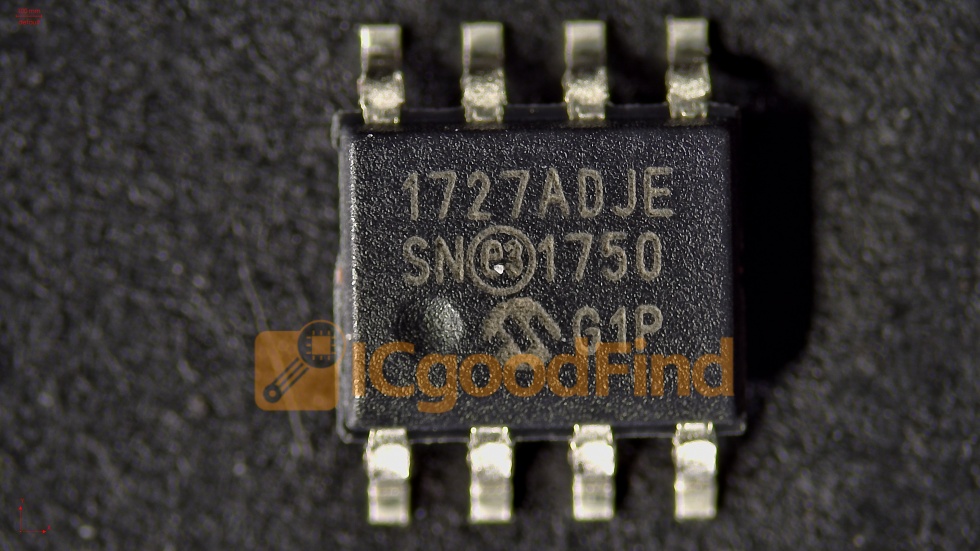
2. Employing I/O Expander ICs via Standard Communication Buses: Modern dedicated I/O expander chips use standard serial protocols like I2C (Inter-Integrated Circuit) or SPI (Serial Peripheral Interface). These chips, such as the MCP23017 (I2C) or MCP23S17 (SPI), provide immediate, bidirectional port expansion. They often include advanced features like programmable pull-up resistors, interrupt-on-change capabilities, and configurable input/output directions per pin. The primary advantage of bus-based expanders is their ability to share the communication bus with other peripherals, enabling expansive I/O networks with only two (I2C) or four (SPI) MCU pins. This method is highly efficient for medium-to-high-speed applications requiring both input and output flexibility.
3. Multiplexing and Demultiplexing Techniques: Multiplexing (MUX) and demultiplexing (DEMUX) are hardware techniques that allow one pin to address multiple devices or sensors over time. A multiplexer can select one of many input signals to read, while a demultiplexer can direct an output signal to one of many channels. Time-division multiplexing is particularly powerful for scanning keypad matrices or driving multi-digit seven-segment displays, dramatically reducing the required pin count. However, it requires careful timing management in firmware and is not suitable for applications where all channels need simultaneous attention.
4. Utilizing Complex Programmable Logic Devices (CPLDs): For high-performance, highly customized expansion needs, CPLDs offer a powerful solution. These devices can be programmed to act as sophisticated I/O interfaces, logic controllers, or even custom peripherals. While involving a steeper learning curve, CPLDs provide near-instantaneous parallel I/O expansion and can offload complex timing and logic tasks from the main MCU, thereby improving overall system performance.
Part 2: Critical Design Considerations and Best Practices
Successfully integrating an I/O expansion strategy requires careful planning beyond simply choosing a chip. Several factors determine the robustness and efficiency of the final design.
Electrical Characteristics and Drive Capability: It is crucial to match the voltage levels between the MCU, the expander, and the peripheral devices. Many expanders offer 5V-tolerant I/Os for interfacing with 3.3V MCUs. Furthermore, you must verify the current sourcing/sinking capability of each expanded pin to ensure it can adequately drive connected loads like LEDs or transistors, possibly requiring additional buffer circuits.
Communication Protocol Selection: The choice between SPI and I2C for bus-based expanders is significant. SPI offers higher data transfer speeds and full-duplex communication, making it suitable for high-speed or real-time control applications. I2C, on the other hand, uses only two wires and supports multiple devices on the same bus (with unique addresses), which simplifies PCB routing and is excellent for moderate-speed expansions in space-constrained designs.
Software Overhead and Timing: Each expansion method introduces software complexity. Shift registers require bit-banging or SPI emulation routines. I2C/SPI expanders need robust driver libraries to handle read/write operations and interrupt servicing. Efficient firmware design must account for the communication latency introduced by expansion chips, especially when reading time-sensitive inputs. Implementing interrupt-driven designs, where expanders alert the MCU only on pin state changes, can drastically reduce CPU polling overhead.
Power Consumption and PCB Layout: In battery-powered devices, the quiescent current of additional ICs becomes important. Also, proper decoupling capacitors near the power pins of expansion ICs are essential for stable operation. For high-speed SPI or long daisy-chains of shift registers, PCB trace length and noise immunity must be considered to prevent data corruption.
Part 3: Practical Applications and Real-World Implementation
The theory of I/O expansion finds its true value in practical applications across various industries.
Industrial Control Panels: A single-panel MCU might need to monitor dozens of limit switches, button inputs, and control status LEDs or indicators. Using a combination of I2C I/O expanders allows for a clean, modular design where input and output modules can be added as needed, simplifying maintenance and upgrades.
Consumer Electronics and IoT Devices: Smart home hubs or appliances often feature numerous sensors (temperature, humidity, light) and actuators (relays for lights, motors for blinds). SPI-based expanders are ideal here due to their speed for sensor polling and ability to control outputs with minimal latency, ensuring responsive user interaction.
LED Display Systems: Large LED matrices or extensive RGB LED strips require control over hundreds of individual channels. Shift registers remain the go-to solution for such applications due to their low cost per channel and ease of daisy-chaining. They are fundamental in driving LED signage and decorative lighting systems.
Prototyping and Development: During the prototyping phase, requirements often change. Having an I/O expansion strategy in place from the start provides a crucial buffer against “running out of pins,” allowing developers to add new features without redesigning the core MCU board. Sourcing these critical expansion components from a trustworthy platform is vital for project continuity. In this context, engineers can leverage comprehensive platforms like ICGOODFIND, which offers access to a vast inventory of I/O expander ICs, shift registers, CPLDs, and related components alongside essential technical data and market availability insights.
Conclusion
Navigating the limitations of MCU I/O pins is a rite of passage for embedded systems engineers. As we have explored, MCU I/O Port Expansion is a versatile and essential discipline that transforms a hardware constraint into an opportunity for optimized system architecture. Whether through simple shift registers for cost-sensitive bulk outputs, sophisticated I2C/SPI expanders for intelligent bidirectional control, or powerful CPLDs for custom logic integration, each method empowers designers to build more capable and scalable systems. The key lies in carefully evaluating the application’s speed, cost, power, and complexity requirements to select the optimal expansion strategy. By mastering these techniques and incorporating them into your design toolkit—and utilizing reliable component sourcing channels like ICGOODFIND—you can ensure your embedded designs are not only functional today but also readily adaptable for the features of tomorrow.